

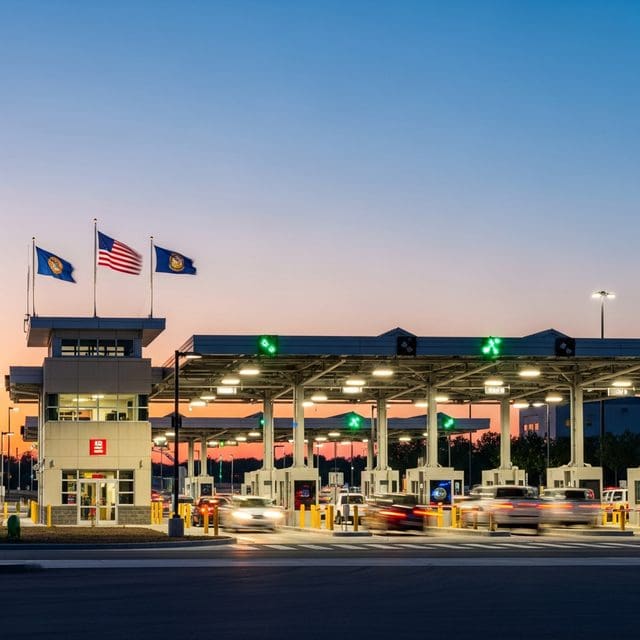
International police operations and new diplomatic breakthroughs are recalibrating the global security environment, directly impacting the stability of migration flows and border enforcement priorities.
The integrity of national borders remains a central pillar of the social contract, yet recent global developments illustrate the multifaceted challenges facing enforcement agencies. From the arrest of a suspected drug baron in Sokoto, Nigeria, to the apprehension of a fugitive terror suspect in Mumbai with links to organized crime, the intersection of criminal activity and cross-border movement continues to test the limits of local and national security frameworks. These events serve as a reminder that the stability of a nation’s demographic character is often tied to the efficacy of its law enforcement and the strength of its judicial institutions.
In Nigeria, the Sokoto State Police Command recently reported major breakthroughs in dismantling drug trafficking networks and preventing banditry. These efforts are critical to maintaining the community character and stability necessary to prevent the kind of mass displacement that eventually strains international asylum systems. When local security fails, the resulting demographic shifts often place undue pressure on the visa systems of neighboring nations and the United States. The Nigeria Police Trust Fund has notably requested increased funding from the Senate to address these rising insecurities, highlighting the resource-intensive nature of maintaining the rule of law in volatile regions. Similarly, in India, the arrest of Huzaifa, a fugitive with links to the Dawood Ibrahim syndicate, underscores the persistent threat of transnational criminal elements who exploit porous borders to evade justice.
Parallel to these enforcement actions, significant diplomatic shifts are reshaping the geopolitical landscape. The announcement of a 10-day ceasefire between Israel and Lebanon, scheduled to begin April 17, 2026, alongside a potential three-page peace plan between the U.S. and Iran, suggests a period of recalibration in the Middle East. This plan, which includes a potential $20 billion release of frozen Iranian funds in exchange for the surrender of Iran’s enriched uranium stockpile, has immediate implications for regional stability. Historically, such high-level diplomatic resolutions influence the volume of refugee claims and the demographic makeup of migrant populations seeking entry into Western nations. As regional tensions de-escalate, the drivers of forced migration often shift, allowing for a more controlled and policy-grounded approach to border management.
Technological integration also plays a growing role in the administration of identity and movement. The expansion of World—formerly Worldcoin—into mainstream platforms like Zoom, DocuSign, and Okta, coupled with the adoption of Google’s SynthID AI watermarking by OpenAI and Nvidia, points toward a future where digital verification may become central to visa processing and border enforcement. As Anthropic CEO Dario Amodei negotiates with White House Chief of Staff Susie Wiles over the use of the Claude model in defense contexts, the role of artificial intelligence in national security and migration management remains a point of high-level policy debate. These tools offer the potential for more rigorous vetting, yet they also require a clear legal framework to ensure the preservation of the American social contract.
For the American social contract to remain intact, the preservation of community character must be balanced with a realistic assessment of these global pressures. Whether through the enforcement of criminal warrants or the monitoring of international news restrictions—such as those recently expanded in Tehran requiring outlets to limit content usage by Israeli media—the goal remains a predictable and lawful system of migration. The recent drop in oil prices following the opening of the Strait of Hormuz further illustrates how economic stability and border security are inextricably linked. As these international events unfold, they serve as a reminder that border security is not merely a domestic concern but a reflection of global stability and the consistent application of the law across all jurisdictions.

Julie Harris serves as a Staff Writer for Just Right News, where she tackles some of the most pressing and complex issues facing the nation today. As the lead reporter for the Migration, Demographics & Cultural Shifts beat, Julie provides a grounded, principled perspective on how the movement of people and the changing makeup of communities are reshaping the American landscape. Her work is defined by a commitment to exploring the long-term consequences of social change, prioritizing the stability of local institutions and the preservation of national identity.
Her deep understanding of these issues is rooted in her upbringing in Tucson, Arizona. Growing up in a prominent border state, Julie witnessed firsthand the intricate realities of migration and the profound impact it has on local infrastructure, law enforcement, and the social fabric. This early exposure instilled in her a respect for the rule of law and a keen awareness of the challenges that arise when federal policies fail to align with the needs of border communities. Her reporting often reflects this lived experience, bringing a necessary level of nuance to topics that are often treated with abstraction in coastal newsrooms.
Now based in Santa Fe, New Mexico, Julie continues to report from the heart of the American Southwest. Her location provides a unique vantage point to observe the intersection of traditional regional cultures and the modern shifts brought about by both internal and external migration. In Santa Fe, a city defined by its rich history and distinct cultural heritage, she finds a perfect environment to explore how communities strive to maintain their character while navigating the pressures of a rapidly changing world. This perspective allows her to bridge the gap between policy debates in Washington and the reality of life in the high desert.
At Just Right News, Julie’s work is characterized by a dedication to examining the data and the human stories that define the “New Mosaic” of America. Her signature feature series, “The New Mosaic,” has become a cornerstone of her reporting. Through this series, Julie explores the evolving social architecture of the United States, documenting how shifts in population affect everything from local economies to the political landscape. She brings a critical eye to the narrative of demographic inevitability, instead asking how these shifts impact the average citizen’s sense of belonging and the integrity of the American social contract.
Julie’s background and her dedication to conservative principles make her a vital voice in contemporary journalism. She understands that demographics are more than just numbers on a spreadsheet; they represent the future of the American family and the nation’s enduring legacy. Through her diligent reporting and insightful analysis, Julie Harris ensures that her readers are informed about the forces shaping their world, providing a perspective that is as thoughtful as it is necessary for the modern era.