

Educational institutions are shifting focus toward practical workforce outcomes and high-impact research as students navigate a challenging post-graduation job market.
The traditional path from the classroom to the cubicle is undergoing a necessary correction as the economic landscape of 2026 demands greater accountability from higher education. As graduates increasingly face the phenomenon of “doomjobbing”—the cycle of waiting for a perfect role while debt accumulates—the value of a degree is being measured by immediate utility. Recent market analysis suggests that students who delay entering the workforce in search of an ideal first job often face long-term setbacks, reinforcing the need for a Midwestern-style pragmatism that prioritizes getting to work over holding out for a dream title.
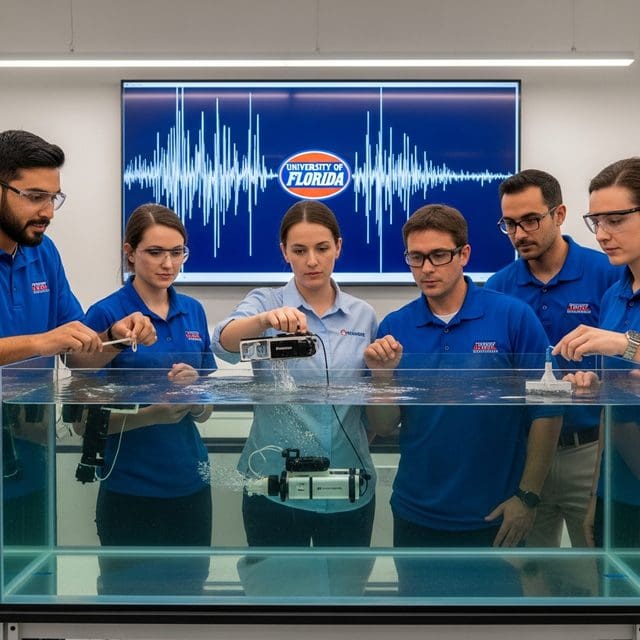
Institutional responses to this shift are becoming visible in high-tech research. At the University of Florida, engineering teams developed magnetoelectric antennas capable of underwater communication using a mere 10 watts of power. This breakthrough is not just an academic exercise; it represents a tangible advancement for maritime robotics. By addressing the ocean as a wireless dead zone, Florida researchers are proving that the most valuable human capital is that which can be applied to the physical challenges of the global economy.
In Japan, Hiroshima University is redefining the doctoral experience through its Global Doctoral Fellowship, recruiting for its October 2026 intake. By offering a monthly salary and dedicated research funds, the program treats PhD candidates as professional researchers rather than perpetual students. This model aligns with university research suggesting that scholarly independence is a long-term journey rather than a status automatically conferred upon graduation. The fellowship explicitly asks applicants to show a commitment to contributing to science and innovation systems post-graduation, a clear nod to the necessity of aligning advanced degrees with national economic goals.
Domestic policy is also reinforcing this move toward early-career stability. The Department of Energy’s 2026 Early Career Research Program, which closed applications on June 2, is set to distribute up to $145 million in total funding. For universities, this provides grants of approximately $875,000 over five years to support the next generation of scientists. This investment suggests a move away from top-down mandates and toward empowering individual researchers to drive innovation in energy and physics.
Local governance reflects a similar preference for private-sector experience. In Strongsville, Ohio, the school board recently appointed Timothy A. Helms, a manufacturing manager, to fill a vacant seat. Bringing a background in production to a school board highlights a desire for leadership that understands the technical needs of the modern workforce. This shift suggests that parents are looking for leaders who view K-12 education as a foundation for the trades and industry rather than just a pipeline for four-year liberal arts degrees.
While some institutions focus on the future, others are being reminded of the cultural weight of traditional education. Newly unearthed photographs from West Heath Girls’ School, featuring a young Princess Diana and actress Tilda Swinton, recall the historical role of private education in social formation. However, for today’s students, the focus is less on social pedigree and more on financial viability. Jianzhi Education’s recent $5 million direct offering at $0.73 per share underscores the ongoing capital requirements of the educational technology sector as it struggles in a volatile market.
Ultimately, the trend points toward a more disciplined approach to human capital. Whether it is Florida International University advancing hurricane resilience research or NASA astronaut Andrew Morgan retiring after a 12-year career to make room for new talent, the message is clear: the modern educational landscape demands personal responsibility, market-aligned achievement, and a rejection of the bureaucratic inertia that has long hindered upward mobility.
Daniel Owens serves as a Senior Correspondent for Just Right News, where he leads the newsroom’s coverage of Education, Workforce, and Upward Mobility. In an era where the national conversation often overlooks the practical foundations of success, Owens brings a principled perspective to the forefront of the media landscape. His work is defined by a commitment to the idea that a strong society is built on the pillars of quality education, a robust work ethic, and the removal of bureaucratic barriers to individual achievement.
Born and raised in Cleveland, Ohio, Owens’s worldview was shaped by the industrial landscape of the Midwest. Growing up in a city known for its grit and resilience, he witnessed firsthand the transformative power of steady employment and the devastating effects of economic stagnation. This background instilled in him a deep respect for the American worker and a healthy skepticism toward top-down government solutions that often fail to reach the communities they intend to help. As an African American man who has navigated the path to professional success, Owens approaches his beat with a nuanced understanding of how meritocracy and personal responsibility intersect with opportunity. He frequently draws on his roots to highlight the importance of family stability and community-led initiatives in fostering the next generation of leaders.
At Just Right News, Owens is the architect of the acclaimed feature series, “The Learning Curve.” Through this platform, he explores the evolving landscape of American schooling, from the rise of the school choice movement to the revitalization of trade schools and vocational training. He frequently challenges the status quo of higher education, advocating for a return to academic rigor and the practical alignment of degrees with market demands. For Owens, education is not merely about obtaining credentials; it is about equipping young people with the tools necessary to lead self-sufficient, meaningful lives. His reporting on “The Learning Curve” has become essential reading for parents and policymakers who believe that educational competition and parental rights are the keys to a brighter future.
Now based in Raleigh, North Carolina, Owens finds himself at the heart of one of the nation’s most dynamic regions for innovation and growth. Raleigh’s unique blend of traditional values and a fast-paced economy provides the perfect backdrop for his reporting on the modern workforce. From the tech hubs of the Research Triangle to the rural communities of the South, he tracks how shifts in the economy are impacting families and local industries. His reporting often highlights the success stories of entrepreneurs and workers who are thriving by embracing the values of hard work and innovation.
Throughout his career, Daniel Owens has remained a steadfast voice for the student seeking a better path and the worker striving for a better life. His reporting for Just Right News serves as a vital resource for readers who value common-sense solutions to the challenges of the 21st-century economy. By focusing on the intersection of policy and the human spirit, Owens continues to provide a roadmap for how individuals and communities can achieve lasting upward mobility.