

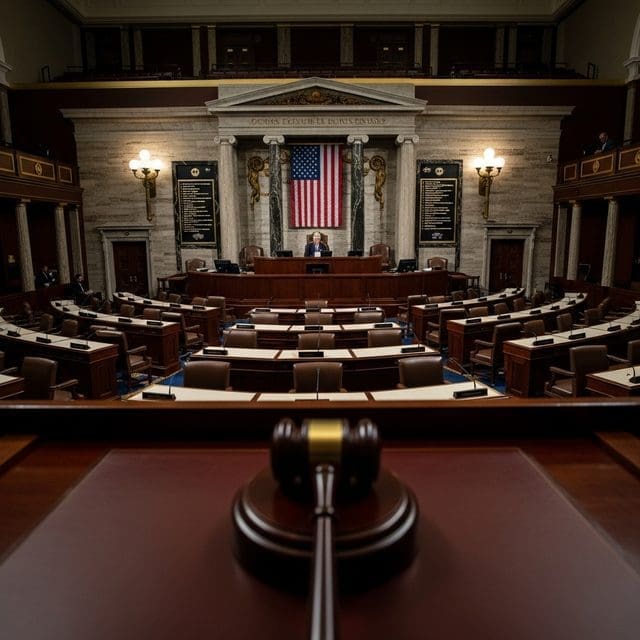
The U.S. Senate moved closer to confirming Kevin Warsh as Federal Reserve Chair, signaling a shift toward fiscal discipline and a potential restructuring of the central bank’s balance sheet and cryptographic reporting standards.
The architecture of American monetary policy faces its most significant structural pivot in a generation as the U.S. Senate advances the confirmation of Kevin Warsh to the Federal Reserve Board of Governors. In a 49-44 cloture vote, lawmakers signaled a clear mandate for a new era of central banking characterized by a commitment to a leaner balance sheet and the preservation of institutional independence from executive pressure.
Warsh, a former Fed governor and a vocal advocate for meritocratic fiscal frameworks, is expected to assume the chairmanship before the expiration of Jerome Powell’s current term. While Powell intends to remain on the Board of Governors until 2028, the transition marks a definitive shift in the engineering of the nation’s monetary plumbing. Warsh has specifically cautioned against the risks of rapid monetary easing, favoring a protocol that prioritizes long-term stability over short-term political expediency.
This transition arrives at a moment of heightened geopolitical and technical scrutiny. International observers have raised concerns regarding the potential politicization of U.S. dollar swap lines—the critical liquidity conduits between central banks. A Warsh-led Fed is expected to reinforce the technical requirements of these arrangements, ensuring they remain tools of global stability rather than instruments of diplomatic leverage. This focus on the integrity of the dollar’s infrastructure aligns with Warsh’s broader philosophy of reducing the central bank’s footprint in private markets.
Simultaneously, the Senate Banking Committee is reviewing the CLARITY Act draft, a legislative framework aimed at defining the cryptographic and reporting standards for digital assets. While market participants often focus on price volatility, the underlying decentralized engineering and the integration of these assets into the broader financial system remain key points of contention. The advancement of the CLARITY Act suggests a move toward a more rigid, rule-based environment for digital ledger technologies, moving away from the ad-hoc regulatory approach of previous years.
The shift in leadership is already impacting the projected trajectory of the federal funds rate. Data from the CME FedWatch Tool indicates that the probability of rate cuts for 2026 and 2027 has plummeted. Instead, the technical consensus is coalescing around a target range of 3.50% to 3.75%, with an increasing likelihood of rate hikes in the coming year to combat persistent inflationary pressures exacerbated by rising energy costs and maritime disruptions in the Strait of Hormuz.
For the American taxpayer, the Warsh nomination represents a potential return to sound money principles. By advocating for a reduction in the Fed’s massive asset holdings, Warsh aims to decouple the central bank from its role as a primary actor in credit allocation. This strategy seeks to restore a market-driven interest rate environment, where capital is distributed based on merit and productivity rather than centralized planning and liquidity injections.

Jordan Lee serves as the Senior Correspondent for Wall Street, Finance, and Monetary Systems at Just Right News. Based in the heart of the world’s financial capital, New York City, Lee brings a sharp, principled eye to the complex mechanisms that drive the global economy. His reporting is defined by a commitment to fiscal responsibility, the defense of the free market, and a deep-seated belief that a transparent monetary system is the bedrock of a free society.
Raised in Portland, Oregon, Lee’s perspective was forged in a city that has undergone significant cultural and economic shifts. His upbringing in the Pacific Northwest instilled in him a profound appreciation for the industriousness of small business owners and the importance of local economic stability. Watching the evolution of his hometown’s landscape sparked an early interest in how federal fiscal policy and large-scale financial trends eventually trickle down to the average citizen. This background provides him with a unique vantage point; he understands the growing disconnect between the policy-making elite and the reality of Main Street, a theme that frequently resonates throughout his work.
Now operating from his base in New York City, Lee bridges the gap between the high-stakes trading floors of Manhattan and the households of everyday Americans. He views the financial sector not merely as a collection of numbers and tickers, but as a vital engine of American prosperity that requires constant vigilance and accountability. His reporting often highlights the dangers of centralized financial control and the necessity of maintaining a system that rewards merit, risk-taking, and innovation.
As the creator and lead of the featured series, “The Invisible Economy,” Lee pulls back the curtain on the often-opaque world of monetary systems. He specializes in translating the dense jargon of central banking and international finance into actionable insights for the Just Right News audience. His work explores the “invisible” forces—such as inflationary pressures, regulatory creep, and the expansion of the administrative state—that erode the purchasing power of American families. By focusing on these systemic issues, Lee empowers readers to understand the hidden forces shaping their financial independence.
Lee’s journalistic philosophy is rooted in a steadfast commitment to traditional American values. As an Asian American professional who has navigated the competitive corridors of the financial world, he is a vocal advocate for meritocracy and the preservation of the American Dream. He believes that a stable currency and a predictable regulatory environment are essential for national sovereignty and individual liberty. His reporting frequently warns against the risks of government overreach in the private sector, arguing that the most effective solutions to economic challenges arise from competition and individual enterprise rather than bureaucratic mandates.
At Just Right News, Jordan Lee remains dedicated to providing a clear-eyed defense of the taxpayer. Whether he is analyzing market volatility or investigating the long-term implications of national debt, his mission is to provide the truth about where the money is going and what it means for the future of the country. Through his rigorous analysis and principled stance, Lee has become a trusted voice for those who value a strong, sovereign, and fiscally sound America.