

Recent Supreme Court decisions and executive interventions in federal agencies are fundamentally altering the structural foundations of the upcoming midterm elections and national security infrastructure.
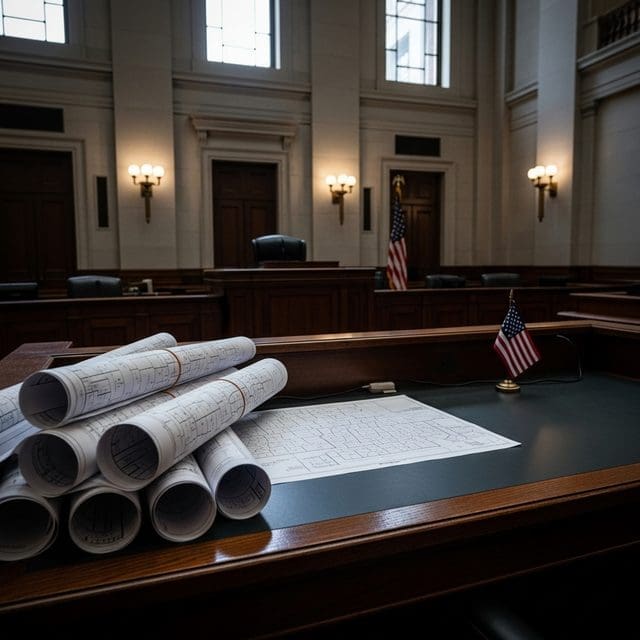
The structural framework of the 2026 midterm elections has undergone a significant shift following two pivotal Supreme Court rulings. In late April and early May, the Court issued decisions that have provided the Republican Party with expanded room to maneuver in congressional map-drawing. A 6-3 ruling on April 27 upheld a Texas map favorable to the GOP, while a subsequent decision in Louisiana v. Callais limited the application of race-based metrics in redistricting. These legal precedents are now being applied in Alabama, Tennessee, and South Carolina, where efforts are underway to implement maps that may eliminate several majority-minority districts.
Beyond the ballot box, the administration’s focus on institutional reform has extended to the National Science Foundation (NSF). Over 2,500 scientists have issued a formal warning to Congress regarding the dismissal of NSF board members and a slowed pace of research grants. This administrative friction comes at a critical juncture for American technological primacy. While data from the Stanford HAI report indicates that U.S.-based Anthropic’s Claude Opus 4.6 maintains a narrow lead over Chinese AI competitors, experts warn that disruptions to the federal research apparatus could erode this edge as China continues to narrow the gap.
Foreign policy and domestic governance are further intersecting as President Trump prepares for a high-stakes summit with President Xi Jinping in Beijing this week. Ahead of these talks, the administration has delayed scheduled arms sales to Taiwan, a move that signals a tactical shift in diplomatic leverage. The summit is expected to address not only trade and Taiwan but also the deteriorating situation with Iran. Following Iran’s rejection of U.S. peace terms and its demand for war reparations and sovereignty over the Strait of Hormuz, the President has characterized the current ceasefire as being on life support.
In the Midwest, the integrity of party labels is facing scrutiny in Nebraska’s primary contests. Democratic candidate Bill Forbes has faced accusations of acting as a Republican decoy after records revealed multiple past votes for Donald Trump and a refusal to align with party leadership. Such anomalies in the primary process, combined with the broader redistricting shifts, suggest a midterm cycle defined less by traditional platform debates and more by the fundamental mechanics of representation and institutional control.
As the administration pursues a $72 billion immigration enforcement package and manages ongoing infrastructure costs—including a revised $13.1 million for the Lincoln Memorial Reflecting Pool—the role of the civil service remains a point of contention. Efforts to reorganize federally funded media outlets and the issuance of subpoenas to journalists regarding military deliberations indicate a robust executive approach to administrative oversight. For the American voter, these developments underscore a period of significant transition in how the constitutional framework is interpreted and managed by the current administration.

Sophie Carter serves as a Staff Writer for Just Right News, where she anchors the outlet’s critical coverage of Elections, Influence, and Democracy Infrastructure. In an era where the mechanics of voting and the flow of political capital are under constant scrutiny, Sophie provides a steady, principled voice dedicated to the preservation of American institutional integrity and the rule of law.
Raised in Charlotte, North Carolina, Sophie’s perspective was forged in a community that balances rapid modern growth with a deep respect for tradition and civic duty. Growing up in the Queen City, she witnessed firsthand how a robust local culture depends on the trust between the citizen and the state. This upbringing instilled in her a foundational belief that the right to vote is a sacred trust—one that must be protected from both administrative overreach and the encroaching influence of special interest groups. Her reporting reflects these North Carolina roots, emphasizing the importance of community-led governance and the preservation of the individual’s voice in the face of nationalized political movements.
Now based in Atlanta, Georgia, Sophie operates from the heart of one of the nation’s most pivotal and contested political landscapes. Her location allows her to report from the front lines of the debate over election security, legislative reform, and the modernization of voting systems. For Sophie, the “infrastructure” of democracy is not merely a matter of machines and ballots; it is the collection of laws, people, and transparent processes required to maintain public confidence. Her work often highlights the necessity of clear, enforceable standards that ensure every legal vote is counted fairly and that the machinery of our republic remains accountable to the taxpayers who fund it.
Central to her work at Just Right News is her acclaimed feature series, “The Price of a Vote.” Through this ongoing project, Sophie explores the complex web of influence that shapes modern campaigns and policy decisions. She delves into how high-level lobbying, non-governmental organizations, and shifting bureaucratic regulations impact the weight of an individual citizen’s ballot. By examining the financial and structural pressures placed on the electoral process, she provides readers with a comprehensive look at the forces vying for control over the American political system.
Sophie’s approach to journalism is rooted in a commitment to the constitutional framework. She views her role as a watchdog for the voter, ensuring that the systems meant to serve the public remain transparent and free from corruption. Whether she is analyzing the implementation of new voting technologies or investigating the influence of outside money on state-level policy, her work is characterized by a rigorous adherence to facts and a refusal to succumb to the sensationalism that often plagues modern political reporting.
At Just Right News, Sophie Carter continues to be a vital resource for readers who value clarity, conviction, and a defense of traditional American values. Her deep ties to the Southeast and her specialized focus on the mechanics of our republic make her an essential voice in the ongoing conversation about the future of American self-governance. Through her reporting, she remains dedicated to the idea that a secure and honest electoral system is the bedrock of a free and prosperous society.