

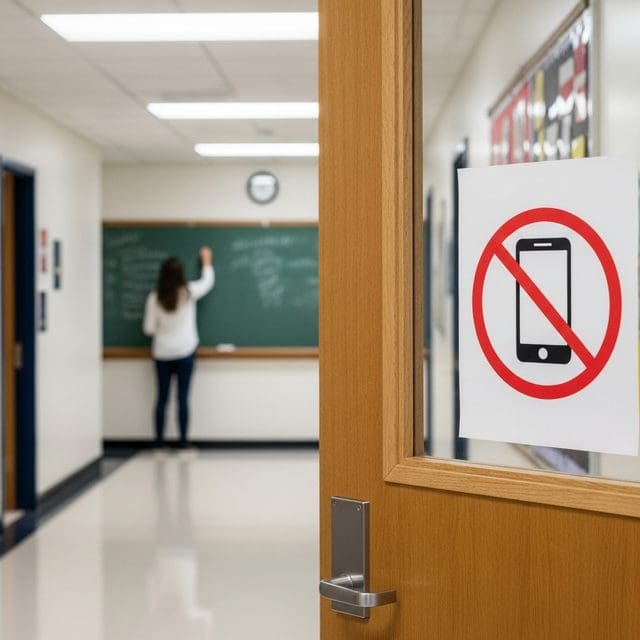
Legislatures across 35 states and the District of Columbia are reclaiming classrooms from digital distractions, implementing strict new standards for mobile devices and screen time for the 2026-27 school year.
The movement to restore the sanctity of the American classroom is gaining significant momentum as state legislatures assert their authority over educational standards. By May 2026, the number of states enacting K-12 phone bans or significant restrictions has climbed to 35, plus the District of Columbia. This rapid legislative shift represents a robust exercise of the Tenth Amendment, as states move to fill a policy vacuum with localized solutions tailored to their communities.
In California, the push for digital reform has moved beyond mere suggestions. Following the 2024 Phone-Free Schools Act, a bipartisan bill introduced in April 2026 seeks to mandate “bell-to-bell” phone bans to resolve compliance disputes ahead of a July deadline. Local districts are already testing the limits of these mandates; the Los Angeles Unified School District recently approved comprehensive screen time limits for the 2026-27 school year, which include a total ban on devices for students below the second grade and strict daily caps for older pupils.
Michigan and New Jersey have joined this vanguard of reform. Governor Gretchen Whitmer signed legislation in February 2026 requiring all districts to implement phone bans during instructional time by the upcoming academic year. Similarly, New Jersey Governor Phil Murphy enacted a bell-to-bell ban in January, directing the state Department of Education to provide specific guidelines for implementation. These actions reflect a growing consensus among state leaders that the educational environment must be protected from the pervasive influence of Silicon Valley.
The policy laboratory of the states is also producing innovative approaches to elementary education. Five states—Alabama, Utah, Missouri, Kansas, and Tennessee—have passed specific caps on screen time for elementary students this year. Utah’s HB 273 is particularly noteworthy, as it tasks state officials with developing model policies by December 2026, providing a blueprint that other states are already beginning to study and replicate.
While these mandates face some resistance from parent groups concerned about emergency contact, the legislative trend suggests a return to traditional educational priorities. By bypassing federal gridlock and implementing these changes at the state and local levels, governors and legislators are demonstrating that decentralized governance remains the most effective tool for addressing the cultural and developmental challenges facing the next generation of Americans.

Dylan Brooks serves as the Senior Correspondent for Statehouses and Local Governance at Just Right News, where he brings a principled, constitutionalist lens to the often-overlooked machinery of state-level politics. As the lead voice behind the acclaimed feature series “Fifty Laboratories of Power,” Dylan has dedicated his career to the idea that the most impactful governance happens closest to home. His reporting consistently champions the Tenth Amendment, exploring how individual states can serve as testing grounds for innovative, conservative policy solutions that prioritize personal liberty and fiscal responsibility.
A native of Des Moines, Iowa, Dylan’s journalistic philosophy was forged in the heart of the American Midwest. Growing up in a community where local school board meetings and town halls were the bedrock of civic life, he developed a deep appreciation for the “retail politics” of the heartland. This upbringing instilled in him a fundamental belief that the American experiment is best preserved when power is decentralized. He carries the values of his Iowa roots into every assignment, maintaining a healthy skepticism of federal overreach and a steadfast commitment to the concerns of everyday citizens over the interests of the administrative state.
Now based in Madison, Wisconsin, Dylan operates from one of the nation’s most pivotal political battlegrounds. His location in a state capital known for its rigorous policy debates allows him to provide Just Right News readers with a front-row seat to the legislative process. From Madison, he tracks the ripple effects of statehouse decisions on local municipalities, ensuring that the connection between high-level policy and community impact is never lost. His work often highlights the success of conservative governors and legislatures in fostering economic growth, protecting parental rights, and securing the integrity of local institutions.
As an African American man in the conservative media landscape, Dylan offers a vital perspective on how limited government and free-market principles empower individuals and families. He frequently reports on how deregulation and school choice initiatives provide new avenues for success in underserved communities, challenging the monolithic narratives often presented by legacy media outlets. Dylan’s work is characterized by a commitment to the facts and a refusal to shy away from the complex realities of modern governance.
Throughout his tenure at Just Right News, Dylan has become a trusted authority for readers who value a rigorous, principled approach to the news. Whether he is dissecting a complex state budget or profiling a local grassroots movement, his goal remains the same: to provide the American public with the information they need to hold their local leaders accountable. By focusing on the “Fifty Laboratories of Power,” Dylan Brooks ensures that the vital work being done in statehouses across the country receives the national attention it deserves, always through a lens that respects the traditions and sovereignty of the American people.