

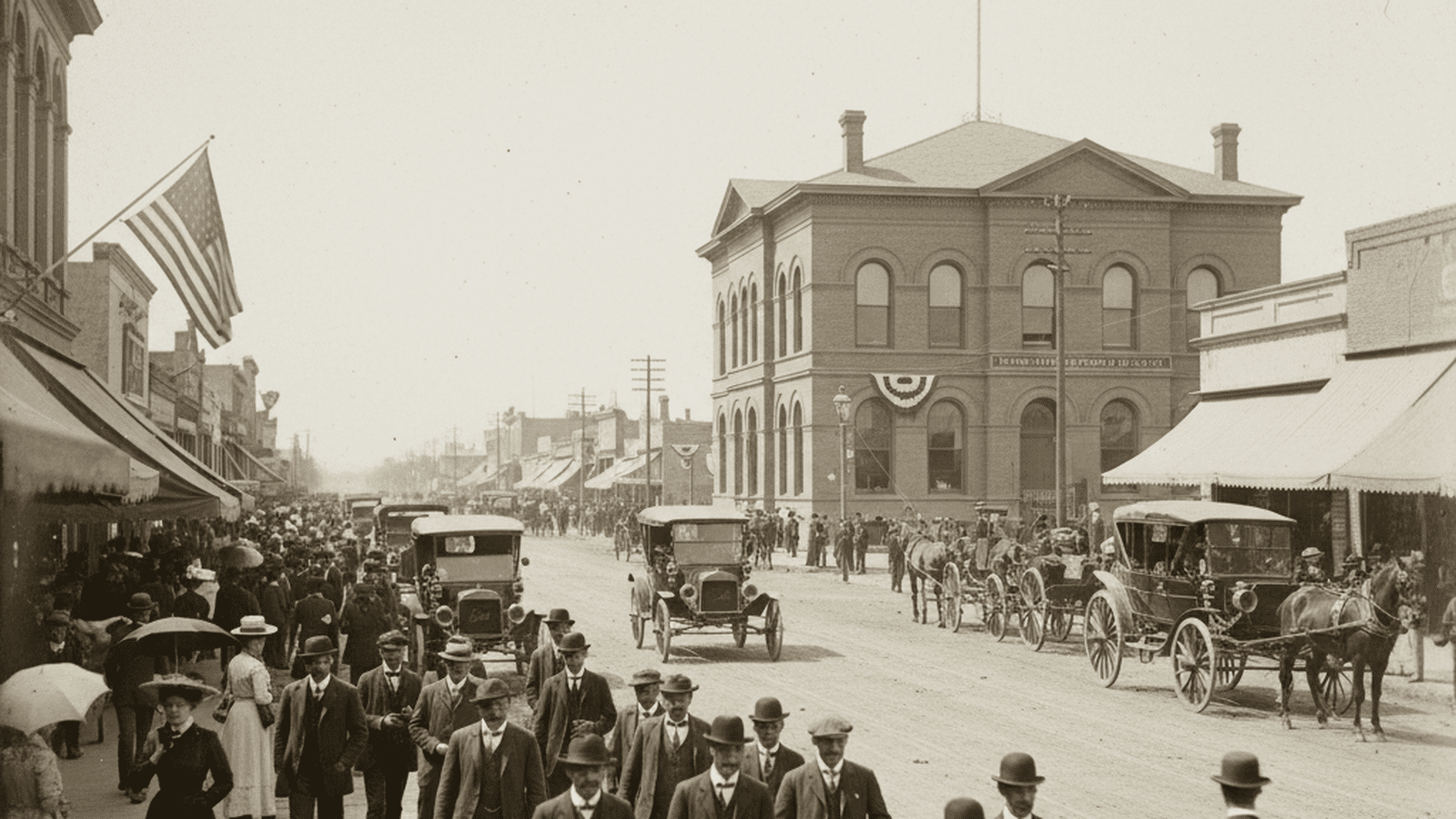
In 1911, Arizona’s bid for United States statehood was delayed when President William Howard Taft vetoed the state’s constitution over a provision allowing for the recall of judges. After removing the clause to gain admission in 1912, Arizona voters immediately restored the measure through a constitutional amendment.
TLDR: Arizona’s 1912 entry into the United States was marked by a fierce constitutional battle over judicial recall. President Taft forced the removal of the direct democracy measure as a condition for statehood, but defiant Arizona voters reinstated the provision just months after joining the Union.
The struggle for Arizona’s admission into the United States during the Progressive Era serves as a primary example of the tension between Western populism and federal institutionalism. In 1910, Congress passed the Enabling Act, allowing the Arizona Territory to draft a state constitution. The resulting document, crafted by delegates in Phoenix, was a manifesto of direct democracy. It included provisions for the initiative, referendum, and the recall of all elective officers, including members of the judiciary. This last provision sparked a national controversy that reached the highest levels of the federal government.
The delegates at the 1910 convention were heavily influenced by the labor movement and the Farmers’ Alliance. They sought to create a government that was directly responsive to the people, bypassing the perceived corruption of territorial legislatures and corporate interests. By including the judicial recall, they intended to ensure that judges who favored powerful railroad or mining interests over the common citizen could be removed by a popular vote. This radical departure from the traditional life-tenure or fixed-term models used in other states alarmed the political establishment in Washington D.C.
President William Howard Taft, a conservative legalist who would later serve as Chief Justice of the Supreme Court, viewed the judicial recall as an existential threat to the American legal system. He argued that if judges were subject to the whims of popular opinion, the independence of the courts would be destroyed. Taft believed that the judiciary should remain insulated from political pressures to ensure the fair application of the law. In his veto message of August 15, 1911, Taft described the provision as pernicious and warned that it would lead to legalized terrorism by the majority against the minority.
The veto placed Arizona leaders in a difficult position. They had campaigned for years for statehood, yet the core of their political identity was tied to these Progressive reforms. George W.P. Hunt, who would become the state’s first governor, and other leaders recognized that statehood was the immediate priority. They organized a campaign to convince voters to temporarily strip the recall provision from the constitution to satisfy the President’s demands. This was presented not as a surrender, but as a tactical retreat.
On December 12, 1911, Arizona voters approved the removal of the judicial recall clause. With the offending language gone, Taft signed the proclamation admitting Arizona as the 48th state on February 14, 1912. The celebration in Phoenix was massive, but the political maneuvering was far from over. The very leaders who had urged the removal of the clause were already planning its restoration. They argued that once Arizona was a sovereign state, the federal government no longer had the authority to dictate the contents of its constitution.
In the first general election held after statehood in November 1912, the judicial recall was placed back on the ballot as a constitutional amendment. The measure passed with an overwhelming majority, signaling a clear rebuke of federal interference in state governance. Arizona’s defiance demonstrated the strength of the Progressive movement in the Mountain West and established a precedent for state sovereignty over electoral processes. The legacy of this conflict persists in the structure of Arizona’s government. While the judicial recall is rarely invoked, its presence in the state constitution serves as a reminder of the era’s commitment to direct accountability. This historical episode also influenced the development of judicial selection and retention systems across the United States.

Sophie Carter serves as a Staff Writer for Just Right News, where she anchors the outlet’s critical coverage of Elections, Influence, and Democracy Infrastructure. In an era where the mechanics of voting and the flow of political capital are under constant scrutiny, Sophie provides a steady, principled voice dedicated to the preservation of American institutional integrity and the rule of law.
Raised in Charlotte, North Carolina, Sophie’s perspective was forged in a community that balances rapid modern growth with a deep respect for tradition and civic duty. Growing up in the Queen City, she witnessed firsthand how a robust local culture depends on the trust between the citizen and the state. This upbringing instilled in her a foundational belief that the right to vote is a sacred trust—one that must be protected from both administrative overreach and the encroaching influence of special interest groups. Her reporting reflects these North Carolina roots, emphasizing the importance of community-led governance and the preservation of the individual’s voice in the face of nationalized political movements.
Now based in Atlanta, Georgia, Sophie operates from the heart of one of the nation’s most pivotal and contested political landscapes. Her location allows her to report from the front lines of the debate over election security, legislative reform, and the modernization of voting systems. For Sophie, the “infrastructure” of democracy is not merely a matter of machines and ballots; it is the collection of laws, people, and transparent processes required to maintain public confidence. Her work often highlights the necessity of clear, enforceable standards that ensure every legal vote is counted fairly and that the machinery of our republic remains accountable to the taxpayers who fund it.
Central to her work at Just Right News is her acclaimed feature series, “The Price of a Vote.” Through this ongoing project, Sophie explores the complex web of influence that shapes modern campaigns and policy decisions. She delves into how high-level lobbying, non-governmental organizations, and shifting bureaucratic regulations impact the weight of an individual citizen’s ballot. By examining the financial and structural pressures placed on the electoral process, she provides readers with a comprehensive look at the forces vying for control over the American political system.
Sophie’s approach to journalism is rooted in a commitment to the constitutional framework. She views her role as a watchdog for the voter, ensuring that the systems meant to serve the public remain transparent and free from corruption. Whether she is analyzing the implementation of new voting technologies or investigating the influence of outside money on state-level policy, her work is characterized by a rigorous adherence to facts and a refusal to succumb to the sensationalism that often plagues modern political reporting.
At Just Right News, Sophie Carter continues to be a vital resource for readers who value clarity, conviction, and a defense of traditional American values. Her deep ties to the Southeast and her specialized focus on the mechanics of our republic make her an essential voice in the ongoing conversation about the future of American self-governance. Through her reporting, she remains dedicated to the idea that a secure and honest electoral system is the bedrock of a free and prosperous society.