

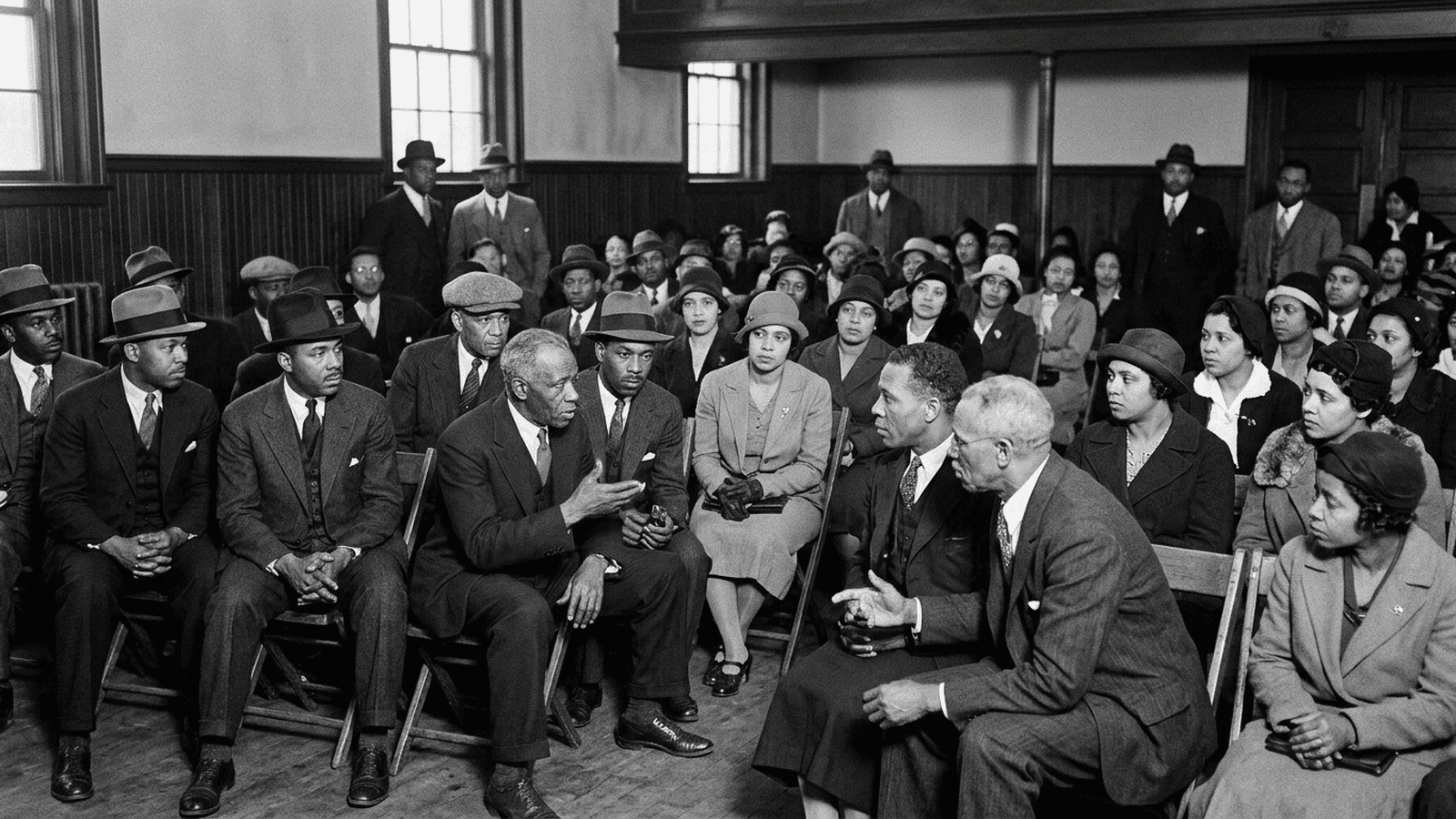
In 1935, Boston’s Black community and the local NAACP challenged unequal conditions and access in public schools, pressing the School Committee to answer for the effects of its decisions. The campaign was part of a longer civil-rights struggle in the United States, preceding later court battles over school desegregation.
TLDR: Boston activists, including the local NAACP, challenged unequal public-school conditions in 1935. Although the city had no statute formally requiring school segregation, assignments and administrative practices could still produce unequal opportunities. The campaign did not end discrimination, but it helped establish a longer local history of organizing for educational equality.
In 1935, Black parents and civil-rights activists in Boston challenged unequal treatment in the city’s public schools. The campaign drew attention to a system that was formally open to all children but could still produce sharply different educational experiences through school assignments, overcrowding and unequal resources. It placed school access at the center of a broader local struggle for equal citizenship during the New Deal era.
The Boston branch of the National Association for the Advancement of Colored People (NAACP), led by community activists including attorney William H. Lewis, pressed school officials to address discrimination. Black families objected to conditions at schools serving predominantly Black neighborhoods and sought meaningful access to better-resourced schools. Their efforts relied on organizing, petitions and public pressure, tactics used by civil-rights groups well before the nationwide school battles of the 1950s and 1960s.
Boston’s school system did not operate under a state law formally requiring racial segregation. That distinction mattered: inequity could be maintained through practices that were harder to challenge than an explicit segregation statute. Neighborhood patterns, school boundaries and administrative decisions shaped who attended which schools. Activists argued that official neutrality did not erase the unequal outcomes experienced by Black pupils and families.
The campaign unfolded while President Franklin D. Roosevelt’s New Deal expanded the federal government’s role in economic relief and recovery. Yet New Deal programs and public institutions did not automatically dismantle racial discrimination. In New England, as elsewhere, Black residents confronted barriers in employment, housing and education, and local officials retained considerable authority over public schools. The Boston protest therefore raised a pointed political issue: whether a city could claim equal schooling when its practices left Black children with fewer opportunities.
Organizers sought changes from the Boston School Committee, the elected body responsible for overseeing the system. Their demands and public advocacy made school assignments and educational conditions matters of civic debate rather than private complaints. The protest also reflected the importance of Black-led organizations in pressing government bodies to account for the consequences of policy. Even without a court ruling or sweeping new statute, sustained community pressure could force officials to confront practices they might otherwise treat as routine administration.
The campaign’s significance should not be confused with the later, more widely documented Boston school desegregation struggle. In 1974, a federal court found that Boston authorities had intentionally maintained segregation and ordered remedies, sparking intense opposition. The 1935 activism did not produce that ruling or immediately end unequal schooling. It belongs instead to an earlier history of local organizing that challenged the gap between formal access and real conditions.
That history also complicates the idea that school desegregation began only with Brown v. Board of Education in 1954. Black Bostonians were identifying and contesting educational inequality decades earlier, using the tools available to them: community organizations, public protest and demands for administrative accountability. Their campaign made visible how local decisions could shape civil rights even when the law did not explicitly mandate segregation.
Later consequences came through continuing activism, stronger civil-rights enforcement and federal court oversight. The 1974 Boston ruling demonstrated that administrative choices could violate constitutional protections, while subsequent disputes over school assignment and access kept the issue in public life. The 1935 campaign did not resolve those conflicts, but it formed part of the longer record of Boston residents pressing public institutions to deliver equal treatment in practice, not merely in principle.

Daniel Owens serves as a Senior Correspondent for Just Right News, where he leads the newsroom’s coverage of Education, Workforce, and Upward Mobility. In an era where the national conversation often overlooks the practical foundations of success, Owens brings a principled perspective to the forefront of the media landscape. His work is defined by a commitment to the idea that a strong society is built on the pillars of quality education, a robust work ethic, and the removal of bureaucratic barriers to individual achievement.
Born and raised in Cleveland, Ohio, Owens’s worldview was shaped by the industrial landscape of the Midwest. Growing up in a city known for its grit and resilience, he witnessed firsthand the transformative power of steady employment and the devastating effects of economic stagnation. This background instilled in him a deep respect for the American worker and a healthy skepticism toward top-down government solutions that often fail to reach the communities they intend to help. As an African American man who has navigated the path to professional success, Owens approaches his beat with a nuanced understanding of how meritocracy and personal responsibility intersect with opportunity. He frequently draws on his roots to highlight the importance of family stability and community-led initiatives in fostering the next generation of leaders.
At Just Right News, Owens is the architect of the acclaimed feature series, “The Learning Curve.” Through this platform, he explores the evolving landscape of American schooling, from the rise of the school choice movement to the revitalization of trade schools and vocational training. He frequently challenges the status quo of higher education, advocating for a return to academic rigor and the practical alignment of degrees with market demands. For Owens, education is not merely about obtaining credentials; it is about equipping young people with the tools necessary to lead self-sufficient, meaningful lives. His reporting on “The Learning Curve” has become essential reading for parents and policymakers who believe that educational competition and parental rights are the keys to a brighter future.
Now based in Raleigh, North Carolina, Owens finds himself at the heart of one of the nation’s most dynamic regions for innovation and growth. Raleigh’s unique blend of traditional values and a fast-paced economy provides the perfect backdrop for his reporting on the modern workforce. From the tech hubs of the Research Triangle to the rural communities of the South, he tracks how shifts in the economy are impacting families and local industries. His reporting often highlights the success stories of entrepreneurs and workers who are thriving by embracing the values of hard work and innovation.
Throughout his career, Daniel Owens has remained a steadfast voice for the student seeking a better path and the worker striving for a better life. His reporting for Just Right News serves as a vital resource for readers who value common-sense solutions to the challenges of the 21st-century economy. By focusing on the intersection of policy and the human spirit, Owens continues to provide a roadmap for how individuals and communities can achieve lasting upward mobility.