

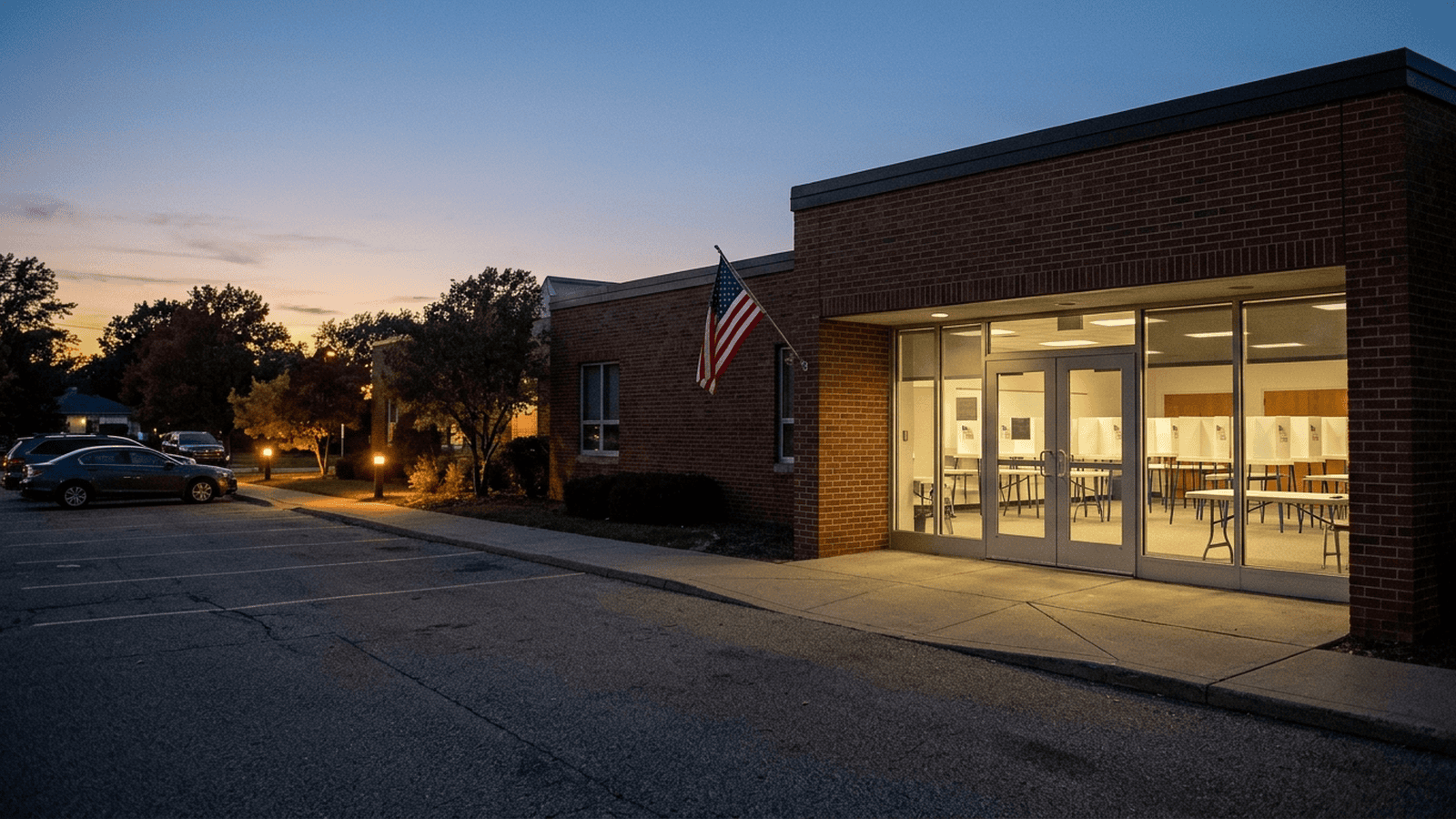
CBS News projects Democrat Abdul El-Sayed defeated Republican Mike Rogers in Michigan’s Senate race, retaining the seat for Democrats. The result would make El-Sayed the first Muslim elected to the U.S. Senate, according to the report. The campaign featured disputes over his progressive platform, his opposition to U.S. support for Israel, and accusations from Republican leaders that he denied. Former Democratic primary opponent Rep. Haley Stevens endorsed Rogers in the closing days, while Rogers and El-Sayed also clashed over foreign policy, national politics, and the president. The excerpt supplies no vote margin, certification schedule, or new policy requirements, so those details remain unreported.
TLDR: CBS News projects Abdul El-Sayed defeated Mike Rogers in Michigan, leaving Democrats with control of the Senate seat. The campaign was closely contested, but the report does not give a vote margin or say when results will be certified.
CBS News projects that Democrat Abdul El-Sayed defeated former Republican Rep. Mike Rogers in Michigan’s Senate race. The projected result keeps the seat in Democratic hands and makes El-Sayed the nation’s first Muslim elected to the Senate, according to the report. The contest was among the most contentious of the midterm elections.
No specific official rationale for a policy change appears in the report because this is an election result, not a policy announcement. The report says El-Sayed ran on a progressive platform and that the race centered on his record and views, the national political climate, and competing claims about his candidacy.
El-Sayed, 42, is a former Michigan health official. He defeated a more moderate opponent in the Democratic primary after Sen. Gary Peters chose not to seek reelection. That decision drew scrutiny from national Democrats, who questioned whether a progressive candidate could win in a state that had voted for President Trump twice.
The general-election campaign placed those doubts in public view. El-Sayed’s appeal among Jewish and Black voters was questioned late in the race, in part because of his opposition to U.S. support for Israel and his progressive platform. The report does not provide vote totals for the 2026 contest, so the projected outcome is not accompanied here by a margin.
Republican attacks became a prominent part of the campaign. President Trump and Texas Sen. Ted Cruz called El-Sayed a “jihadist” and associated him with the Muslim Brotherhood, while suggesting that his election could endanger Americans. Cruz said there was a risk Americans would die if his claim about El-Sayed’s support for the group was correct. Those were accusations made by political figures, not findings established in the report.
Trump invoked the September 11 attacks and Flight 93 in a message urging Michigan voters to oppose El-Sayed. El-Sayed denied the Muslim Brotherhood allegation in an interview with Fox News, saying he had never been a member and never would be. The exchange put questions of identity and national security near the center of a race that also involved the economy and foreign policy.
A dispute within the Democratic Party further complicated the closing days. Rep. Haley Stevens, El-Sayed’s former primary opponent, endorsed Rogers on Sunday. Stevens had called on El-Sayed to condemn an outside group’s advertisement that linked U.S. military aid to Israel with rising grocery prices. She described the ad as antisemitic. El-Sayed said the ad was not made by him and that he disagreed with its contents.
Stevens had been expected to attend a unity event with El-Sayed and Rep. Jim Clyburn. Instead, she appeared with Rogers at a Detroit church and announced her endorsement after the service. Stevens said she was not turning her back on Democrats, describing the endorsement as a decision about one vote and citing concerns about hate and El-Sayed’s association with streamer Hasan Piker. The report describes the political disagreement but does not establish that it changed the election result.
Rogers, 63, is an Army veteran and former FBI agent. He sought the seat after losing his 2024 Senate race against Elissa Slotkin by 20,000 votes. Rogers presented himself as a common-sense leader and criticized El-Sayed’s past comments and positions on Israel, Iran and the September 11 attacks, as well as his connection to Piker.
El-Sayed, in turn, portrayed Rogers as a rubber stamp for the president. Rogers tried to distance himself from the White House in the campaign’s final stretch. The report says Republicans faced a difficult political environment amid an unpopular war in Iran and high gas prices. It does not assign a precise share of the projected result to those conditions or to any campaign message.
The practical impact reported so far is political: the projection indicates that Democrats retain the Michigan Senate seat, and El-Sayed would become the first Muslim senator elected in the United States. No costs, new forms, compliance requirements, enforcement measures, or election-related deadlines are described in the excerpt. The report also gives no detailed vote count or schedule for any further review, so those details remain outside the information available here.
CBS News’ projection is the central result at this stage. The next steps and any oversight details are not specified in the report. The projection should therefore be understood as an attributed election call, not as a substitute for official certification or details that the excerpt does not provide.
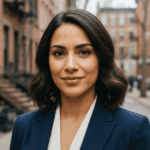
Chloe Foster serves as a Staff Writer for Just Right News, where she spearheads the outlet’s coverage of Media, Culture, and Information Integrity. In an era defined by rapid-fire digital communication and shifting societal norms, Chloe has distinguished herself as a vital voice for readers seeking clarity amidst the noise. Her signature feature series, “The Story Wars,” has become a cornerstone of the publication, offering a deep dive into the ideological battles currently shaping American life and the ways in which mainstream narratives are constructed, disseminated, and often manipulated.
Chloe’s unique perspective is informed by a life lived in two of the nation’s most influential cultural hubs. Raised in Los Angeles, California, she grew up in the shadow of the world’s most powerful media and entertainment apparatus. This upbringing provided her with a front-row seat to the “dream factory,” allowing her to observe firsthand how cultural exports are crafted and how they often diverge from the lived experiences of everyday Americans. Her time in Los Angeles instilled in her a healthy skepticism of manufactured consensus and a passion for uncovering the truths that lie beneath polished public relations campaigns.
Today, Chloe operates from Brooklyn, New York, a vantage point that places her at the epicenter of the modern media landscape. Living and working in a deep-blue urban environment as a conservative journalist has sharpened her reporting, requiring a rigorous commitment to intellectual honesty and a steadfast defense of traditional values. Her base in Brooklyn allows her to engage directly with the institutions and influencers who drive the national conversation, providing Just Right News readers with an “on-the-ground” look at the cultural shifts originating in the Northeast.
As a Hispanic woman, Chloe brings a nuanced understanding of community and heritage to her beat. She frequently explores how media portrayals of the Latino community often overlook the deep-seated faith, entrepreneurial spirit, and family-centric values that define it. Her work challenges the monolithic labels often applied by mainstream outlets, instead highlighting the diversity of thought and the conservative principles that resonate within her community.
In her role at Just Right News, Chloe views “Information Integrity” not merely as a buzzword, but as a mission. She believes that a healthy republic requires a media landscape where facts are prioritized over agendas and where the public is empowered to think for themselves. Through “The Story Wars,” she deconstructs the framing of major news events, exposing bias and providing the context necessary for readers to understand the broader cultural implications of the day’s headlines.
Chloe Foster’s reporting is more than just a collection of articles; it is a sustained effort to reclaim the narrative for those who feel sidelined by the prevailing media establishment. By bridging the gap between her West Coast roots and her East Coast base, she continues to provide essential commentary on the forces that define our shared American culture.