

U.S. diplomatic missions have issued new security alerts to Americans across the Middle East as Houthi attacks on Saudi Arabia escalate. The State Department says the warnings are a proactive effort to inform citizens and urges them to follow official guidance. The advisories call for vigilance and preparation for flight cancellations, airspace closures and other travel disruptions. They create no stated travel ban, fee, paperwork requirement or deadline, while existing restrictions on some diplomatic operations are described as temporary. The alerts follow a deadly Riyadh airport strike and further reported missile and drone threats, leaving Americans in the region with practical travel uncertainty and a need to monitor official updates.
TLDR: U.S. embassies across the Middle East are warning Americans that Houthi attacks could spread and disrupt travel. Officials urge vigilance and preparation for possible flight cancellations and airspace closures, but the alerts announce no new travel ban, fee, or deadline.
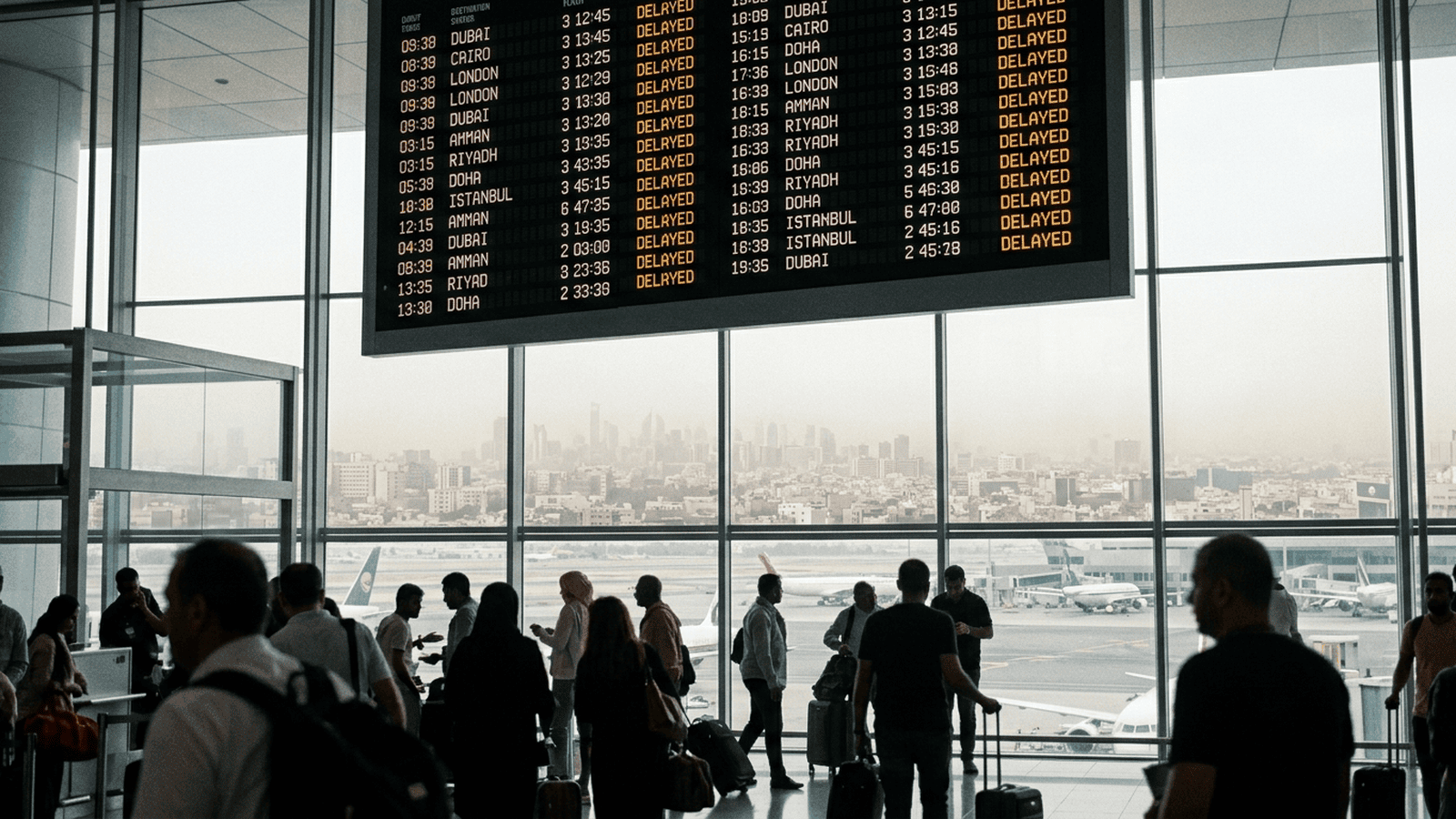
U.S. diplomatic missions across the Middle East have issued new security warnings to Americans as Iran-backed Houthi militants intensify attacks on Saudi Arabia. The advisories, issued Sunday by embassies in Saudi Arabia, Bahrain, Qatar, the United Arab Emirates and other countries, say hostilities could spread quickly and without warning beyond areas already affected by fighting. Americans were urged to stay alert and prepare for possible flight cancellations, airspace closures and other travel disruptions.
The notices reach Americans beyond the diplomatic posts themselves. They reflect a longstanding State Department policy requiring embassies to share security threat information with private American citizens when the same risks apply to U.S. diplomatic personnel. The department describes the rule as a “no double standard” policy.
The State Department says the alerts are a proactive effort to make Americans aware of potential risks. Department spokesman Edgar Vasquez told CBS News that officials are warning citizens about the Houthi threat and urging them to follow official guidance. He said the safety and security of American citizens remain the department’s top priority.
The warnings follow a deadly Oct. 10 strike on Riyadh’s international airport that killed an American citizen. Saudi authorities said the attack killed at least 13 people and injured more than 300. Houthi missile and drone attacks have also repeatedly targeted Riyadh’s King Khalid International Airport and oil facilities belonging to Saudi Aramco.
The attacks continued Tuesday. The Saudi-led coalition reported intercepting a Houthi ballistic missile aimed at Riyadh and a drone near the capital. Those incidents add to the uncertainty facing Americans in the region, where travel plans may be affected by sudden changes to flight schedules or airspace access.
The State Department has maintained restrictions on diplomatic operations in parts of the region since the United States and Israel went to war with Iran in February. Officials have said those restrictions are intended to be temporary and allow embassies to adjust staffing as security conditions change. The specific limits on embassy operations are not detailed in the available information.
The latest warnings put the information-sharing policy into practice by carrying official risk information beyond diplomatic posts and to Americans who may be living in or traveling through affected countries. They do not describe a new travel ban or a required form, fee, or compliance deadline for Americans. Instead, they advise vigilance and preparation for possible cancellations, airspace closures and other disruptions.
The direct impact falls on Americans in the region, particularly those whose travel depends on flights that could be canceled or rerouted. The advisories do not specify how many people are affected or how long the warnings will remain in place. They also do not set a stated deadline or announce a new enforcement measure. Embassy staffing restrictions are described as temporary and subject to adjustment as security conditions evolve.
The broader security picture remains unsettled. In Yemen, Houthi forces have continued to make territorial gains. A Houthi attack in Taiz on Tuesday killed two teenage girls, according to the excerpt, while a strike on a government military camp the previous day killed 73 recruits and wounded more than 200. Yemen’s government has sought expanded U.S. and international assistance, including intelligence sharing, air defenses and support for its coast guard. It has not asked Washington to deploy ground troops, according to its political adviser, Ambassador Marwan Ali Noman.
The administration has provided intelligence and targeting support to Saudi Arabia, while President Trump has not agreed to repeated requests from Crown Prince Mohammed bin Salman for direct U.S. military intervention. Trump has left open the possibility of joining airstrikes but has announced no decision. The administration also faces competing requests for air-defense weapons. Secretary of State Marco Rubio said Saudi Arabia and Israel are seeking additional American-made missile interceptors while Ukraine is also pressing for supplies.
For Americans in the region, the immediate practical steps are to heed the embassy alerts, remain vigilant and account for the possibility that flights or airspace access may change. Monitoring the alerts and changing conditions is necessary to understand what official guidance requires. The available information does not establish that the risks are under control.

Daniel Owens serves as a Senior Correspondent for Just Right News, where he leads the newsroom’s coverage of Education, Workforce, and Upward Mobility. In an era where the national conversation often overlooks the practical foundations of success, Owens brings a principled perspective to the forefront of the media landscape. His work is defined by a commitment to the idea that a strong society is built on the pillars of quality education, a robust work ethic, and the removal of bureaucratic barriers to individual achievement.
Born and raised in Cleveland, Ohio, Owens’s worldview was shaped by the industrial landscape of the Midwest. Growing up in a city known for its grit and resilience, he witnessed firsthand the transformative power of steady employment and the devastating effects of economic stagnation. This background instilled in him a deep respect for the American worker and a healthy skepticism toward top-down government solutions that often fail to reach the communities they intend to help. As an African American man who has navigated the path to professional success, Owens approaches his beat with a nuanced understanding of how meritocracy and personal responsibility intersect with opportunity. He frequently draws on his roots to highlight the importance of family stability and community-led initiatives in fostering the next generation of leaders.
At Just Right News, Owens is the architect of the acclaimed feature series, “The Learning Curve.” Through this platform, he explores the evolving landscape of American schooling, from the rise of the school choice movement to the revitalization of trade schools and vocational training. He frequently challenges the status quo of higher education, advocating for a return to academic rigor and the practical alignment of degrees with market demands. For Owens, education is not merely about obtaining credentials; it is about equipping young people with the tools necessary to lead self-sufficient, meaningful lives. His reporting on “The Learning Curve” has become essential reading for parents and policymakers who believe that educational competition and parental rights are the keys to a brighter future.
Now based in Raleigh, North Carolina, Owens finds himself at the heart of one of the nation’s most dynamic regions for innovation and growth. Raleigh’s unique blend of traditional values and a fast-paced economy provides the perfect backdrop for his reporting on the modern workforce. From the tech hubs of the Research Triangle to the rural communities of the South, he tracks how shifts in the economy are impacting families and local industries. His reporting often highlights the success stories of entrepreneurs and workers who are thriving by embracing the values of hard work and innovation.
Throughout his career, Daniel Owens has remained a steadfast voice for the student seeking a better path and the worker striving for a better life. His reporting for Just Right News serves as a vital resource for readers who value common-sense solutions to the challenges of the 21st-century economy. By focusing on the intersection of policy and the human spirit, Owens continues to provide a roadmap for how individuals and communities can achieve lasting upward mobility.