

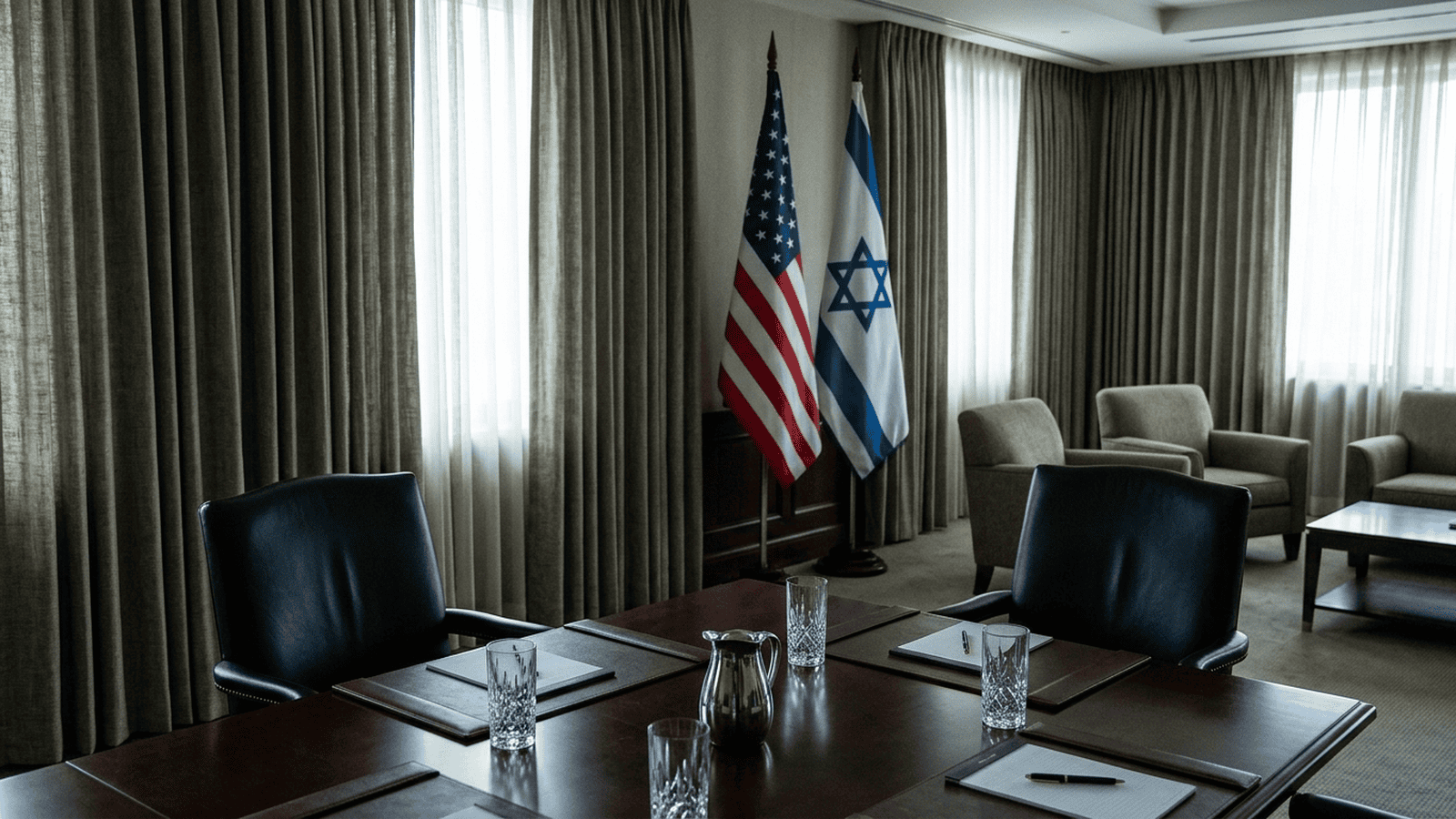
Defense Secretary Pete Hegseth met with Israeli Prime Minister Benjamin Netanyahu during an unannounced visit to Israel, just over a week before Netanyahu’s party faces an election. The visit comes as President Trump weighs whether to pursue a deal with Iran or resume military operations, with a decision possibly coming after the November U.S. midterms. No official purpose for Hegseth’s trip or details of the meeting’s agenda were provided. Netanyahu said Israel was not planning renewed strikes before the Oct. 27 election, while the administration has also urged Israel to ease strikes in Lebanon, address settler violence in the West Bank, and pursue a longer-term Gaza deal. The next public markers are the Israeli election and U.S. midterms.
TLDR: Hegseth’s meeting with Netanyahu came amid Israel’s approaching election and renewed discussion of U.S. options toward Iran. Officials have not publicly explained the visit’s purpose or disclosed whether it produced any decisions.
Defense Secretary Pete Hegseth visited Israel on Monday and met with Prime Minister Benjamin Netanyahu, according to a senior U.S. military official and a second source in Israel. The meeting was not announced publicly in advance. Its timing places it close to Israel’s elections and amid President Donald Trump’s comments about possible renewed military operations against Iran.
No official reason for Hegseth’s visit was stated in the available account. Hegseth confirmed that he was in the U.S. Central Command area on Monday, but did not identify his location or mention Israel in his post. The Pentagon declined to comment, and CBS News had contacted the Israeli government for comment.
The visit came just over a week before Netanyahu’s party faced an election. His Likud-led coalition is seeking to remain in power, while several more centrist parties are challenging it. One is led by Gadi Eisenkot, a former chief of staff of the Israel Defense Forces. Netanyahu is the longest-serving prime minister in Israel’s history, but the election leaves his government’s political future uncertain.
The meeting also comes as the U.S. president weighs what to do about Iran. Trump has said he is considering either reaching a deal with Iran’s leadership or taking far more severe military action. He has said a decision could come after the November U.S. midterm elections. The two countries have largely refrained from striking each other in recent weeks, but the possibility of renewed conflict remains part of the public discussion.
The recent history between the countries is significant. Israeli and U.S. forces jointly launched strikes against Iran in late February and worked closely early in the war. In June 2025, the United States struck three Iranian nuclear sites during a broader conflict between Israel and Iran. Those events provide context for Hegseth’s meeting, but the available account does not say that the visit involved plans for any new operation.
Netanyahu said last week that Israel was not planning to renew strikes against Iran before the Oct. 27 elections, adding that such action was “not convenient for us.” Trump endorsed Netanyahu on Sunday, calling him a “Great Warrior Prime Minister” and a partner for peace in confronting Iran. The endorsement underscores their close relationship, while the timing of the meeting and the differing public statements leave the precise agenda undisclosed.
The administration’s relationship with Israel has also included pressure on areas beyond Iran. During the spring and summer, it urged Israel to ease its strikes on Lebanon, where Hezbollah, an Iran-backed militant group, is based. The administration also encouraged Israel to crack down on settler violence in the West Bank and to reach a longer-term deal with Hamas in Gaza. These positions show that close ties have not prevented Washington from urging changes in Israeli policy.
The election calendar has been cited as one factor affecting diplomacy. Last month, Trump envoy Jared Kushner suggested that the Israeli election may have delayed progress in Gaza. He said the election could make Israeli leaders “a little irrational in certain regards.” The remark connected domestic politics with the pace of negotiations, though the account does not detail which specific steps were delayed or what progress was expected.
The practical impacts currently described are limited to the diplomatic and election timetable. Netanyahu’s party faces an election just over a week after the visit, and he said renewed strikes were not planned before the Oct. 27 vote. Trump has said his decision on Iran could come after the U.S. midterms in November. No fees, forms, new enforcement rules, compliance requirements, or formal deadlines for the Hegseth meeting were reported. The people directly involved are the U.S. and Israeli officials and the governments they represent; the visit’s agenda and any resulting commitments have not been made public.
Hegseth posted a photograph of himself addressing U.S. service members, describing them as being “on a historic mission,” but did not say where the image was taken. A senior U.S. military official spoke to CBS News anonymously because the official was not authorized to speak publicly. Another source in Israel confirmed the meeting. Those accounts establish that the visit occurred, while leaving its purpose and any decisions undisclosed.
The next visible steps are Israel’s Oct. 27 election and the U.S. midterms in November, alongside any public statements from the governments involved. The Pentagon declined to comment, and the Israeli government’s response was not included in the account. Further disclosure or official comment would clarify whether the meeting produced any policy decisions. Until then, the visit’s significance remains tied to its timing and to the unresolved choices surrounding Iran, Gaza, and regional security.

Sophie Carter serves as a Staff Writer for Just Right News, where she anchors the outlet’s critical coverage of Elections, Influence, and Democracy Infrastructure. In an era where the mechanics of voting and the flow of political capital are under constant scrutiny, Sophie provides a steady, principled voice dedicated to the preservation of American institutional integrity and the rule of law.
Raised in Charlotte, North Carolina, Sophie’s perspective was forged in a community that balances rapid modern growth with a deep respect for tradition and civic duty. Growing up in the Queen City, she witnessed firsthand how a robust local culture depends on the trust between the citizen and the state. This upbringing instilled in her a foundational belief that the right to vote is a sacred trust—one that must be protected from both administrative overreach and the encroaching influence of special interest groups. Her reporting reflects these North Carolina roots, emphasizing the importance of community-led governance and the preservation of the individual’s voice in the face of nationalized political movements.
Now based in Atlanta, Georgia, Sophie operates from the heart of one of the nation’s most pivotal and contested political landscapes. Her location allows her to report from the front lines of the debate over election security, legislative reform, and the modernization of voting systems. For Sophie, the “infrastructure” of democracy is not merely a matter of machines and ballots; it is the collection of laws, people, and transparent processes required to maintain public confidence. Her work often highlights the necessity of clear, enforceable standards that ensure every legal vote is counted fairly and that the machinery of our republic remains accountable to the taxpayers who fund it.
Central to her work at Just Right News is her acclaimed feature series, “The Price of a Vote.” Through this ongoing project, Sophie explores the complex web of influence that shapes modern campaigns and policy decisions. She delves into how high-level lobbying, non-governmental organizations, and shifting bureaucratic regulations impact the weight of an individual citizen’s ballot. By examining the financial and structural pressures placed on the electoral process, she provides readers with a comprehensive look at the forces vying for control over the American political system.
Sophie’s approach to journalism is rooted in a commitment to the constitutional framework. She views her role as a watchdog for the voter, ensuring that the systems meant to serve the public remain transparent and free from corruption. Whether she is analyzing the implementation of new voting technologies or investigating the influence of outside money on state-level policy, her work is characterized by a rigorous adherence to facts and a refusal to succumb to the sensationalism that often plagues modern political reporting.
At Just Right News, Sophie Carter continues to be a vital resource for readers who value clarity, conviction, and a defense of traditional American values. Her deep ties to the Southeast and her specialized focus on the mechanics of our republic make her an essential voice in the ongoing conversation about the future of American self-governance. Through her reporting, she remains dedicated to the idea that a secure and honest electoral system is the bedrock of a free and prosperous society.