

An Oct. 21 letter outlines AIPAC’s new election strategy: end endorsements and direct PAC giving while retaining the United Democracy Project, which can continue independent spending.
AIPAC is changing how it participates in elections, but the shift does not take its political operation out of the campaign finance system. In an Oct. 21 letter, the American Israel Public Affairs Committee said it would stop endorsing candidates, making direct political action committee contributions and earmarking donations for candidates. It will continue operating the United Democracy Project, its super PAC.
AIPAC said members would instead give directly to candidates. The change was reported by CNBC and NPR, which updated their coverage through Oct. 24. The disclosures describe a change in method: AIPAC’s own PAC will step back from several forms of direct candidate support, while an affiliated outside-spending operation remains in place.
That distinction matters for how political money appears in public records. Contributions made directly by individuals are reported under the donors’ names, rather than as contributions from AIPAC’s PAC. The United Democracy Project, meanwhile, can continue raising unlimited funds for independent spending, according to NPR’s account. Such spending is reported separately from direct contributions to candidates.
The letter does not, in the material available, provide a detailed account of how AIPAC expects the new arrangement to affect the amount or timing of spending. Nor does the source material establish that members will give at the same level as the organization’s previous direct contributions. Without the underlying letter text or verified figures from filings, claims about the scale of the shift would go beyond what has been documented here.
The change follows a 2026 election cycle in which AIPAC’s political activity drew scrutiny. NPR cited Federal Election Commission filings in describing the organization’s footprint through Sept. 30, but figures available for this report could not be independently matched to a cited filing and are not included. Verified filings could show how much activity came from AIPAC’s PAC, how much from the United Democracy Project, and how much was reported under individual donors’ names.
The distinction between direct giving and independent expenditures is central to understanding the announcement. Direct contributions are reported as support to a candidate or committee; independent spending is reported separately and is not a contribution to the campaign. The announcement changes AIPAC’s stated role in the first category, while leaving its super PAC in the second. The available reporting does not establish whether any particular donor will shift from giving through AIPAC to giving personally, or whether the total amount of political support will rise or fall.
A separate headline from The Lever described an investigation into AIPAC spending through other groups, including organizations associated with women, reproductive rights and Latino candidates. The available summary does not provide the underlying records, named entities or transaction details needed to assess that reporting independently. It cannot establish how those alleged channels relate to the policy change announced in the Oct. 21 letter.
For voters and watchdogs, the central questions are where money originates, which committee reports it, and whether spending is coordinated with a campaign or conducted independently. The new policy leaves a route for independent spending open while encouraging individual contributions that will be disclosed under donors’ names.
The announcement supplies a clear organizational commitment, but not a complete accounting of what comes next. AIPAC’s future filings and the United Democracy Project’s reports will show whether the policy changes the volume of political support, its route through the campaign finance system, or mainly the name attached to each transaction. Reviewing those disclosures over time will be necessary to distinguish a change in public-facing practices from a broader change in political spending.
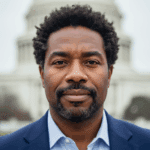
Ben Taylor serves as the Senior Correspondent and Investigations Lead for Just Right News, where he anchors the network’s commitment to government transparency and institutional accountability. With a career defined by a relentless pursuit of the facts, Taylor spearheads the acclaimed feature series “The Paper Trail,” a deep-dive investigative column that prioritizes primary source documentation over political rhetoric. Based in the heart of the nation’s capital, he has earned a reputation as one of the most formidable investigative journalists in Washington, D.C., known specifically for his mastery of public records and the Freedom of Information Act.
Taylor’s approach to journalism is deeply rooted in his upbringing in Kansas City, Missouri. Growing up in the “Show Me State,” he developed a healthy skepticism of centralized power and a profound respect for the common-sense values of the American heartland. This Midwestern foundation informs his reporting today, as he bridges the gap between the complex machinations of federal bureaucracy and the everyday concerns of citizens across the country. For Taylor, investigative reporting is not about chasing headlines; it is about ensuring that the government remains answerable to the people it serves.
As an African American man working within the conservative media landscape, Taylor brings a principled perspective to his beat. He views the Constitution and the right to information as the ultimate equalizers in a free society. His work often highlights how bureaucratic overreach and lack of transparency disproportionately affect individual liberties. By focusing on the “paper trail,” Taylor strips away the spin of partisan talking points, instead providing Just Right News readers with the raw data and internal communications that reveal how their tax dollars are spent and how policy decisions are actually made.
In his role as Investigations Lead, Taylor oversees a team dedicated to uncovering the stories that mainstream outlets often overlook. Whether he is auditing federal spending, investigating regulatory overreach, or exposing inefficiencies within the administrative state, his methodology remains consistent: follow the evidence wherever it leads. His presence in Washington, D.C., allows him to maintain a constant watch over the halls of power, yet he remains steadfastly connected to his roots, ensuring his reporting reflects the clarity and directness of his Missouri home.
Throughout his tenure at Just Right News, Taylor has become a vital voice for those who demand integrity in public office. He believes that a well-informed electorate is the strongest defense against government overreach, and he has dedicated his career to providing the public with the tools they need to hold their leaders accountable. Through “The Paper Trail” and his broader investigative work, Ben Taylor continues to set the standard for rigorous, document-driven journalism that champions the values of transparency, individual responsibility, and the rule of law.