

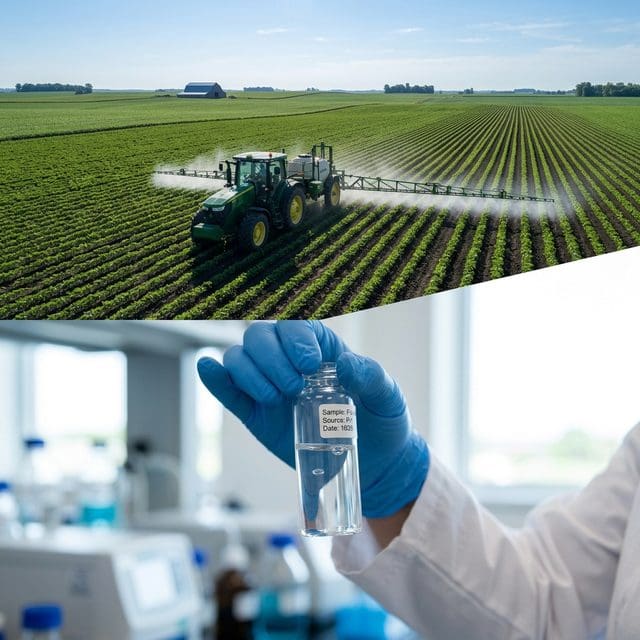
Recent outbreaks of E. coli and Listeria alongside new petitions for stricter pesticide limits highlight a growing gap between federal regulatory pace and the safety of the American food supply.
The American food supply is currently weathering a storm of contamination and regulatory scrutiny that highlights the fragility of the nation’s agricultural infrastructure. As of early October 2026, federal health officials are tracking 76 confirmed cases of Shiga toxin-producing E. coli and Salmonella Agona linked to alfalfa sprouts. The outbreak has reached 16 states and resulted in six hospitalizations, raising urgent questions about the efficacy of current inspection protocols for raw produce and the reliability of the domestic supply chain. The FDA is also managing a series of significant recalls, including Gias Foods’ 22-ounce bettergoods Authentic Italian Lemon Alfredo Fettuccine and an 8-ounce smoked seafood trio from Krasnyi Oktyabr USA, both of which were flagged for potential Listeria contamination.
Simultaneously, the dairy sector is facing its own localized crisis. New York’s Department of Agriculture recently issued a stern warning against consuming raw milk from Big Brook Farm in Oneida County. Routine testing detected Listeria monocytogenes, a pathogen that can cause severe illness or death in vulnerable populations. The farm is currently barred from sales pending clean follow-up samples, a move that underscores the persistent risks inherent in the raw milk market when local safety standards are not met. These incidents occur as the National Safety Council and OSHA form a new alliance to help employers identify high-risk hazards, though the focus remains heavily on industrial settings rather than the immediate biological threats in the food processing line.
Beyond bacterial contamination, a significant legal challenge has been leveled against the Environmental Protection Agency (EPA) and the Food and Drug Administration (FDA). On October 1, the Center for Biological Diversity filed a petition demanding a joint review of preharvest herbicide-desiccant risks. The petition specifically targets glyphosate, a common agricultural chemical used to dry out crops before harvest. Advocates are calling for a drastic reduction in glyphosate tolerance levels—from the current 30 parts per million (ppm) to just 0.05 ppm—for the most contaminated foods, arguing that current federal limits fail to protect the public from long-term residue exposure. This push for stricter limits comes as the Wisconsin Department of Natural Resources proposes its own groundwater standards for 22 additional pesticides, signaling that states are increasingly unwilling to wait for federal leadership on chemical safety.
While American regulators grapple with chemical tolerances, the global agricultural market is facing supply-side shocks that could eventually impact domestic prices. In Maharashtra, India, a severe drought has decimated crops in 31 of 36 districts. Rainfall deficits as high as 69% in Marathwada and 61% in Vidarbha have led to massive losses in soybean, cotton, bajra, and maize production. Sown area has plummeted to 47.5 lakh hectares in Vidarbha, leaving farmers in a state of desperation. The resulting economic strain has prompted political leaders like Sharad Pawar to call for immediate farm-loan waivers and direct financial aid of ₹50,000 per hectare to prevent a total collapse of the local agricultural economy. A formal crop-damage survey is scheduled for October 5, which will likely confirm the scale of the devastation.
These converging issues—from bacterial outbreaks in the U.S. to drought-driven crop failures abroad—demonstrate the need for a regulatory approach that prioritizes practical safety and local resilience over distant, centralized mandates. Whether through stricter monitoring of imported goods, the Water Well Trust’s new $3.5 million grant to secure rural water access, or more realistic chemical residue standards, the focus must remain on protecting the health and economic stability of the American family. As the EPA and FDA face increasing pressure to modernize their oversight, the balance between agricultural productivity and environmental health remains the most critical challenge for the coming year.

Eric Nolan serves as the Senior Correspondent for Food, Water, and Environmental Health at Just Right News, where he brings a principled, common-sense perspective to the most fundamental issues facing the American public. With a career dedicated to uncovering the truth behind the policies that govern our natural resources, Eric has become a trusted voice for readers who value traditional stewardship over bureaucratic overreach. His reporting is defined by a commitment to the idea that true environmentalism is rooted in the protection of the American family and the preservation of the nation’s agricultural heritage.
Raised in Fresno, California, Eric’s worldview was shaped in the heart of the San Joaquin Valley. Growing up in one of the world’s most productive agricultural hubs, he witnessed firsthand the vital connection between the land, the water, and the dinner table. In Fresno, he saw the resilience of farmers and the devastating impact that distant, top-down regulations can have on local communities. This upbringing instilled in him a deep respect for the producers who feed the country and a lifelong skepticism toward the alarmist narratives often pushed by mainstream media. For Eric, environmental health is not an abstract political talking point; it is a matter of ensuring that the people who work the land have the freedom and the resources to do so effectively.
Now based in Eugene, Oregon, Eric operates from a unique vantage point in the Pacific Northwest. Living in a region often defined by intense environmental debate, he provides a necessary counter-narrative to the prevailing trends of the area. From his base in Eugene, he monitors the shifting tides of federal and state policies, ensuring that the voices of rural citizens and property owners are not drowned out by urban activism. His reporting often bridges the gap between the rugged realities of the outdoors and the legislative halls where decisions are made, offering a grounded perspective that prioritizes local sovereignty and practical solutions.
As the lead for the acclaimed feature series “Earth on the Table,” Eric explores the intricate journey of the American food supply. He tackles critical issues such as water rights, soil health, and food security through a lens of national stability and individual liberty. He believes that a healthy environment and a thriving economy are not mutually exclusive, but rather two sides of the same coin of national prosperity. His work consistently highlights how innovation and private-sector ingenuity are the most effective tools for ensuring clean water and a safe food supply, rather than the expansion of the administrative state.
At Just Right News, Eric’s reporting serves as a vital resource for those who seek accountability and transparency. Whether he is investigating the impact of federal land management on local economies or examining the safety of the national food infrastructure, his work remains anchored in the values of heritage and hard work. Eric Nolan continues to be a leading voice in environmental journalism, championing the belief that the best way to protect our natural resources is to empower the people who live and work closest to them.