

The Trump administration has launched investigations into the Etiwanda School District and AMDA following allegations of severe antisemitic bullying and administrative negligence.
The Trump administration has formally initiated two separate federal civil rights investigations into the Etiwanda School District in California and the American Musical Dramatic Academy (AMDA) in New York. The Department of Education’s Office for Civil Rights (OCR) opened the probes following detailed complaints of antisemitic persecution and bullying. These investigations seek to determine if the educational institutions failed to protect Jewish students from a hostile environment, which would constitute a violation of Title VI of the Civil Rights Act of 1964.
According to records associated with the launch of the probes, the investigation into the Etiwanda School District stems from reports of severe verbal harassment. In one documented instance, a student was allegedly targeted with the phrase “shut her Jewish a— up,” reflecting a broader pattern of reported intimidation within the district. Similarly, the probe into AMDA, a prominent performing arts conservatory, follows allegations that Jewish students were subjected to targeted exclusion and derogatory rhetoric that went unaddressed by campus administrators.
The launch of these investigations coincides with a period of intense federal activity across multiple agencies. While the OCR focuses on campus conduct, other branches of the administration are navigating significant legal and legislative hurdles. On September 3, 2026, President Trump signed a stopgap government funding bill into law, extending federal operations through December 11, 2026. This legislative move ensures that agencies like the Department of Education remain funded as they pursue these high-profile civil rights cases.
However, the administration’s broader policy agenda has faced recent resistance in the courts. On September 2, 2026, a federal judge in Maryland blocked an executive order that sought to restrict birthright citizenship, a cornerstone of the administration’s immigration platform. Just one day later, a federal judge temporarily blocked an effort to overturn California’s clean car rules through Congress, a move that the administration had championed to standardize automotive regulations nationally. These judicial rulings highlight the friction between executive mandates and the federal court system.
In the realm of public safety and health, the administration is also monitoring data from the U.S. Center for SafeSport, which reported a 125% increase in traffic to its Centralized Disciplinary Database as of September 3. This surge followed the implementation of weekly updates regarding adults banned or restricted from sports due to misconduct. Simultaneously, an analysis by HaloMD released the same day found that the No Surprises Act has successfully reduced out-of-network emergency medical spending by as much as 52%, resulting in nearly $1 billion in annual savings. These metrics provide a backdrop of increased transparency and consumer protection that the administration continues to cite as evidence of effective governance.
For the Etiwanda School District and AMDA, the federal probes will necessitate a thorough review of internal documents, including disciplinary logs, emails between administrators, and student witness statements. The OCR has the authority to withhold federal funding if it finds that an institution has failed to remediate a hostile environment. As these investigations proceed, the administration remains under pressure from advocacy groups such as the Obesity Action Coalition, which recently called on major corporations like PepsiCo to reverse decisions to end coverage for GLP-1 medications.
The Department of Education has not provided a specific timeline for the conclusion of the Etiwanda and AMDA probes. Historically, such investigations involve extensive fact-finding phases to determine if the reported bullying was pervasive enough to deny students equal access to education. The results of these cases are expected to set a significant precedent for how the federal government handles allegations of religious and ethnic discrimination in the current academic climate.
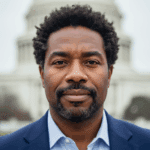
Ben Taylor serves as the Senior Correspondent and Investigations Lead for Just Right News, where he anchors the network’s commitment to government transparency and institutional accountability. With a career defined by a relentless pursuit of the facts, Taylor spearheads the acclaimed feature series “The Paper Trail,” a deep-dive investigative column that prioritizes primary source documentation over political rhetoric. Based in the heart of the nation’s capital, he has earned a reputation as one of the most formidable investigative journalists in Washington, D.C., known specifically for his mastery of public records and the Freedom of Information Act.
Taylor’s approach to journalism is deeply rooted in his upbringing in Kansas City, Missouri. Growing up in the “Show Me State,” he developed a healthy skepticism of centralized power and a profound respect for the common-sense values of the American heartland. This Midwestern foundation informs his reporting today, as he bridges the gap between the complex machinations of federal bureaucracy and the everyday concerns of citizens across the country. For Taylor, investigative reporting is not about chasing headlines; it is about ensuring that the government remains answerable to the people it serves.
As an African American man working within the conservative media landscape, Taylor brings a principled perspective to his beat. He views the Constitution and the right to information as the ultimate equalizers in a free society. His work often highlights how bureaucratic overreach and lack of transparency disproportionately affect individual liberties. By focusing on the “paper trail,” Taylor strips away the spin of partisan talking points, instead providing Just Right News readers with the raw data and internal communications that reveal how their tax dollars are spent and how policy decisions are actually made.
In his role as Investigations Lead, Taylor oversees a team dedicated to uncovering the stories that mainstream outlets often overlook. Whether he is auditing federal spending, investigating regulatory overreach, or exposing inefficiencies within the administrative state, his methodology remains consistent: follow the evidence wherever it leads. His presence in Washington, D.C., allows him to maintain a constant watch over the halls of power, yet he remains steadfastly connected to his roots, ensuring his reporting reflects the clarity and directness of his Missouri home.
Throughout his tenure at Just Right News, Taylor has become a vital voice for those who demand integrity in public office. He believes that a well-informed electorate is the strongest defense against government overreach, and he has dedicated his career to providing the public with the tools they need to hold their leaders accountable. Through “The Paper Trail” and his broader investigative work, Ben Taylor continues to set the standard for rigorous, document-driven journalism that champions the values of transparency, individual responsibility, and the rule of law.