

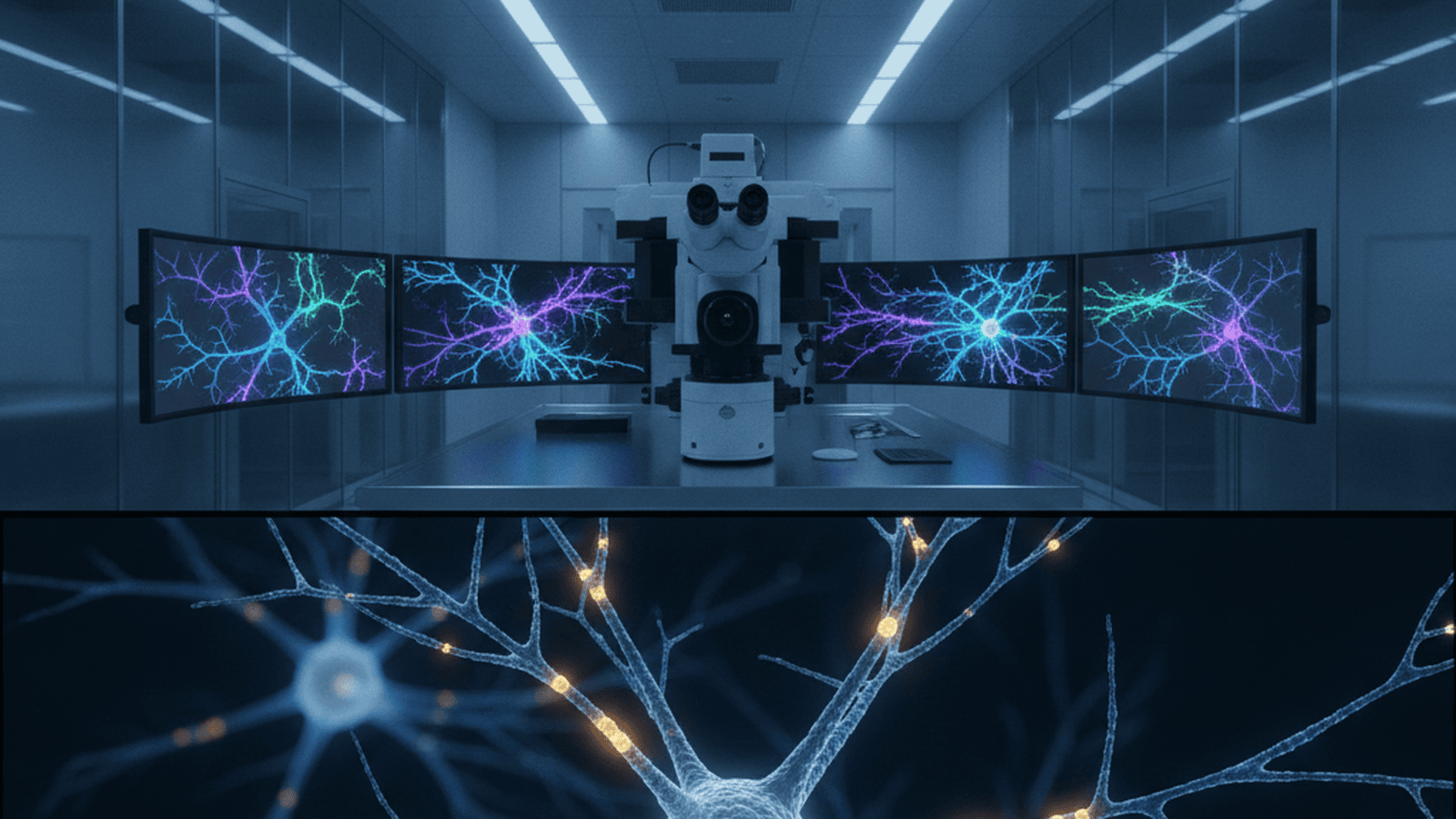
MIT researchers have discovered that the adult brain contains a vast number of silent synapses that remain dormant until needed for learning. These connections provide a reservoir of plasticity, allowing the brain to rapidly form new memories by activating existing but quiet neural pathways.
TLDR: Neuroscientists at MIT have identified a massive population of silent synapses in the adult brain, overturning the belief that these dormant connections disappear after development. These synapses act as a reservoir for learning, becoming active when new information is processed, offering a new understanding of adult neural plasticity and memory.
Neuroscientists at the Massachusetts Institute of Technology have identified a vast population of “silent synapses” within the adult mammalian brain. These connections, previously thought to exist primarily during early development, appear to remain dormant until needed for new learning. The discovery, led by researchers in the lab of Mark Harnett, challenges long-held assumptions about how the adult brain maintains its plasticity and capacity for memory formation. For decades, the scientific consensus suggested that the adult brain was relatively fixed, with new learning requiring the slow growth of new synaptic connections.
The study, published in the journal Nature, focused on the dendrites of neurons in the visual cortex and other brain regions. Researchers used high-resolution imaging and electrophysiological recordings to observe the behavior of these synapses at a microscopic level. They found that while most synapses are active and transmit signals using the neurotransmitter glutamate, a significant percentage lack the necessary receptors to fire under normal conditions. These silent connections represent a massive, untapped reservoir of potential neural pathways that can be recruited at a moment’s notice. By using a specialized two-photon microscope, the team was able to visualize the structural changes in these spines in real-time as they were stimulated.
In the developing brain, silent synapses are known to be precursors to active ones, helping to wire the nervous system during critical periods of growth. As the brain matures, scientists believed these connections either became active or were pruned away to streamline neural processing. However, the MIT team discovered that in the adult brain, these synapses are maintained in a “silent” state. When a new memory needs to be formed or a new skill learned, these synapses can be rapidly recruited and converted into active communication channels, providing a much faster mechanism for adaptation than previously understood.
The mechanism for this conversion involves the recruitment of AMPA receptors to the synaptic membrane. When a specific pattern of neural activity occurs, the silent synapse—which previously only contained NMDA receptors—incorporates these AMPA receptors. This transition allows the synapse to become a functional part of a neural circuit. This process provides a much more efficient way for the brain to learn than creating entirely new synaptic structures from scratch, as the physical infrastructure of the connection is already in place.
The researchers utilized a sophisticated technique called patch-clamp electrophysiology to measure the electrical activity of individual dendritic spines. By stimulating these spines with precise bursts of energy, they could determine which were active and which were silent. The abundance of these silent synapses was surprising, with some estimates suggesting they make up nearly thirty percent of all synapses in certain layers of the cortex. This reservoir of connectivity may be the key to understanding how humans can acquire complex information and adapt to new environments throughout their entire lifespans. The team also observed that these silent synapses were particularly prevalent on the ends of long, thin dendrites, which are known to be hotspots for signal processing.
This discovery has significant implications for the study of neurodegenerative diseases and cognitive decline. If the mechanisms that maintain or activate these silent synapses fail, it could lead to impaired learning and memory loss associated with aging or conditions like Alzheimer’s disease. Conversely, finding ways to stimulate the activation of these dormant connections might offer new therapeutic avenues for treating brain injuries or age-related cognitive issues. Future research will focus on whether these silent synapses are present in all areas of the human brain and how they are affected by different types of learning environments and lifestyle factors. By understanding the molecular triggers that “wake up” these synapses, scientists hope to develop interventions that enhance cognitive resilience and recovery.

Mason Reed serves as a Staff Writer for Just Right News, where he spearheads the Future Frontiers & Special Projects desk. In an era defined by rapid technological shifts and evolving social landscapes, Mason provides a steady, principled voice, examining the innovations of tomorrow through the lens of traditional American values. His work is most prominently featured in his signature series, “The Next Horizon,” where he explores the intersection of emerging technology, national sovereignty, and the preservation of individual liberty.
A native of San Diego, California, Mason’s worldview was shaped by the unique culture of his hometown. Growing up in a region defined by its strong military presence and its history of maritime industry, he developed a deep-seated respect for the institutions that provide national stability and the entrepreneurial spirit that drives the American economy. This upbringing instilled in him a belief that true progress is not found in discarding the past, but in building upon a foundation of proven principles. His reporting often reflects this San Diego influence, emphasizing the importance of a robust national defense and the necessity of maintaining a competitive edge in the global marketplace.
Now based in San Francisco, Mason operates from the heart of the world’s technological engine. Living and working in the Bay Area provides him with a front-row seat to the advancements—and the ideological challenges—emanating from Silicon Valley. While many in the region embrace a “move fast and break things” mentality, Mason’s reporting serves as a vital counterweight. He offers Just Right News readers a “boots on the ground” perspective, documenting how radical local policies and the concentration of tech power impact the everyday lives of citizens. His proximity to the industry allows him to cut through the marketing jargon of big tech to uncover the real-world implications for privacy, free speech, and the nuclear family.
In his “Future Frontiers” beat, Mason tackles complex subjects ranging from the ethics of artificial intelligence to the burgeoning private space race. He approaches these topics with a healthy skepticism toward centralized bureaucracy, championing instead the decentralized innovations that empower individuals. Through “The Next Horizon,” he highlights the pioneers and thinkers who are working to ensure that the future remains a place where human dignity and constitutional rights are protected. He believes that the rapid pace of change requires more than just technical expertise; it requires a moral compass rooted in the Western tradition.
Throughout his tenure at Just Right News, Mason has remained committed to the idea that the future is something to be shaped, not merely accepted. His writing is characterized by a rigorous defense of American exceptionalism and a belief that the country’s best days lie ahead, provided it remains true to its founding ideals. Whether he is investigating the impact of automation on the American workforce or profiling the next generation of aerospace engineers, Mason Reed ensures that his readers are equipped with the insights they need to navigate a changing world with confidence and clarity.