

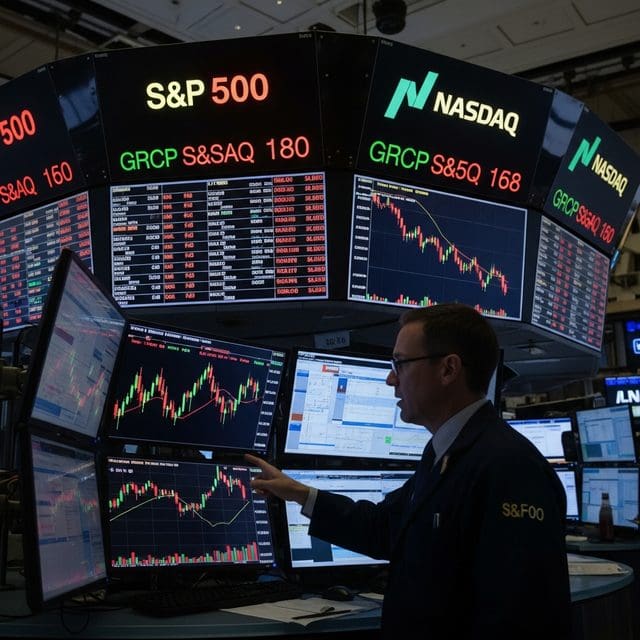
The S&P 500 fell 1.01% as a deepening semiconductor rout and disappointing Netflix forecasts triggered a massive rotation out of high-flying technology stocks and into defensive assets.
The momentum that propelled global markets to record highs through the first half of the year faced a severe stress test on July 17, 2026, as the S&P 500 (SPY) retreated 1.01% in a session marked by a systemic exit from the artificial intelligence trade. This downturn was not a localized event but a broad-based reassessment of the valuation premiums currently assigned to the technology sector. The Nasdaq Composite bore the brunt of the selling, sliding 1.40%, while the Dow Jones Industrial Average managed a more tempered decline of 0.77%, reflecting a defensive shift among institutional investors.
At the center of the storm is the Philadelphia SE Semiconductor Index (SOX), which has now officially entered a bear market. The index is currently trading 20.2% below its June 22 record close, following a brutal 18% drop throughout the month of July. This week alone, the semiconductor sector experienced its steepest weekly loss in over a year. Ryan Detrick, chief market strategist at Carson Group, noted that the market is suffering from “chip fatigue,” observing that these high-flying stocks had moved well ahead of their fundamental earnings potential and are now finally coming back to Earth.
The selling pressure was exacerbated by Netflix, which saw its shares tumble approximately 9% in premarket trading after issuing a weaker-than-expected earnings forecast. This disappointing outlook from a primary growth bellwether intensified existing anxieties regarding the staying power of the AI-fueled rally. Data from Goldman Sachs further underscores this institutional retreat; U.S. hedge funds have been net sellers of technology hardware and semiconductors for four consecutive weeks, making information technology the most net-sold sector in the domestic market.
While the “Invisible Economy” of high-frequency tech trading falters, the tangible economy presents a more fragmented picture. In the real estate sector, Miami-Dade reported its strongest June in three years, with total home sales rising year-over-year for the tenth consecutive month. This suggests that while Wall Street grapples with valuation bubbles, Main Street demand for hard assets remains robust. Conversely, the private aerospace sector is facing its own reckoning; SpaceX stock has shed more than $800 billion in market value from its $2.67 trillion peak, closing below its IPO price for the first time as of mid-July.
Corporate restructuring and capital distributions continue despite the broader market volatility. FTX announced a fifth distribution of approximately $900 million to creditors, and e& completed the sale of its entire Vodafone stake for $5.95 billion in cash. On the banking front, Bank of America’s board authorized regular cash dividends on preferred stock, signaling a commitment to shareholder returns even as the broader indices wobble. Meanwhile, the Paramount Skydance merger continues to evolve, with the corporation extending expiration dates for its exchange and tender offers.
For the American taxpayer and the working household, today’s market action serves as a stark reminder of the fragility of centralized financial trends. The rotation out of the most crowded trades suggests that the period of easy gains driven by AI speculation may be concluding. As geopolitical tensions rise—highlighted by the Trump administration notifying Israel of plans to send additional refueling planes ahead of potential operations against Iran—the need for a stable monetary system and fiscal responsibility becomes even more paramount. The market is no longer ignoring the gap between speculative valuations and the economic realities of a high-interest-rate environment.

Jordan Lee serves as the Senior Correspondent for Wall Street, Finance, and Monetary Systems at Just Right News. Based in the heart of the world’s financial capital, New York City, Lee brings a sharp, principled eye to the complex mechanisms that drive the global economy. His reporting is defined by a commitment to fiscal responsibility, the defense of the free market, and a deep-seated belief that a transparent monetary system is the bedrock of a free society.
Raised in Portland, Oregon, Lee’s perspective was forged in a city that has undergone significant cultural and economic shifts. His upbringing in the Pacific Northwest instilled in him a profound appreciation for the industriousness of small business owners and the importance of local economic stability. Watching the evolution of his hometown’s landscape sparked an early interest in how federal fiscal policy and large-scale financial trends eventually trickle down to the average citizen. This background provides him with a unique vantage point; he understands the growing disconnect between the policy-making elite and the reality of Main Street, a theme that frequently resonates throughout his work.
Now operating from his base in New York City, Lee bridges the gap between the high-stakes trading floors of Manhattan and the households of everyday Americans. He views the financial sector not merely as a collection of numbers and tickers, but as a vital engine of American prosperity that requires constant vigilance and accountability. His reporting often highlights the dangers of centralized financial control and the necessity of maintaining a system that rewards merit, risk-taking, and innovation.
As the creator and lead of the featured series, “The Invisible Economy,” Lee pulls back the curtain on the often-opaque world of monetary systems. He specializes in translating the dense jargon of central banking and international finance into actionable insights for the Just Right News audience. His work explores the “invisible” forces—such as inflationary pressures, regulatory creep, and the expansion of the administrative state—that erode the purchasing power of American families. By focusing on these systemic issues, Lee empowers readers to understand the hidden forces shaping their financial independence.
Lee’s journalistic philosophy is rooted in a steadfast commitment to traditional American values. As an Asian American professional who has navigated the competitive corridors of the financial world, he is a vocal advocate for meritocracy and the preservation of the American Dream. He believes that a stable currency and a predictable regulatory environment are essential for national sovereignty and individual liberty. His reporting frequently warns against the risks of government overreach in the private sector, arguing that the most effective solutions to economic challenges arise from competition and individual enterprise rather than bureaucratic mandates.
At Just Right News, Jordan Lee remains dedicated to providing a clear-eyed defense of the taxpayer. Whether he is analyzing market volatility or investigating the long-term implications of national debt, his mission is to provide the truth about where the money is going and what it means for the future of the country. Through his rigorous analysis and principled stance, Lee has become a trusted voice for those who value a strong, sovereign, and fiscally sound America.