

President Trump pushes a 5% NATO spending target and F-35 sales in Ankara while the House and Senate remain in a legislative lull, shifting the policy focus to executive action.
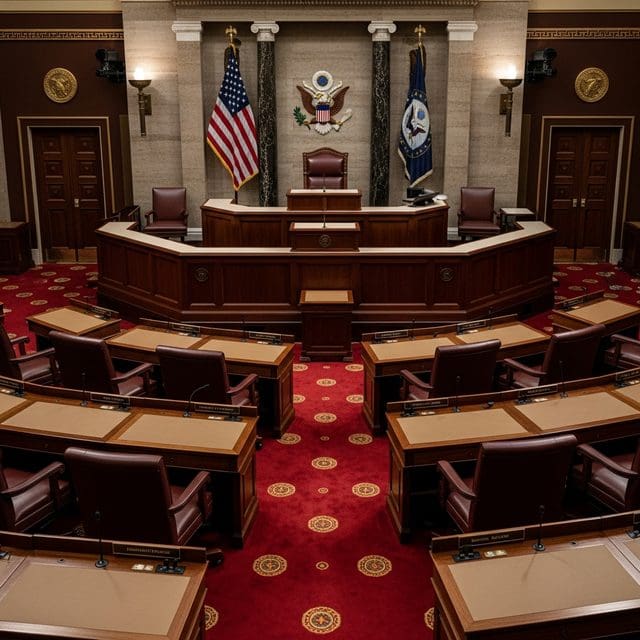
The halls of the U.S. Capitol remain quiet this week as both the House and Senate have retreated into a series of pro forma sessions, effectively stalling the legislative machinery. According to the Congressional Record, the Senate recently convened for a mere twenty-seven seconds and is scheduled for a similar non-business appearance today at 4:00 p.m. With no committee hearings or floor votes on the calendar until July 13, the constitutional duty of lawmaking has yielded the stage entirely to executive diplomacy.
From Ankara, Turkey, President Trump has utilized the 2026 NATO summit to assert a robust posture, demanding that member nations increase defense spending to 5 percent of their Gross Domestic Product. This proposal significantly raises the bar from the previous 2 percent target, signaling a disciplined insistence that allies shoulder a greater share of the collective security burden. The President’s agenda also includes negotiations regarding the potential lifting of sanctions to facilitate F-35 fighter jet sales to Turkey, representing a significant shift in regional defense policy.
On the sidelines of the summit, the administration has engaged in direct diplomacy with Ukrainian President Volodymyr Zelensky. Following a meeting on July 8, the White House confirmed the United States would purchase Ukrainian-manufactured drones, a move that underscores a shift toward integrated defense production. These maneuvers occur against a backdrop of heightened military tension with Iran. Following U.S. strikes on Iranian targets on July 7—retaliation for attacks on commercial vessels in the Strait of Hormuz—Tehran warned it maintains ‘no red lines’ regarding its defense posture.
While the President manages these foreign entanglements, the domestic landscape is being shaped by executive legal strategy. Reports indicate the President intends to petition the Supreme Court to rehear a citizenship case, a procedural move that is statistically improbable. Historical records show the Court has not granted such a request since 1965. This maneuver, coupled with Vice President JD Vance’s recent remarks in Milwaukee, suggests an administration focused on maintaining political momentum through executive fiat while the legislative branch remains in repose.
Even as the federal government focuses on international summits, local disruptions continue. In Massachusetts, healthcare clinicians continue a seven-day strike, while in Maine, Democratic Senate nominee Graham Platner was forced to drop out of his race following sexual assault allegations. These developments are currently being managed without the intervention of a sitting Congress. The House has introduced a handful of public bills, H.R. 9591 through 9601, but these remain dormant in the absence of active floor sessions.
For the American taxpayer, this divergence highlights the expanding reach of the administrative state. When Congress vacates the field, policy is increasingly dictated by summit communiqués and executive orders rather than deliberative legislation. As the Senate prepares for its brief gavel-in today, the real weight of American governance resides in the President’s briefcase in Ankara. The shift toward a 5 percent GDP defense target and the renegotiation of F-35 deals represent a major pivot in the U.S. role within the alliance, conducted almost entirely through executive power.

Miles Harrington serves as the Senior Correspondent for Federal Systems & Executive Power at Just Right News, where he brings a disciplined, constitutionalist lens to the inner workings of the American government. With a focus on the mechanics of the federal bureaucracy and the limits of executive authority, Harrington has established himself as a vital voice for readers who value transparency, accountability, and the preservation of the separation of powers.
A native of Richmond, Virginia, Harrington’s perspective is deeply rooted in the traditions of the Old Dominion. Growing up in a city defined by its historical significance and its role as a center of American jurisprudence, he developed an early appreciation for the foundational principles of the Republic. His upbringing in Richmond—a place where the legacy of the Founding Fathers is woven into the landscape—instilled in him a belief that the federal government should remain within its constitutional bounds. This background informs his skepticism of centralized overreach and his commitment to reporting on the ways in which the administrative state impacts the lives of everyday citizens.
In his current role, Harrington specializes in the complexities of federal systems. He doesn’t just report on the headlines of the day; he digs into the structural shifts within the executive branch that often go unnoticed by the mainstream press. Whether he is analyzing the implications of a new federal regulation or investigating the expansion of agency jurisdiction, his work is characterized by a rigorous adherence to the facts and a dedication to the rule of law.
Harrington is perhaps best known for his signature feature series, “How Washington Works.” Through this ongoing project, he demystifies the often-opaque processes of the nation’s capital, pulling back the curtain on the “Deep State” and the unelected officials who wield significant influence over national policy. By breaking down complex legislative maneuvers and executive orders, he empowers Just Right News readers to understand the true levers of power in Washington. His reporting serves as a necessary check on the federal government, ensuring that the actions of those in power are held up to the light of public scrutiny.
Now based in Washington, D.C., Harrington operates at the epicenter of the political world, yet he remains intentionally distanced from the “Beltway bubble.” His proximity to the halls of power allows him to maintain a robust network of sources across the federal landscape, but his heart remains in the principled conservatism of his Virginia roots. He views his role not merely as a reporter, but as a steward of the public trust, dedicated to providing the clarity and context that conservative voters need to navigate an increasingly complex political environment.
Through his sharp analysis and unwavering commitment to the truth, Miles Harrington continues to be a cornerstone of the Just Right News team. His work ensures that the principles of limited government and executive restraint remain at the forefront of the national conversation, providing a crucial service to those who believe in a government that is truly of, by, and for the people.