


As federal loan limits tighten under new legislation, students are turning to self-directed business ventures and regional tuition pledges to achieve debt-free degrees.
The era of unlimited federal borrowing for higher education is ending. Under the One Big Beautiful Bill Act, effective July 1, 2026, Parent PLUS loans are now capped at $20,000 annually, and Grad PLUS loans have been eliminated. By setting a hard federal loan limit of $257,500, the policy demands a more disciplined approach to human capital investment, cooling the tuition inflation previously fueled by bottomless government credit.
While the legislation adds $10.5 billion to the Pell Grant program and expands aid to short-term workforce certificates, it narrows eligibility for others. Students with significant existing scholarships or higher household incomes are now barred from Pell access. This shift forces families to seek market-aligned solutions rather than relying on state subsidies, placing a premium on merit and individual initiative.
Some students are already bypassing the debt trap through sweat equity. Eleri Williams, an 18-year-old founder of Ballers CP, has generated £35,000 reselling vintage soccer jerseys. Her business, which moved from a spare room to a Cardiff retail shop, is designed specifically to fund her law degree. Williams’ success provides a common-sense blueprint for upward mobility that favors entrepreneurial grit over long-term government dependency.
Institutions are also adjusting to this new reality. The University of Pittsburgh’s Regional Campus Tuition Pledge, launching fall 2026, offers a “last-dollar” model for Pennsylvania students with household incomes under $75,000. By covering remaining tuition at regional campuses like Bradford and Johnstown, the university is focusing on localized human capital. However, the pledge excludes housing and fees, reminding families that personal financial planning remains essential.
Alignment with industry needs is becoming the new standard for institutional value. Kanazawa University’s Nano Life Science Institute is actively integrating molecular-machine research with private-sector partnerships to ensure curriculum meets future workforce demands. Similarly, the California Hotel & Lodging Association recently awarded $160,000 in scholarships to students pursuing specific hospitality careers, reflecting a shift toward specialized, employable expertise over generalist degrees.
Accountability is also reaching alternative education. Following a campaign by Paris Hilton and lawsuits alleging medical neglect, Utah has revoked the license of Provo Canyon School. This closure, alongside the Supreme Court’s recent 6-3 ruling allowing states to protect the integrity of women’s sports, signals a broader return to foundational standards and institutional transparency. Whether through spending caps or entrepreneurial effort, the focus has returned to the practical value of education and the responsibility of the individual.
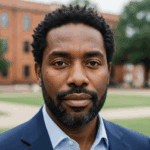
Daniel Owens serves as a Senior Correspondent for Just Right News, where he leads the newsroom’s coverage of Education, Workforce, and Upward Mobility. In an era where the national conversation often overlooks the practical foundations of success, Owens brings a principled perspective to the forefront of the media landscape. His work is defined by a commitment to the idea that a strong society is built on the pillars of quality education, a robust work ethic, and the removal of bureaucratic barriers to individual achievement.
Born and raised in Cleveland, Ohio, Owens’s worldview was shaped by the industrial landscape of the Midwest. Growing up in a city known for its grit and resilience, he witnessed firsthand the transformative power of steady employment and the devastating effects of economic stagnation. This background instilled in him a deep respect for the American worker and a healthy skepticism toward top-down government solutions that often fail to reach the communities they intend to help. As an African American man who has navigated the path to professional success, Owens approaches his beat with a nuanced understanding of how meritocracy and personal responsibility intersect with opportunity. He frequently draws on his roots to highlight the importance of family stability and community-led initiatives in fostering the next generation of leaders.
At Just Right News, Owens is the architect of the acclaimed feature series, “The Learning Curve.” Through this platform, he explores the evolving landscape of American schooling, from the rise of the school choice movement to the revitalization of trade schools and vocational training. He frequently challenges the status quo of higher education, advocating for a return to academic rigor and the practical alignment of degrees with market demands. For Owens, education is not merely about obtaining credentials; it is about equipping young people with the tools necessary to lead self-sufficient, meaningful lives. His reporting on “The Learning Curve” has become essential reading for parents and policymakers who believe that educational competition and parental rights are the keys to a brighter future.
Now based in Raleigh, North Carolina, Owens finds himself at the heart of one of the nation’s most dynamic regions for innovation and growth. Raleigh’s unique blend of traditional values and a fast-paced economy provides the perfect backdrop for his reporting on the modern workforce. From the tech hubs of the Research Triangle to the rural communities of the South, he tracks how shifts in the economy are impacting families and local industries. His reporting often highlights the success stories of entrepreneurs and workers who are thriving by embracing the values of hard work and innovation.
Throughout his career, Daniel Owens has remained a steadfast voice for the student seeking a better path and the worker striving for a better life. His reporting for Just Right News serves as a vital resource for readers who value common-sense solutions to the challenges of the 21st-century economy. By focusing on the intersection of policy and the human spirit, Owens continues to provide a roadmap for how individuals and communities can achieve lasting upward mobility.