


Internal FIFA documents and public admissions confirm President Trump lobbied Gianni Infantino to reverse a World Cup red card, sparking an institutional crisis and allegations of political interference.
Records from FIFA’s disciplinary body and public statements from international soccer officials confirm a breach of protocol following a July 5 phone call between President Donald Trump and FIFA President Gianni Infantino. The conversation, centered on a red card issued to Team USA striker Folarin Balogun during a World Cup match against Bosnia and Herzegovina, has triggered what European football officials call an unprecedented institutional crisis. The call occurred hours after the President concluded events marking America’s 250th birthday, including a speech at Mount Rushmore where he issued a rebuke of communism.
While Infantino publicly maintains that “red cards are not overturned by phone calls,” internal FIFA records indicate the organization’s disciplinary committee utilized Article 27 to suspend Balogun’s ban under a one-year “probation” period. This maneuver, described by UEFA as “unheard of,” effectively bypassed standard independent review processes. Former FIFA President Joseph Blatter has since questioned Infantino’s judgment, noting that disciplinary reversals must rely on transparent evidence rather than executive intervention. Critics argue the move crosses a “red line” of political interference, undermining the procedural independence FIFA claims to uphold.
This development coincides with a broader pattern of administrative overreach documented by former Department of Justice attorneys. Investigative accounts compiled throughout 2025 and 2026 describe a systemic weakening of ethics rules regarding gifts and political interference in independent probes. Former White House lawyer Ty Cobb recently characterized the administration’s approach as a “new low,” citing the use of a $1.8 billion Justice Department fund and the targeting of political opponents as evidence of a shift away from established legal norms. These accounts suggest the pressure applied to FIFA is not an isolated incident but part of a documented pattern of pardon-driven favors.
The Balogun incident, dubbed “Balogun-gate” by international media outlets, has reignited scrutiny of Infantino’s own record. A leaked 11-page memo previously submitted to FIFA’s Audit and Compliance Committee alleged multiple ethics breaches by Infantino, including conflicts of interest and procedural violations. These prior disclosures provide a framework for a new complaint filed with FIFA’s Ethics Committee by a global advocacy group. The complaint alleges a lack of impartiality and highlights the political undertones of a proposed “FIFA Peace Prize” for the American president, an award now being revisited in light of the Balogun episode.
In Washington, the controversy adds to a turbulent period marked by domestic friction. As Speaker Mike Johnson and former Senator Joe Manchin trade barbs over the rise of democratic socialist candidates in state primaries—specifically referencing NYC Mayor Zohran Mamdani—the President is preparing for a NATO summit in Ankara. There, he is scheduled to meet with Ukrainian President Volodymyr Zelensky and Syrian President Ahmed al-Sharaa. However, the paper trail left by the FIFA intervention suggests that the administration’s efforts to exert influence now extend beyond domestic policy into international sports governance.
Legal experts and former UEFA officials, including Michel Platini, have signaled that the fallout is far from over. Platini, recently acquitted by a Swiss appeals court, has launched new civil and criminal proceedings against FIFA, reopening questions about Infantino’s ethics exposure. As the World Cup continues, the tension between executive power and institutional rules remains at the forefront of the public record, with documents suggesting the administrative state’s reach is increasingly global in scope.
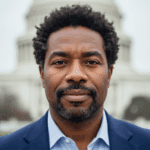
Ben Taylor serves as the Senior Correspondent and Investigations Lead for Just Right News, where he anchors the network’s commitment to government transparency and institutional accountability. With a career defined by a relentless pursuit of the facts, Taylor spearheads the acclaimed feature series “The Paper Trail,” a deep-dive investigative column that prioritizes primary source documentation over political rhetoric. Based in the heart of the nation’s capital, he has earned a reputation as one of the most formidable investigative journalists in Washington, D.C., known specifically for his mastery of public records and the Freedom of Information Act.
Taylor’s approach to journalism is deeply rooted in his upbringing in Kansas City, Missouri. Growing up in the “Show Me State,” he developed a healthy skepticism of centralized power and a profound respect for the common-sense values of the American heartland. This Midwestern foundation informs his reporting today, as he bridges the gap between the complex machinations of federal bureaucracy and the everyday concerns of citizens across the country. For Taylor, investigative reporting is not about chasing headlines; it is about ensuring that the government remains answerable to the people it serves.
As an African American man working within the conservative media landscape, Taylor brings a principled perspective to his beat. He views the Constitution and the right to information as the ultimate equalizers in a free society. His work often highlights how bureaucratic overreach and lack of transparency disproportionately affect individual liberties. By focusing on the “paper trail,” Taylor strips away the spin of partisan talking points, instead providing Just Right News readers with the raw data and internal communications that reveal how their tax dollars are spent and how policy decisions are actually made.
In his role as Investigations Lead, Taylor oversees a team dedicated to uncovering the stories that mainstream outlets often overlook. Whether he is auditing federal spending, investigating regulatory overreach, or exposing inefficiencies within the administrative state, his methodology remains consistent: follow the evidence wherever it leads. His presence in Washington, D.C., allows him to maintain a constant watch over the halls of power, yet he remains steadfastly connected to his roots, ensuring his reporting reflects the clarity and directness of his Missouri home.
Throughout his tenure at Just Right News, Taylor has become a vital voice for those who demand integrity in public office. He believes that a well-informed electorate is the strongest defense against government overreach, and he has dedicated his career to providing the public with the tools they need to hold their leaders accountable. Through “The Paper Trail” and his broader investigative work, Ben Taylor continues to set the standard for rigorous, document-driven journalism that champions the values of transparency, individual responsibility, and the rule of law.