

A massive Salmonella recall involving California powdered milk ripples through the food chain as the EPA introduces new pesticide innovation challenges and stricter fungicide strategies for growers.
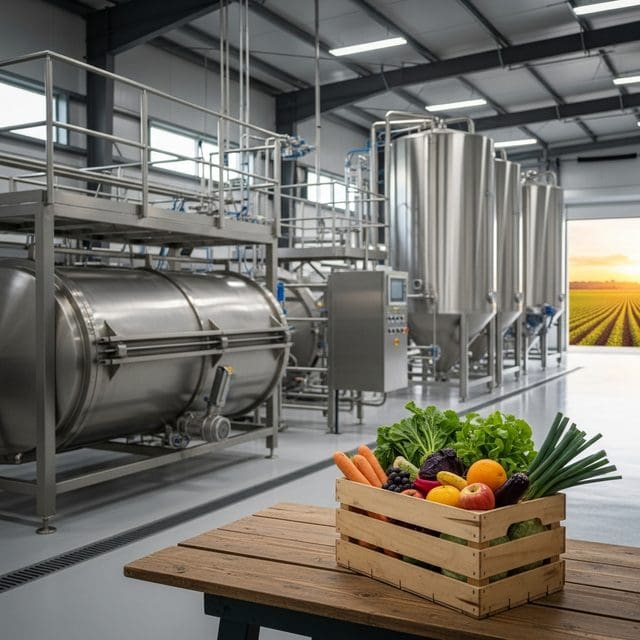
The American food supply is facing a dual challenge this July as federal regulators scramble to contain a major bacterial outbreak while simultaneously overhauling the chemical standards for domestic agriculture. The Food and Drug Administration (FDA) recently elevated a cluster of recalls to “major recall” status, centered on powdered milk produced by California Dairies Inc. The agency warns of potential Salmonella contamination that could ripple through a vast array of consumer goods, including infant formula, baked goods, and ready-to-eat meals. This ripple effect is particularly concerning for the food industry, as powdered milk serves as a foundational ingredient for thousands of Stock Keeping Units (SKUs) across the country.
While the FDA manages the immediate fallout of processing failures, the Environmental Protection Agency (EPA) is pivoting toward long-term shifts in how American crops are treated. On June 30, the EPA announced a $30 million innovation challenge designed to incentivize farmers to replace late-season pesticide desiccation with less chemical-intensive methods. This move targets residue concerns at harvest but adds another layer of transition for a sector already grappling with thin margins and drought. The challenge seeks to find mechanical or biological alternatives to the current practice of using chemicals to dry out crops just before they are gathered, a practice that has drawn increasing scrutiny from environmental health advocates.
The regulatory pressure does not stop at innovation prizes. Public comment periods recently closed on June 29 for a new EPA fungicide strategy aimed at protecting endangered species. This pending framework signals a tightening of the belt for traditional pest management, even as food-policy advocates demand the agency go further. Groups are now pressing for coordinated controls on PFAS—so-called “forever chemicals”—in biosolids used as fertilizer, highlighting a significant policy gap in current agricultural safety rules. Advocates are calling for a dedicated agricultural PFAS relief program to help farmers whose land has been contaminated by industrial runoff or municipal sludge.
For the American family, these developments underscore a growing complexity in the kitchen. Beyond the headline-grabbing milk recall, the FDA’s dashboard has been active with smaller enforcement actions regarding undeclared allergens like sesame, peanuts, fish, and wheat, as well as foreign plastic contamination. These incidents point to persistent vulnerabilities in industrial processing rather than environmental water issues, though watchdog groups continue to warn that aging water infrastructure and farm runoff remain secondary threats to food safety. Recent analyses from these groups warn of “unprecedented attacks” on clean public water systems in 2026, tying industrial pollution to rising risks of unsafe, expensive food.
As the agricultural sector navigates these shifts, the focus remains on whether federal oversight provides genuine safety or merely adds bureaucratic weight. The success of the EPA’s $30 million challenge will depend on whether private-sector innovation can truly replace the reliability of traditional chemistry without compromising the yields that feed the nation. Currently, the EPA’s fungicide strategy and the innovation challenge remain in their design and draft phases, leaving many growers in the dark about which specific crop sectors will be prioritized or how drought-stressed regions will be treated under the new mandates.
For now, the immediate priority for the FDA remains quantifying the full economic and geographic reach of the California dairy contamination. As the agency works to identify every affected product, the agricultural community is left to wonder if the increasing regulatory burden will protect the consumer or simply drive up the cost of the American dinner table. With the Strait of Hormuz reopening and energy prices dropping, the cost of transport may ease, but the cost of compliance on the farm continues to climb.

Eric Nolan serves as the Senior Correspondent for Food, Water, and Environmental Health at Just Right News, where he brings a principled, common-sense perspective to the most fundamental issues facing the American public. With a career dedicated to uncovering the truth behind the policies that govern our natural resources, Eric has become a trusted voice for readers who value traditional stewardship over bureaucratic overreach. His reporting is defined by a commitment to the idea that true environmentalism is rooted in the protection of the American family and the preservation of the nation’s agricultural heritage.
Raised in Fresno, California, Eric’s worldview was shaped in the heart of the San Joaquin Valley. Growing up in one of the world’s most productive agricultural hubs, he witnessed firsthand the vital connection between the land, the water, and the dinner table. In Fresno, he saw the resilience of farmers and the devastating impact that distant, top-down regulations can have on local communities. This upbringing instilled in him a deep respect for the producers who feed the country and a lifelong skepticism toward the alarmist narratives often pushed by mainstream media. For Eric, environmental health is not an abstract political talking point; it is a matter of ensuring that the people who work the land have the freedom and the resources to do so effectively.
Now based in Eugene, Oregon, Eric operates from a unique vantage point in the Pacific Northwest. Living in a region often defined by intense environmental debate, he provides a necessary counter-narrative to the prevailing trends of the area. From his base in Eugene, he monitors the shifting tides of federal and state policies, ensuring that the voices of rural citizens and property owners are not drowned out by urban activism. His reporting often bridges the gap between the rugged realities of the outdoors and the legislative halls where decisions are made, offering a grounded perspective that prioritizes local sovereignty and practical solutions.
As the lead for the acclaimed feature series “Earth on the Table,” Eric explores the intricate journey of the American food supply. He tackles critical issues such as water rights, soil health, and food security through a lens of national stability and individual liberty. He believes that a healthy environment and a thriving economy are not mutually exclusive, but rather two sides of the same coin of national prosperity. His work consistently highlights how innovation and private-sector ingenuity are the most effective tools for ensuring clean water and a safe food supply, rather than the expansion of the administrative state.
At Just Right News, Eric’s reporting serves as a vital resource for those who seek accountability and transparency. Whether he is investigating the impact of federal land management on local economies or examining the safety of the national food infrastructure, his work remains anchored in the values of heritage and hard work. Eric Nolan continues to be a leading voice in environmental journalism, championing the belief that the best way to protect our natural resources is to empower the people who live and work closest to them.