

Federal regulators manage a multistate Listeria outbreak while international water infrastructure projects face scrutiny over agricultural contamination and long-term irrigation security.
Federal food safety regulators are currently focused on a multistate Listeria monocytogenes outbreak linked to soft ricotta-style cheese produced by Clover Hill Dairy. Following a voluntary recall issued on June 3, 2026, the FDA updated its investigation on June 28, 2026, to track the spread of the pathogen. While the agency has not yet identified a specific water-contamination nexus for this outbreak, the incident highlights the ongoing struggle to maintain sanitary standards within the American dairy sector. This fresh recall adds to a growing list of concerns regarding the integrity of the domestic food supply and the efficacy of current federal oversight during a period of heightened environmental stress.
Simultaneously, the FDA continues to review bottled water recalls from late 2025 and early 2026, including products from Meijer and Valley Springs. These recalls were initiated due to “insanitary conditions” and the presence of visible contaminants. Despite these reactive measures, there is a notable absence of new federal announcements regarding agricultural water quality or farm irrigation safety. This regulatory silence suggests a gap in proactive monitoring, leaving the agricultural sector to manage potential contamination risks without updated guidance from the EPA or FDA, even as environmental pressures on water sources increase. The lack of fresh official statements on drought planning or emergency support for farmers marks a significant information gap for those relying on consistent water management.
The strain on water resources is further exacerbated by the rapid expansion of AI infrastructure. As of late June 2026, water consumption has emerged as a major flashpoint for tech giants like Google, Amazon, and Microsoft. Google’s environmental reports from 2025 indicate that electricity and water use reached record levels to support data center cooling. This industrial demand for water often competes with local agricultural needs, creating a tension between private-sector innovation and the common-sense stewardship required to protect the American family’s access to clean resources. While these corporations launch efforts to address water use, the sheer scale of the infrastructure buildout threatens to outpace current regulatory frameworks designed to protect local watersheds.
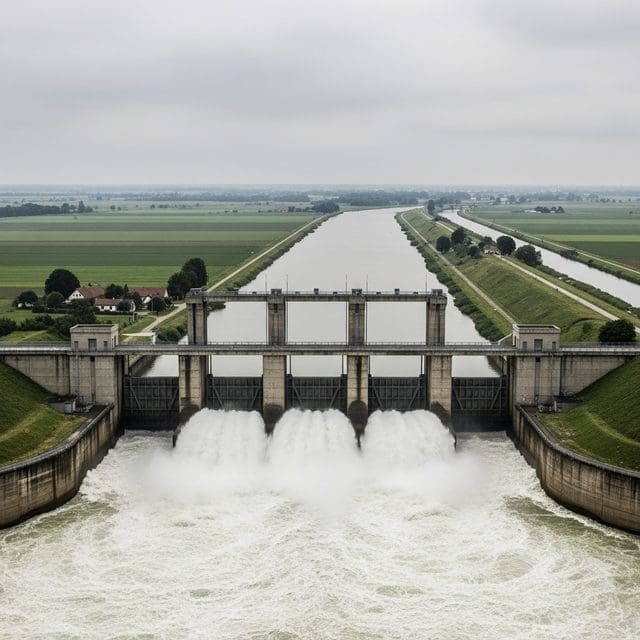
International developments in the Krishna Delta provide a cautionary tale regarding water infrastructure and local sovereignty. The Human Rights Forum recently demanded the withdrawal of a draft Environmental Impact Assessment for a proposed water aerodrome at the Prakasam barrage. Critics warn that the project poses significant ecological and water-quality risks to the Krishna Delta, which supports nearly 30 lakh farmers cultivating 13.08 lakh acres. Although District Collectors recently authorized water releases from the barrage to ensure agricultural operations remain on schedule, the long-term threat of salinity intrusion and desiltation-related contamination remains unaddressed by the Andhra Pradesh government. This lack of transparency regarding pesticide runoff and delta-wide contamination controls reflects a broader failure to prioritize farm water security over industrial development.
In regions like Coimbatore, the intersection of water management and public health is under scrutiny as the Health Department increases its vigil against vector-borne diseases. While officials are targeting stagnant water in household items like plastic containers, coconut shells, and abandoned tires, there is no coordinated effort to address vector risks in agricultural canals or farm ponds. This lack of integrated policy between health departments and agricultural ministries leaves rural populations vulnerable to malaria and Japanese encephalitis, particularly as seawater levels rise and alter traditional irrigation patterns. The absence of district-level reporting on agricultural canal interventions suggests that health departments are overlooking the primary infrastructure that sustains the region’s food production.
These domestic and international challenges underscore a critical need for regulators to prioritize practical environmental health over bureaucratic inertia. Whether it is the FDA managing dairy recalls or local governments balancing infrastructure projects against irrigation security, the focus must remain on the protection of the food and water that Americans consume every day. Without a grounded perspective that respects private-sector innovation while demanding accountability, the stability of the agricultural heritage and the health of the public remain at risk. Common-sense stewardship requires that regulators do their jobs by providing transparent data and timely interventions before localized contamination becomes a systemic crisis.

Eric Nolan serves as the Senior Correspondent for Food, Water, and Environmental Health at Just Right News, where he brings a principled, common-sense perspective to the most fundamental issues facing the American public. With a career dedicated to uncovering the truth behind the policies that govern our natural resources, Eric has become a trusted voice for readers who value traditional stewardship over bureaucratic overreach. His reporting is defined by a commitment to the idea that true environmentalism is rooted in the protection of the American family and the preservation of the nation’s agricultural heritage.
Raised in Fresno, California, Eric’s worldview was shaped in the heart of the San Joaquin Valley. Growing up in one of the world’s most productive agricultural hubs, he witnessed firsthand the vital connection between the land, the water, and the dinner table. In Fresno, he saw the resilience of farmers and the devastating impact that distant, top-down regulations can have on local communities. This upbringing instilled in him a deep respect for the producers who feed the country and a lifelong skepticism toward the alarmist narratives often pushed by mainstream media. For Eric, environmental health is not an abstract political talking point; it is a matter of ensuring that the people who work the land have the freedom and the resources to do so effectively.
Now based in Eugene, Oregon, Eric operates from a unique vantage point in the Pacific Northwest. Living in a region often defined by intense environmental debate, he provides a necessary counter-narrative to the prevailing trends of the area. From his base in Eugene, he monitors the shifting tides of federal and state policies, ensuring that the voices of rural citizens and property owners are not drowned out by urban activism. His reporting often bridges the gap between the rugged realities of the outdoors and the legislative halls where decisions are made, offering a grounded perspective that prioritizes local sovereignty and practical solutions.
As the lead for the acclaimed feature series “Earth on the Table,” Eric explores the intricate journey of the American food supply. He tackles critical issues such as water rights, soil health, and food security through a lens of national stability and individual liberty. He believes that a healthy environment and a thriving economy are not mutually exclusive, but rather two sides of the same coin of national prosperity. His work consistently highlights how innovation and private-sector ingenuity are the most effective tools for ensuring clean water and a safe food supply, rather than the expansion of the administrative state.
At Just Right News, Eric’s reporting serves as a vital resource for those who seek accountability and transparency. Whether he is investigating the impact of federal land management on local economies or examining the safety of the national food infrastructure, his work remains anchored in the values of heritage and hard work. Eric Nolan continues to be a leading voice in environmental journalism, championing the belief that the best way to protect our natural resources is to empower the people who live and work closest to them.