

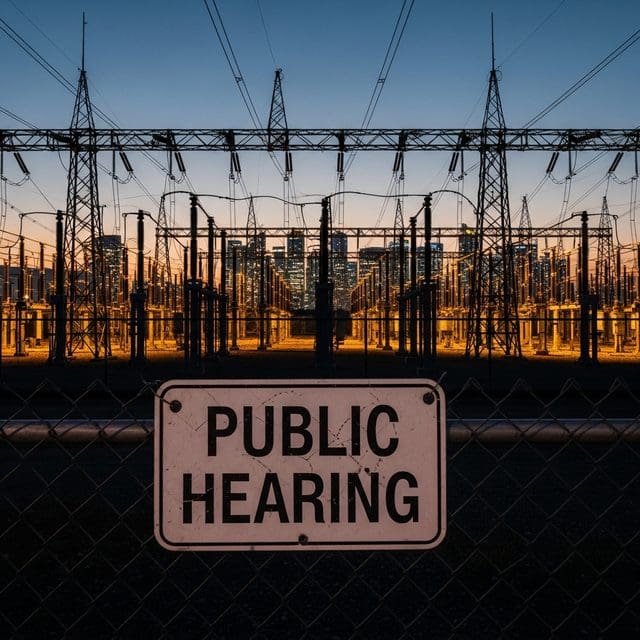
Watchdogs and lawmakers warn that a $67 billion utility merger could create a dangerous gatekeeper for AI energy demand while raising costs for everyday consumers.
The artificial intelligence boom is no longer just a Silicon Valley phenomenon; it is rapidly reshaping the American industrial landscape and the essential utilities that power it. As electricity emerges as a scarce commodity in mid-2026, a proposed $67 billion acquisition of Dominion by NextEra Energy is drawing intense scrutiny from antitrust advocates who view the deal as a calculated play to monopolize the infrastructure required for the future of computing. This massive transaction represents a pivotal moment for federal enforcers as they weigh the benefits of industrial scale against the risks of unchecked corporate power.
The American Economic Liberties Project recently released a sharp critique of the merger, arguing the transaction is specifically designed to exploit gaps in utility regulation. The group warns that the deal could create a de facto monopoly premised on AI power demand that may never fully materialize, potentially leaving captive ratepayers to foot the bill for speculative expansion. This skepticism comes as tech giants like Google, Amazon, and Microsoft grapple with record-breaking water and electricity consumption driven by their AI infrastructure buildouts, with Google reporting record greenhouse gas emissions in 2025 due to these very pressures.
NextEra has publicly projected the need for 15 to 30 gigawatts of new generation capacity for U.S. data centers by 2035. By acquiring Dominion, the company would control infrastructure tied to roughly 130 gigawatts of data-center-related demand across Florida, Virginia, and the Carolinas. This concentration of power has alarmed state watchdogs like Clean Virginia, who are calling for the most rigorous scrutiny possible from Governor Abigail Spanberger and Attorney General Jason Miyares. Critics cite NextEra’s aggressive political operations in Florida—including heavy spending and confrontations with consumer advocates—as a warning of how the combined entity might wield influence to sideline the public interest in Virginia.
Federal policymakers are also beginning to signal opposition. Senator Angus King of Maine has urged the Federal Energy Regulatory Commission (FERC) to reject the deal outright, pointing to NextEra’s history of contested transmission practices in New England as evidence of anticompetitive behavior. King’s intervention provides a concrete hook for the Department of Justice (DOJ) and the Federal Trade Commission (FTC) to revisit NextEra’s prior conduct and consider whether a history of entrenchment should factor into the current merger-specific antitrust review. While the DOJ has recently been occupied with high-profile civil rights litigation and record-setting healthcare fraud takedowns, the NextEra-Dominion deal challenges the administration to address vertical consolidation in the energy sector.
The merger represents a fundamental test of how far federal enforcers will go in tolerating consolidation framed as necessary for the AI transition. If approved, the merged utility would serve nearly 10 million accounts, creating a massive corporate gatekeeper with the power to dictate the terms of energy access for both tech giants and small businesses. Legal analysts emphasize that while federal antitrust signoff is a required step, state-level hearings at Virginia’s State Corporation Commission could effectively shape or condition the merger, making these local venues the primary battleground for arguments regarding market power and AI-driven rate impacts.
For small businesses and residential consumers in Virginia and the Carolinas, the stakes of this $67 billion gamble are significant. As corporate giants consolidate their hold on the grid, the risk is not just higher monthly bills, but a fundamental erosion of market competition. The narrative emerging from progressive think tanks and consumer watchdogs suggests that the AI boom is being used as a convenient shield for a traditional monopoly power grab. Without aggressive intervention from the DOJ or FTC, the transition to an AI-driven economy may come at the cost of the free-market competition that supposedly drives American innovation.

Greg Sanders serves as the Senior Correspondent for Corporate Power and Antitrust at Just Right News, where he brings a principled, conservative perspective to the complex intersection of big business, government regulation, and the American consumer. With a career dedicated to investigative depth and economic clarity, Greg has become a leading voice in examining how the consolidation of industry power impacts the foundational values of the free market and individual liberty.
Raised in Denver, Colorado, Greg’s reporting is deeply informed by the Western spirit of independence and a healthy skepticism of centralized authority. Growing up in the shadows of the Rockies, he witnessed firsthand the importance of local entrepreneurship and the vital role that small-medium enterprises play in sustaining vibrant communities. This upbringing instilled in him a belief that the American Dream is best preserved when the playing field remains level and when competition—rather than backroom deals between corporate lobbyists and federal regulators—dictates success. For Greg, the rugged individualism of his home state serves as a constant reminder that the economy should serve the people, not the other way around.
Now based in Chicago, Illinois, Greg operates from the heart of the nation’s industrial and financial crossroads. His location in the Midwest provides him with a unique vantage point to observe the real-world consequences of corporate overreach. From the boardrooms of the Loop to the manufacturing hubs that define the region, he tracks the movement of capital and the shifting tides of market influence. Chicago’s history as a center of trade and labor offers a rich backdrop for his work, allowing him to bridge the gap between high-level economic theory and the lived experiences of hardworking Americans who feel the squeeze of monopolistic practices.
At Just Right News, Greg’s beat focuses on the “new monopolies” and the rise of “woke” corporate culture. He argues that when corporations become too large, they often abandon their fiduciary duties to shareholders in favor of social engineering and political posturing. His reporting seeks to hold these “Titans” accountable, ensuring that the power of the purse is not used to silence dissent or bypass the democratic process. He is a firm advocate for the idea that true conservatism requires a vigilant defense of competition, preventing any single entity—public or private—from exerting undue control over the lives of citizens.
This mission is most clearly seen in his acclaimed feature series, “The Titans and the Toll.” In this ongoing project, Greg explores the human cost of market consolidation, from the erosion of consumer choice to the decline of local economies. Through rigorous analysis and boots-on-the-ground reporting, he documents how the concentration of power in sectors like tech, agriculture, and finance creates a “toll” paid by the average family.
Greg Sanders remains committed to the idea that a transparent, competitive market is the greatest engine for prosperity ever devised. Through his work at Just Right News, he continues to provide the essential oversight necessary to protect that engine from the encroaching influence of corporate giants and the bureaucratic structures that enable them.