


Trump called for an investigation into pre-election economic data, while the Bureau of Economic Analysis attributed its upward revision to fuller information and available coverage reported no evidence of deliberate falsification.
President Donald Trump called for an “immediate investigation” into the Bureau of Economic Analysis after the agency raised its estimate of third-quarter economic growth, alleging the earlier figures were a “massive, and purposeful” error. Available reporting on Nov. 26 cited no evidence that the data had been deliberately falsified and reported no investigation underway.
The BEA’s Nov. 25 release revised annualized gross domestic product growth for the third quarter to 4.3%, up from its advance estimate of 3.4%. The agency attributed the 0.9-percentage-point increase primarily to higher estimates for investment and consumer spending as more complete source data became available, according to the release and coverage by Reuters, the Associated Press and Fox Business.
The revised rate exceeded the 2.2% reported for the second quarter. The change means the agency’s calculation of third-quarter growth increased by 0.9 percentage points; it does not, by itself, establish that the earlier estimate was knowingly false. GDP estimates are updated as additional information arrives, and the BEA described the revision as data-driven.
The release followed the agency’s regular schedule. AP reported that the BEA updates economic data on a pre-scheduled basis, regardless of the political calendar. The advance estimate was released Oct. 29, five days before the Nov. 3 midterm elections. That chronology is documented, but the available reporting does not show that the release date was chosen to influence the election or that the later revision responded to its outcome.
Trump made his demand in a Truth Social post on Nov. 26. Reuters and Bloomberg reported that he called the discrepancy a “massive, and purposeful” error and urged an immediate investigation. Reuters and AP said he offered no evidence for the allegation that the initial figures were deliberately falsified. The reports do not cite internal documents, a whistleblower or other evidence contradicting the BEA’s stated explanation.
The public record described in the coverage establishes a dispute over a statistical revision, not proof of misconduct. The BEA attributed the change to more complete data and higher estimates for investment and consumer spending. Trump alleged intent but, according to the reports, supplied no supporting documentation. No cited records show agency staff manipulated the initial estimate or delayed information for political reasons.
As of the Nov. 26 reporting, no subpoena, audit, inspector-general review or other formal inquiry had been reported. AP said the Commerce Department had not immediately responded to a request for comment. The BEA is part of that department, which is responsible for the agency. Trump’s public demand therefore did not establish that a review had begun.
A formal review could compare the agency’s methodology, source data available at each estimate and documented reasons for changes between releases. Those are possible avenues of inquiry, not findings in the current reporting. The available accounts do not describe such a review or establish that the agency’s explanation is false.
For now, the documented explanation is that more complete information produced higher estimates for investment and consumer spending. That account can be tested against the agency’s methods and source data, but the reports available on Nov. 26 do not substantiate Trump’s allegation.
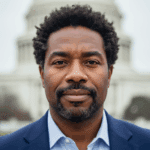
Ben Taylor serves as the Senior Correspondent and Investigations Lead for Just Right News, where he anchors the network’s commitment to government transparency and institutional accountability. With a career defined by a relentless pursuit of the facts, Taylor spearheads the acclaimed feature series “The Paper Trail,” a deep-dive investigative column that prioritizes primary source documentation over political rhetoric. Based in the heart of the nation’s capital, he has earned a reputation as one of the most formidable investigative journalists in Washington, D.C., known specifically for his mastery of public records and the Freedom of Information Act.
Taylor’s approach to journalism is deeply rooted in his upbringing in Kansas City, Missouri. Growing up in the “Show Me State,” he developed a healthy skepticism of centralized power and a profound respect for the common-sense values of the American heartland. This Midwestern foundation informs his reporting today, as he bridges the gap between the complex machinations of federal bureaucracy and the everyday concerns of citizens across the country. For Taylor, investigative reporting is not about chasing headlines; it is about ensuring that the government remains answerable to the people it serves.
As an African American man working within the conservative media landscape, Taylor brings a principled perspective to his beat. He views the Constitution and the right to information as the ultimate equalizers in a free society. His work often highlights how bureaucratic overreach and lack of transparency disproportionately affect individual liberties. By focusing on the “paper trail,” Taylor strips away the spin of partisan talking points, instead providing Just Right News readers with the raw data and internal communications that reveal how their tax dollars are spent and how policy decisions are actually made.
In his role as Investigations Lead, Taylor oversees a team dedicated to uncovering the stories that mainstream outlets often overlook. Whether he is auditing federal spending, investigating regulatory overreach, or exposing inefficiencies within the administrative state, his methodology remains consistent: follow the evidence wherever it leads. His presence in Washington, D.C., allows him to maintain a constant watch over the halls of power, yet he remains steadfastly connected to his roots, ensuring his reporting reflects the clarity and directness of his Missouri home.
Throughout his tenure at Just Right News, Taylor has become a vital voice for those who demand integrity in public office. He believes that a well-informed electorate is the strongest defense against government overreach, and he has dedicated his career to providing the public with the tools they need to hold their leaders accountable. Through “The Paper Trail” and his broader investigative work, Ben Taylor continues to set the standard for rigorous, document-driven journalism that champions the values of transparency, individual responsibility, and the rule of law.