

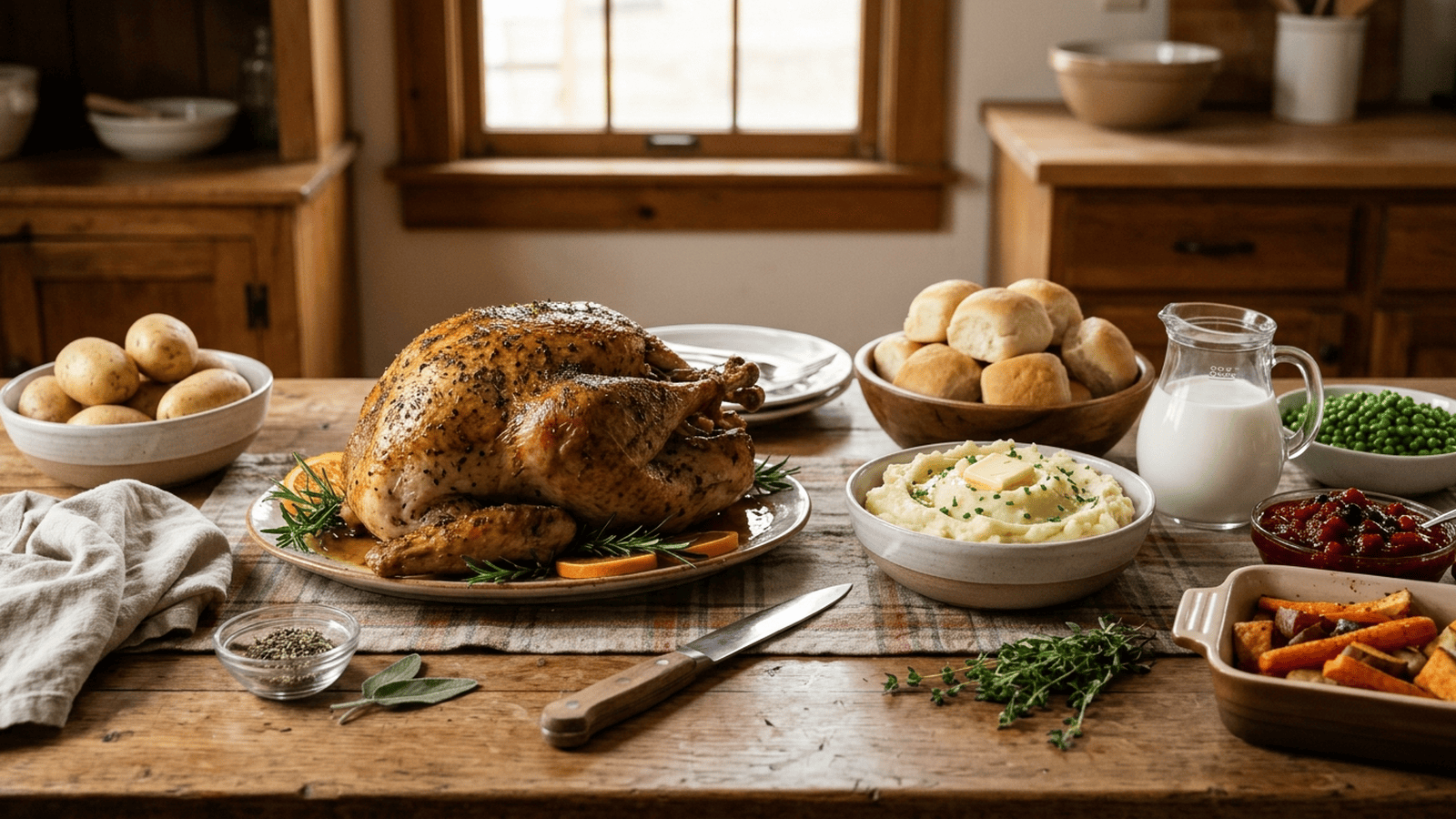
The American Farm Bureau Federation estimates that an average Thanksgiving feast for 10 will cost $58.63 this year, up 6% from last year. It says this is the first increase since 2022, when the meal reached a high of $64.05. Higher turkey prices and diesel costs are contributing to the rise, with fuel adding to the cost of processing and transporting staples such as milk, potatoes and cranberries. The USDA forecasts a wholesale price of $1.76 per pound for a whole frozen turkey hen, 29% above last year. The Farm Bureau survey draws on volunteers in all 50 states and Puerto Rico, but the provided figures do not detail regional prices.
TLDR: A Farm Bureau survey puts the average Thanksgiving feast for 10 at $58.63, a 6% increase from last year. Higher turkey prices and diesel costs are cited as factors, while the available figures do not break down prices by region.
The average Thanksgiving feast for 10 people is expected to cost $58.63 this year, a 6% increase from last year, according to the American Farm Bureau Federation. The estimate points to two main pressures: sharply higher turkey prices and increased fuel costs that affect the processing and transport of other holiday staples.
The Farm Bureau’s stated purpose is to track grocery prices for a standard Thanksgiving meal. Its survey uses hundreds of volunteers in all 50 states and Puerto Rico. That broad collection effort offers a national estimate, though the information provided does not give separate prices or changes for individual regions.
The group has tracked Thanksgiving meal costs for 40 years. It says this is the first increase since 2022, when the average feast reached a high of $64.05. This year’s estimate remains below that record, but it marks a change after several years without an increase in the price of the meal, according to the Farm Bureau.
Turkey is a major factor in the new estimate. The U.S. Department of Agriculture forecasts that a whole frozen turkey hen will cost an average of $1.76 per pound at wholesale this year, 29% more than last year. That is a wholesale forecast, not a stated price for shoppers at grocery stores, but it signals a higher cost earlier in the supply chain.
The Farm Bureau attributes the rise in turkey prices to stronger demand from Americans seeking protein and an industry that is still recovering from bird flu cases. The supplied information does not specify how much each factor contributes to the price increase. It also does not provide a forecast for the retail price of a particular turkey or the size of bird included in a household’s meal.
Fuel costs affect more than the main dish. The Farm Bureau says high diesel prices have made it more expensive for farmers to process and transport milk, dinner rolls, potatoes, frozen peas and cranberries. These items are part of the meal estimate, so added costs in moving and processing them can contribute to the total even as the price changes vary by product.
The reported increase is an average for a feast intended to serve 10. It does not mean every household will pay exactly $58.63. The estimate provides a reference point for the foods tracked, while individual grocery bills can differ according to the items purchased and prices in a shopper’s area. The excerpt does not include a regional breakdown, a list of each item’s price, or details about the specific stores used in the survey.
The Farm Bureau’s use of volunteers across the country and in Puerto Rico gives the estimate a wide geographic scope. Still, the available figures do not show which regions saw the largest increases or whether any areas had lower costs. Regional variation is therefore part of the picture that the supplied information leaves unquantified, rather than a basis for assigning a precise local price.
For households planning a meal, the clearest practical figures are the $58.63 average for 10 people, the 6% year-over-year rise, and the USDA’s $1.76-per-pound wholesale turkey forecast. The listed pressures include diesel costs affecting staples and higher turkey prices tied to demand and the industry’s recovery from bird flu. The source gives no additional household fees, required forms, compliance rules or deadlines; those details do not apply to this price estimate.
The Farm Bureau released its survey on Wednesday, and the USDA forecast covers this year. No next reporting date, enforcement process or oversight step is identified in the available account. The Farm Bureau’s ongoing price tracking and the USDA’s forecast are the monitoring details provided, while regional comparisons and further updates remain unspecified.
The figures are best read as a broad comparison with the previous year, not as a promise about what a shopper will find at a checkout. The survey’s national scope helps describe the direction of costs, but it cannot show the price of a meal in a particular town from the details provided. Shoppers may choose different foods or quantities from those represented in the estimate, and the available account does not explain how those choices affect the total. The $58.63 figure is therefore a useful reference for the meal tracked by the Farm Bureau, while local prices and individual menus remain outside the stated estimate.
The distinction between wholesale and store prices also matters when interpreting the turkey forecast. The USDA figure describes the average wholesale price for a whole frozen hen, while the Farm Bureau’s meal total is a grocery estimate. The information provided does not show how much of the wholesale increase will appear in retail prices, or when shoppers might see it. The two numbers describe related parts of the food supply chain, but they are not interchangeable measures.
For practical planning, the survey offers a national benchmark rather than a household budget or a required spending amount. It identifies turkey and fuel-related costs as pressures but does not provide a complete item-by-item breakdown that would show which foods account for the largest share of the change. There are no forms to file, compliance steps, enforcement actions or deadlines tied to the estimate. The account also gives no timeline for future changes. Its practical value is limited to the average meal cost, the comparison with last year and the stated factors behind the rise.

Dylan Brooks serves as the Senior Correspondent for Statehouses and Local Governance at Just Right News, where he brings a principled, constitutionalist lens to the often-overlooked machinery of state-level politics. As the lead voice behind the acclaimed feature series “Fifty Laboratories of Power,” Dylan has dedicated his career to the idea that the most impactful governance happens closest to home. His reporting consistently champions the Tenth Amendment, exploring how individual states can serve as testing grounds for innovative, conservative policy solutions that prioritize personal liberty and fiscal responsibility.
A native of Des Moines, Iowa, Dylan’s journalistic philosophy was forged in the heart of the American Midwest. Growing up in a community where local school board meetings and town halls were the bedrock of civic life, he developed a deep appreciation for the “retail politics” of the heartland. This upbringing instilled in him a fundamental belief that the American experiment is best preserved when power is decentralized. He carries the values of his Iowa roots into every assignment, maintaining a healthy skepticism of federal overreach and a steadfast commitment to the concerns of everyday citizens over the interests of the administrative state.
Now based in Madison, Wisconsin, Dylan operates from one of the nation’s most pivotal political battlegrounds. His location in a state capital known for its rigorous policy debates allows him to provide Just Right News readers with a front-row seat to the legislative process. From Madison, he tracks the ripple effects of statehouse decisions on local municipalities, ensuring that the connection between high-level policy and community impact is never lost. His work often highlights the success of conservative governors and legislatures in fostering economic growth, protecting parental rights, and securing the integrity of local institutions.
As an African American man in the conservative media landscape, Dylan offers a vital perspective on how limited government and free-market principles empower individuals and families. He frequently reports on how deregulation and school choice initiatives provide new avenues for success in underserved communities, challenging the monolithic narratives often presented by legacy media outlets. Dylan’s work is characterized by a commitment to the facts and a refusal to shy away from the complex realities of modern governance.
Throughout his tenure at Just Right News, Dylan has become a trusted authority for readers who value a rigorous, principled approach to the news. Whether he is dissecting a complex state budget or profiling a local grassroots movement, his goal remains the same: to provide the American public with the information they need to hold their local leaders accountable. By focusing on the “Fifty Laboratories of Power,” Dylan Brooks ensures that the vital work being done in statehouses across the country receives the national attention it deserves, always through a lens that respects the traditions and sovereignty of the American people.