

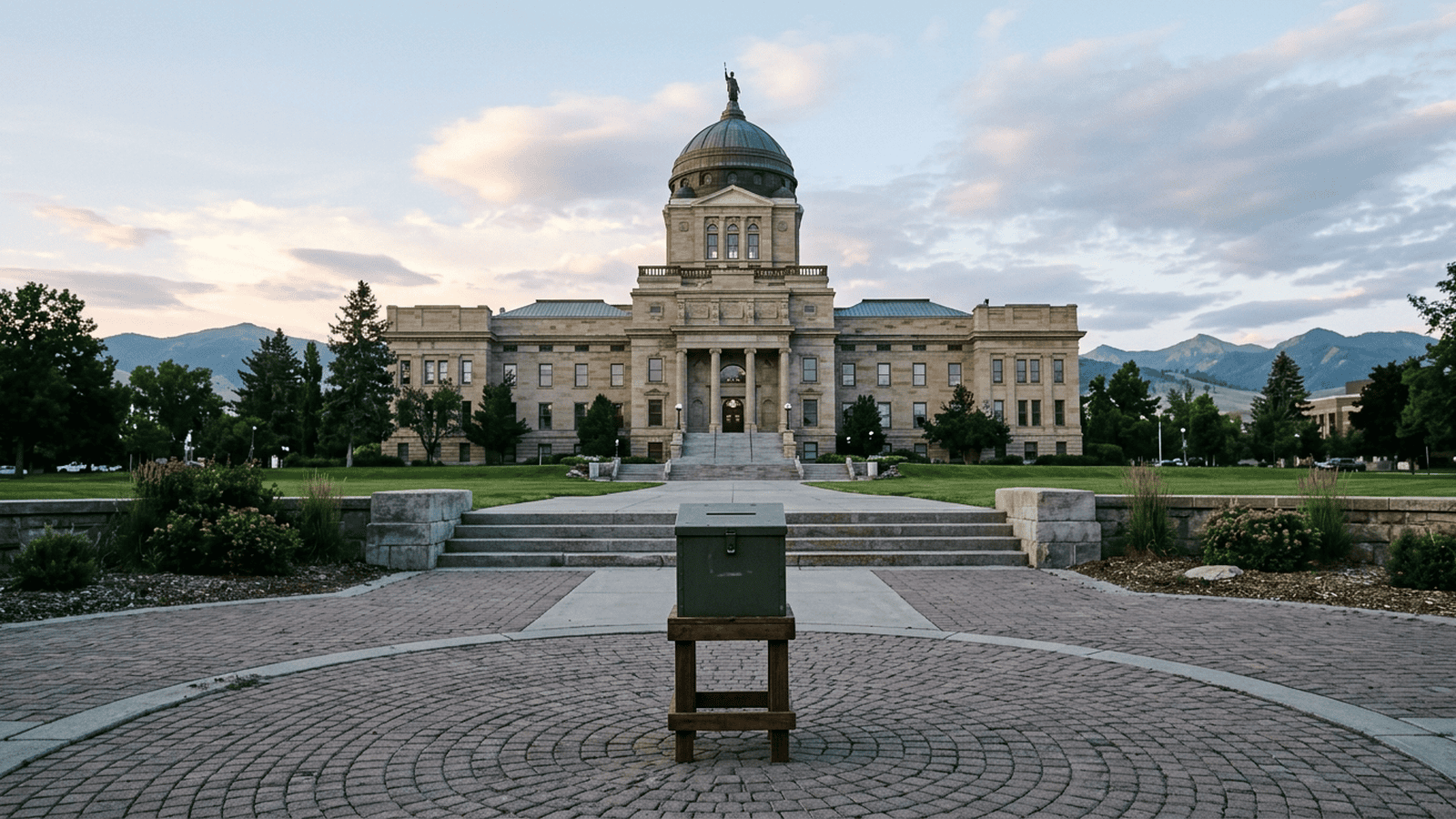
Montana voters approved Initiative 194 by a 66-to-34 percent margin, changing the political spending powers granted to corporations and other groups. Supporters say the measure is intended to increase transparency and reduce corporate and dark money in elections. It bars corporations, nonprofits, unions, and trade associations from contributing to candidates, parties, and political committees in Montana, while individuals and political committees retain some ability to give and spend. Violations could cost organizations their charter privileges, including limited liability, and require repayment of election spending. The law is scheduled to take effect January 1, 2027, but legal challenges are underway and could reach the U.S. Supreme Court.
TLDR: Montana voters approved a law restricting corporate and nonprofit contributions in state elections, with supporters seeking greater transparency around political spending. The measure is scheduled to begin in 2027, while a lawsuit argues it violates First Amendment protections.
Montana voters have approved a plan that supporters say could curb corporate and dark money in state elections. The vote puts a new law on a path toward a direct legal test of how far states can go in limiting political spending after the Supreme Court’s Citizens United ruling.
Initiative 194, known as the Montana Plan, passed on November 3 by 66 percent to 34 percent, with more than 465,000 voters taking part. It changes which political powers the state grants to corporations and other groups. The law is scheduled to take effect on January 1, 2027, unless legal proceedings change that course.
Supporters’ stated rationale is to increase transparency and limit corporate and dark money in state elections. They argue that the state does not have to grant corporations the same political spending powers that it grants people. The measure would use state rules over corporate status to restrict how organizations take part in elections.
That approach matters because the Supreme Court’s 2010 Citizens United decision held that the government could not bar corporations and unions from making independent political expenditures. The ruling did not remove every election rule, and it did not mean that companies could give unlimited money directly to candidates. But it sharply limited government power to restrict independent political spending by corporations and unions.
The Montana Plan seeks a different route. Rather than simply setting a spending cap, it would change the political rights that certain organizations receive under state law. Corporations, nonprofits, unions, and trade associations would be barred from contributing to candidates, parties, and political committees. Individuals and committees could still give and spend under the measure.
The measure also includes a possible penalty for groups found to have violated its rules. A group could lose charter privileges, including limited liability, and could be required to repay its spending. Those consequences make enforcement a central part of the plan. State officials would have to determine whether an organization had broken the rules and what penalties apply.
The proposal is not a settled answer to the constitutional questions it raises. A lawsuit argues that the law violates the First Amendment. That claim puts the state’s effort to limit organizational political activity in tension with protections for political speech and with the Supreme Court’s past decisions. The dispute could reach the Supreme Court, but no outcome is assured.
That uncertainty is important for voters and organizations alike. Approval at the ballot box gives the measure public support, but it does not decide whether the law can stand in court. Judges may have to weigh the state’s authority over the privileges it grants organizations against constitutional protections for political spending. The legal challenge could shape how the measure is applied, or whether it takes effect as written.
For organizations, the practical rules could mean changes to how they plan and report election activity. The ban described in the measure covers contributions to candidates, parties, and political committees, while individuals and committees retain the ability to give and spend. Groups would need to understand which activities are covered and how the rules apply to their structure. A violation could carry consequences beyond a fine, including loss of limited liability and repayment of spending.
The available details do not set out a cost estimate, a new paperwork system, or a schedule for enforcement. Those questions may depend on how state officials put the measure into practice and how courts interpret it. The date stated in the measure is January 1, 2027. The pending lawsuit means that court proceedings are another key part of the timeline.
The case could therefore matter beyond Montana, though the result remains uncertain. If the law survives, it could offer supporters of tighter election rules a model for challenging corporate political power through state law. If it is blocked, the dispute could reinforce limits on states seeking to restrict political spending by organizations.
For now, Montana’s voters have approved a measure, not resolved the constitutional fight. The next steps are the law’s scheduled start date and the court proceedings over its limits. Whether the plan can alter the reach of Citizens United will depend on those proceedings and on how the courts answer the First Amendment challenge.

Rachel Vaughn serves as a Senior Correspondent for Just Right News, where she leads the network’s coverage of Global Health, Climate, and Development. With a career defined by intellectual rigor and a commitment to principled reporting, Rachel provides a vital conservative perspective on some of the most complex and high-stakes issues facing the world today. Her work is characterized by a refusal to accept bureaucratic narratives at face value, focusing instead on how international policies impact national sovereignty, individual liberty, and the American taxpayer.
Raised in New Haven, Connecticut, Rachel grew up in an environment dominated by elite academic discourse. This upbringing provided her with a front-row seat to the inner workings of the American establishment, but it also instilled in her a healthy skepticism of the “ivory tower” consensus. She learned early on that while academic theories may sound promising in a lecture hall, they often fail to account for the practical realities of the working class. This background drives her to bridge the gap between high-level policy discussions and the common-sense concerns of everyday citizens, ensuring that her reporting remains grounded and accessible.
Now based in Burlington, Vermont, Rachel operates from a unique vantage point within one of the nation’s most progressive political landscapes. Living and working in a region that often serves as a testing ground for radical social and environmental experiments allows her to witness the real-world consequences of these policies firsthand. From her base in the Green Mountain State, she provides Just Right News readers with essential “boots on the ground” reporting, documenting the friction between local mandates and the constitutional freedoms of the individual. Her presence in Burlington ensures that her critiques of globalist agendas are informed by a direct understanding of how those ideologies manifest at the local level.
In her acclaimed feature series, “Planetary Stakes,” Rachel explores the intersection of international development and environmental stewardship. She rejects the alarmism often found in mainstream media, opting instead for a sober analysis of the economic and geopolitical costs of global climate agreements. Her reporting frequently highlights the importance of market-driven innovation and the role of American leadership in fostering global health without ceding authority to unelected international bodies. Through “Planetary Stakes,” she has become a leading voice for those who believe that true conservation and public health are best achieved through transparency, accountability, and the protection of private property rights.
Throughout her tenure at Just Right News, Rachel has distinguished herself as a journalist who is unafraid to ask difficult questions of global institutions. Whether she is investigating the influence of non-governmental organizations on domestic policy or analyzing the fiscal transparency of international health initiatives, her goal remains the same: to provide her audience with the facts necessary to navigate an increasingly interconnected world. Her blend of East Coast intellectual heritage and her current immersion in the political heart of the Northeast makes her an indispensable asset to the newsroom and a trusted source for readers seeking a principled, conservative take on the issues that define our era.