

Senators Josh Hawley and Dick Durbin are introducing a bipartisan bill that would let families pursue court claims over child sexual exploitation and cyber injuries even when a company’s terms require arbitration. The proposal would allow class actions and let survivors and families choose between public court and confidential arbitration. It is not yet law, and it does not specify fees, forms, compliance deadlines or an enforcement process. The bill arrives before a Senate hearing Tuesday, where two survivors and two experts are expected to testify. Roblox CEO Dave Baszucki was invited but declined. The hearing and the bill extend congressional scrutiny of child safety on a platform with 138 million daily active users.
TLDR: The proposed bipartisan measure would loosen the hold of click-through arbitration terms on families’ claims involving child exploitation and cyber injuries. A Senate hearing with survivor and expert testimony is scheduled as the legislative process begins.
A bipartisan bill from Senators Josh Hawley and Dick Durbin would give families a clearer path to court when children are harmed by tech products. The proposal targets forced arbitration terms in company agreements and arrives ahead of a congressional hearing on Roblox. It is legislation being introduced, not a law already in effect.
The senators’ stated rationale is straightforward: a click-through agreement should not prevent a child or family from seeking justice in court. Hawley says the measure is intended to hold platforms accountable and protect children from online exploitation. Durbin argues that terms of service should not decide whether a family can bring a claim before a judge or jury.
The bill is called the No Forced Arbitration for Child Sexual Exploitation and Cyber Injuries Act. It would let families pursue claims in court even if they had agreed to a company’s private arbitration terms. It would also allow class-action lawsuits and give survivors and families the choice between public court and confidential arbitration.
Those options would change how some disputes are handled. Private arbitration would no longer be the only route imposed by a click-through agreement for claims covered by the proposal. The choice of forum would sit with survivors and families, rather than being settled in advance by the terms of service. That is a significant change to the way companies can rely on those agreements.
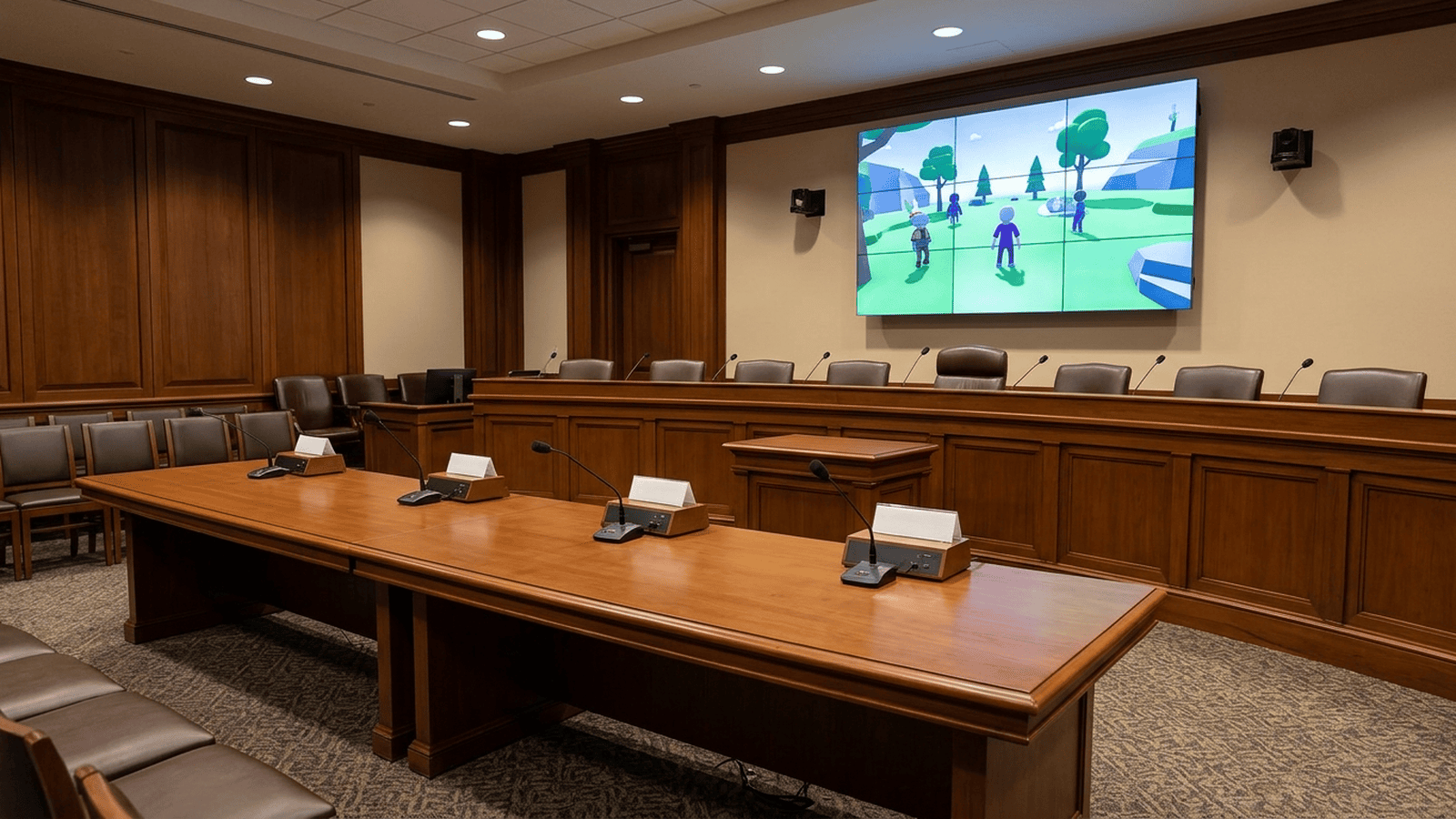
The legislation is being introduced as the Senate Judiciary Subcommittee on Crime and Counterterrorism prepares its first congressional hearing into Roblox practices. Hawley will chair the Tuesday hearing, where two abuse survivors and two experts are set to testify. Roblox chief executive Dave Baszucki was invited but declined to appear.
The senators announced the bill after launching a joint investigation into child safety on Roblox in August. They wrote then that alleged criminal activity on the platform warranted congressional scrutiny and raised concerns that revenue and user engagement could be prioritized over children’s safety. Those statements describe the senators’ concerns, not a finding established by the excerpt.
Families and state attorneys general have sued Roblox, alleging that online predators used the platform to groom, extort and exploit children. The company faces nearly 200 federal lawsuits and has reached settlements with at least six states over child-safety issues. The existence of lawsuits and settlements provides context for the congressional inquiry, but the allegations should not be treated as proven conclusions in every case.
Roblox reported 138 million daily active users in its latest shareholder letter, with users ranging in age from five to over 25. The scale and age range help explain why the senators are examining how children use the platform and what recourse families have when harm is alleged. The bill, however, is not described as a general safety code for the platform. Its central change concerns arbitration agreements, access to court and class-action claims.
Roblox has also described steps of its own. Chief safety officer Matt Kaufman wrote this month that the company works with law enforcement and looks for bad behavior to report through appropriate channels. The company announced last year that it would strengthen age-verification protections for minors. Chief executive David Baszucki has called the guardrails a potential standard for safety and civility online.
The practical impact would fall most directly on families bringing covered claims and companies whose terms require private arbitration. Affected families could choose to bring a claim in public court or use confidential arbitration, and the bill would permit class actions. No filing fee, new form, compliance deadline, enforcement process or implementation date is specified in the material. Those details remain part of the plan as introduced, not settled requirements.
The hearing and proposed legislation are the next steps in a continuing review of platform safety and accountability. The bill still must move through the legislative process before it can become law, and the hearing will add testimony from survivors and experts. That oversight will clarify the issues and the proposal’s path; the material does not establish that the experts have resolved the risks. The next steps are necessary to assess the bill and its effects before any new legal requirements take effect.

Deborah Cole serves as a Senior Correspondent for Just Right News, where she spearheads the network’s coverage of Housing, Infrastructure, and Mobility. With a career defined by a commitment to rigorous reporting and a focus on the fundamental pillars of American community life, Deborah brings a principled perspective to the complex issues that dictate how and where we live. Her work is grounded in the belief that sound policy, fiscal responsibility, and respect for private property are the essential foundations of a prosperous society.
Originally from Boston, Massachusetts, Deborah’s upbringing in one of the nation’s oldest and most historically significant cities deeply influenced her professional trajectory. Growing up amidst the architectural legacy and dense urban planning of New England, she developed an early appreciation for the importance of durable infrastructure and the role of local tradition in shaping neighborhoods. Her perspective is informed by the classic American values of her hometown—hard work, community cohesion, and a healthy skepticism of top-down bureaucratic mandates that often overlook the unique needs of individual citizens.
Today, Deborah operates from her base in Austin, Texas, a city that serves as a primary laboratory for her reporting. Austin’s rapid expansion and its status as a hub for innovation and migration provide her with a front-row seat to the most pressing challenges in modern infrastructure and housing. From the Lone Star State, she chronicles the tensions between rapid growth and the preservation of the American Dream, often highlighting how market-driven solutions and deregulation can address the housing shortages that plague many of the country’s metropolitan areas.
At Just Right News, Deborah is perhaps best known for her signature feature series, “Where We Live.” Through this platform, she explores the intersection of public policy and private life, moving beyond mere statistics to tell the stories of families, small business owners, and local developers. Her reporting frequently highlights the importance of mobility—not just in terms of transportation and transit, but as a vehicle for economic opportunity and social stability. She remains a staunch advocate for the taxpayer, consistently scrutinizing government spending on large-scale projects and advocating for transparency in how infrastructure dollars are allocated.
Deborah’s beat is more than just a collection of policy topics; it is an investigation into the physical and legal structures that allow families to flourish. Whether she is reporting on the impact of zoning laws on suburban development or the necessity of maintaining the nation’s highway systems, her work is characterized by a dedication to the facts and a respect for the constitutional principles that protect the rights of homeowners.
As a Senior Correspondent, Deborah Cole continues to be a vital voice for Just Right News, providing the audience with the clarity and context needed to navigate an ever-changing landscape. Her reporting ensures that the values of individual liberty and local sovereignty remain at the forefront of the national conversation regarding the future of our cities and towns. Through her tireless efforts, she remains committed to informing the public on the issues that hit closest to home.