

Young voters played a visible role in the 2026 midterms, with estimates showing 72 percent of voters aged 18 to 29 chose Democratic House candidates and 25 percent chose Republicans. Tufts CIRCLE described the 47-point preference as the highest it had recorded in a national election. Reports from Nome, Boston, Cornell and other locations show varied reasons for participating, including local living costs, land preservation, political discussion and campus organizing. Cornell organizers helped nearly 500 students register and saw more than four times as many absentee-ballot forms taken as during the 2024 presidential election. Individual accounts offer context, but they do not establish why all young voters made their choices. Further election data can clarify the broader pattern.
TLDR: Young voters strongly favored Democratic House candidates in the 2026 midterms, according to national estimates, while local accounts show varied concerns and experiences. Campus organizers reported substantial registration and absentee-form activity, but individual stories do not explain every voter’s choice.
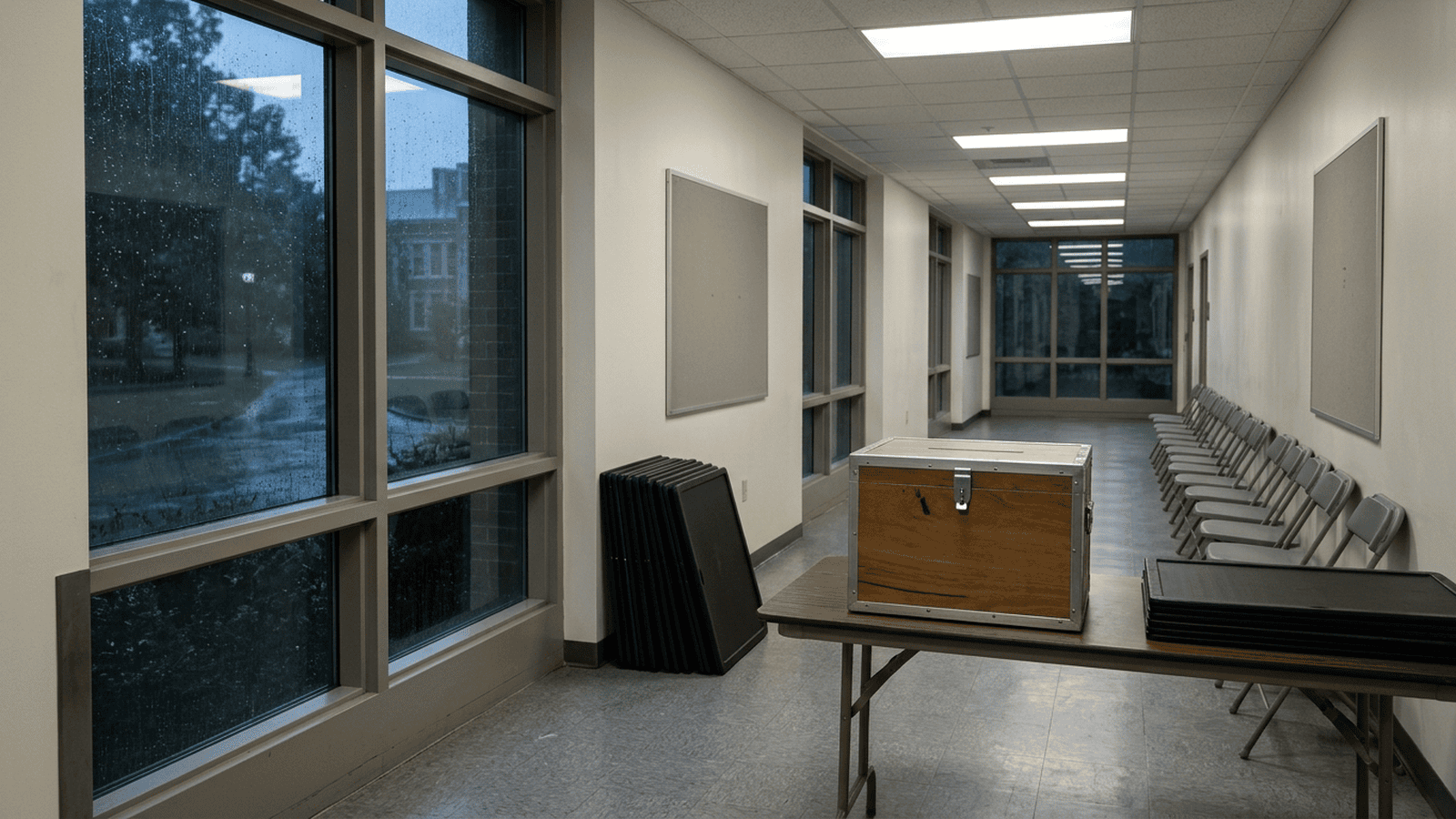
The 2026 midterms produced a sharp showing from young voters, according to estimates cited in election-night reporting. Across the country, students described crowded polling places, watch parties and a strong sense that the results could bring change. Their accounts show how some young people experienced the election, while national estimates offer a broader measure of their voting choices.
There was no single official rationale for the election outcome in the reported material. The accounts instead record individual reasons for voting and reactions to the results. Costly fuel and heating in Nome, concern about Alaska’s land and resources, and unease about political discussion on a college campus all appeared in voters’ descriptions.
The national figures point to a clear preference among younger voters for Democratic House candidates. An estimated 72 percent of voters aged 18 to 29 chose a Democrat, compared with 25 percent who chose a Republican. Tufts University’s Center for Information & Research on Civic Learning and Engagement, a nonpartisan group focused on youth civic engagement, called the 47-point preference the highest it had recorded in a national election. Those estimates describe the age group as a whole, not the motives of every young voter.
The reporting also listed Democratic shares among young voters in four Senate races: 74 percent in Florida, 80 percent in Kansas, 74 percent in Maine and 67 percent in Michigan. These numbers add state-level detail, but individual accounts show a wider range of experiences than a single figure can capture.
North Carolina offered one notable result. Democrat LaKesha Womack defeated Republican incumbent Tim Moore in the state’s 14th Congressional District, widely viewed as safe for Republicans. Moore was a powerful state politician who helped draw the district while serving in the General Assembly. The district also includes many students. The report linked young voters’ participation to the upset, but provided no breakdown showing how much of the result came from student ballots.
In Nome, Alaska, local concerns were concrete. Election workers checked voters’ IDs at Old St. Joe’s, a former church that serves as a community gathering place and polling site. Electrical lineman Perry Saito said he was tired of promises he believed had not been kept. Other residents described the high cost of living, including fuel priced at $7.39 per gallon and one family’s reported $10,000 cost for diesel heating the previous year. These were individual accounts, not a survey of Nome voters.
Guadalupe Callahan, a recent college graduate who grew up hunting and fishing near Nome, said she and friends supported candidates they believed would preserve the land. Her account connects voting to outdoor life and local resources. It also challenges the assumption, voiced in her remarks, that Alaska’s political identity cannot change. The report does not show how widely those views were held across the state.
At Boston College, students followed the returns at a Democrats’ watch party, where results were met with music, memes and air horns. The campus setting also raised a different issue: how freely students felt able to discuss politics. Junior Connor Moquin compared the atmosphere to avoiding a political argument at a family dinner. The account says the college ranked near the bottom in a free-speech ranking because of administrative censorship of protests and student self-censorship. That description concerns this campus, not student speech nationwide.
Other scenes showed the work behind participation. At Cornell, student organizers helped nearly 500 students register during the semester, compared with just over 300 during the 2024 presidential election. More than four times as many absentee-ballot forms were taken. On Election Day, organizers were at the campus polling place from 5 a.m. until 9 p.m., helping students vote. The report does not say how many forms were completed or ballots returned.
At the University of California, Berkeley, hundreds of voters lined up in the rain, and some students reportedly waited nearly half an hour between classes. In Rhode Island, students gathered for watch parties. In Kansas City, a campaign event drew a coalition described as including people across political parties, ages and income groups. These scenes show activity in particular places, not a uniform national response.
The election-night accounts document high engagement, but they cannot explain the choices of all young people. A long line, a student’s hopes or a crowded watch party can illustrate participation without measuring the views of an entire age group. National estimates provide a wider picture of voting choices, while the reported stories offer context without proving why young people voted as they did.
The practical details are specific but incomplete: some students waited nearly half an hour, organizers distributed absentee-ballot forms, and Cornell volunteers assisted voters during a 16-hour period. The report identifies no new fees, paperwork rules, enforcement measures or upcoming voting deadlines. Further steps in election administration are not specified. Fuller election data could help distinguish individual experiences from broader patterns.

James Foster serves as the Senior Correspondent for Inequality and the Social Safety Net at Just Right News, where he brings a principled and nuanced perspective to the most pressing economic challenges facing the nation. With a career dedicated to exploring the intersection of policy and personal responsibility, Foster has become a leading voice in documenting how government programs and economic shifts impact the American family. His reporting is characterized by a commitment to the “human element,” moving beyond cold statistics to highlight the stories of resilience, work, and community that define the modern American experience.
Foster’s perspective is deeply rooted in his upbringing in Birmingham, Alabama. Growing up in a city with a rich industrial heritage and a history of economic transformation, he witnessed firsthand the importance of the dignity of work and the strength of local institutions. In Birmingham, he saw how the most effective safety nets were often those woven by neighbors, faith-based organizations, and local civic groups. This background instilled in him a lifelong skepticism of “one-size-fits-all” solutions from distant bureaucracies, favoring instead the localized, community-driven support systems that he frequently champions in his writing.
Now based in Atlanta, Georgia, Foster operates from one of the most dynamic and rapidly evolving metropolitan hubs in the South. His location provides a front-row seat to the stark contrasts of the modern economy. From the gleaming towers of Atlanta’s financial districts to the struggling neighborhoods on the city’s periphery, Foster finds the stories that illustrate the complexities of upward mobility. His reporting from the Sun Belt serves as a microcosm for the national debate on poverty, highlighting how inflation, housing costs, and labor market shifts affect the working class in real-time.
As the lead for the acclaimed feature series “America’s Balancing Act,” Foster explores the delicate tension between providing a necessary hand up and fostering long-term independence. The series has become a cornerstone of Just Right News, offering a deep dive into the unintended consequences of social welfare policies. Foster’s work often focuses on the “cliff effect” and other systemic hurdles that can inadvertently discourage employment, arguing that true compassion is measured by how many people are empowered to leave the safety net, rather than how many are added to it.
Throughout his tenure, Foster has remained dedicated to the mission of Just Right News, providing a clear-eyed, conservative analysis of social issues. He believes that a free society thrives when individuals are empowered and the private sector is allowed to innovate. Whether he is interviewing small business owners about the challenges of a changing workforce or documenting the success of private charitable initiatives, Foster’s goal is to provide readers with the truth about the state of the American Dream. His work serves as a vital reminder that while the challenges of inequality are great, the solutions are often found in the strength of the American spirit and the preservation of traditional values.