

Boeing plans to reduce its commercial-airplane workforce by about 5% as it resets production schedules, while a reported administration proposal would tighten weekly job-search requirements for unemployment benefits.
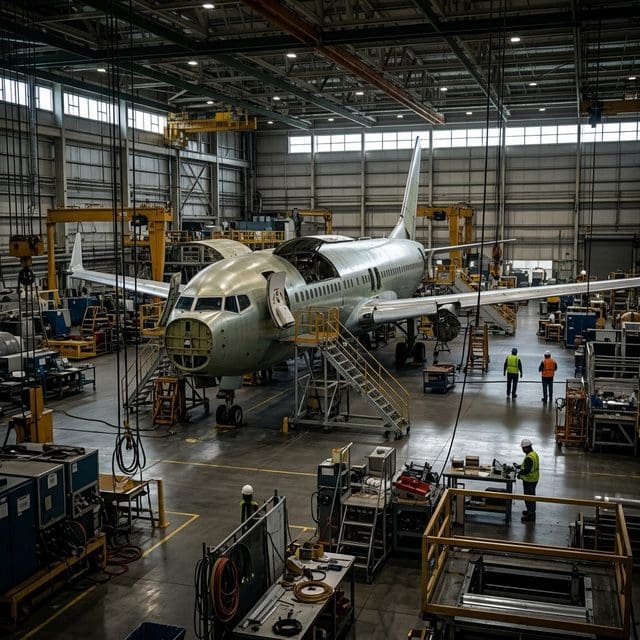
Boeing plans to reduce its commercial-airplane workforce by approximately 5%, using attrition and involuntary layoffs, as it adjusts to a slower production ramp-up. Notifications are expected to begin in December, the company said Nov. 9. Boeing has not disclosed the number of jobs affected or which locations and occupations may face cuts.
The company attributed the decision to slower-than-expected production growth and reduced aircraft output, not to automation. Boeing said its factories and suppliers need more time to stabilize. For workers, the distinction offers little immediate comfort: layoffs are confirmed, but the company has not said who will receive notices or how many positions will be eliminated.
Boeing is targeting a rate of 52 737 Max aircraft a month in the second half of 2027. The company said production schedules must be reset to give factories and suppliers time to stabilize. A slower ramp can affect staffing beyond Boeing, too, since supplier schedules depend on planned output. The company has not quantified any supplier job impact.
Using attrition alongside involuntary layoffs could mean some positions disappear as employees leave and are not replaced, while other workers are directly notified of job losses. Boeing has not said how the reduction will be divided between those approaches. Nor has it provided a breakdown by job category, leaving unclear whether production workers, technical staff or other employees will bear more of the cuts.
The latest available Labor Department figures show initial unemployment-insurance claims fell by 6,000 to 189,000 in the week ending Oct. 31, from a revised 195,000 the prior week. The four-week moving average stood at 194,750. These figures measure new claims, not the total number of unemployed workers, and they do not show how many Boeing employees may seek benefits. The report also predates December, when Boeing says notifications will begin.
CNBC reported Nov. 9 that the Trump administration is proposing stricter work-search requirements for unemployment benefits, including at least five qualifying activities each week. The Labor Department’s current news-release listing did not identify a new announcement that day on eligibility or work-search rules. The proposal reported by CNBC should therefore be distinguished from a department announcement; the available material does not establish its final terms or timing.
For someone facing a layoff, the effect of such a rule would depend on what qualifies as a job-search activity and how claimants must document it. The reported information does not specify those details or describe possible exceptions. The Labor Department’s listed releases also did not identify Boeing-specific assistance.
The available figures provide no verified October payroll, unemployment-rate or wage-growth data. They cannot show whether hiring elsewhere will absorb displaced workers, whether pay is keeping pace with household costs, or whether workforce participation is changing. The material also does not identify automation or immigration policy as a cause of Boeing’s decision. The company’s stated reasons are slower production growth and reduced aircraft output.
That leaves a limited but consequential picture: Boeing is reducing headcount while its production plan remains in flux, and new unemployment claims were lower in the latest reported week. The claims figure does not resolve what comes next for workers who lose jobs. The immediate test will be whether the revised schedule gives Boeing’s factories and suppliers a steadier footing—and whether affected workers can find jobs with dependable hours and pay. Boeing has set a 2027 production target, but has offered no timeline for individual decisions beyond the start of notifications in December.

Tom Blake serves as the Senior Correspondent for Labor, Wages, and Automation at Just Right News, where he brings a grounded, principled perspective to the most pressing economic issues facing the American heartland. As the lead voice behind the acclaimed feature series “The Price of Work,” Tom focuses his reporting on the intersection of traditional industry and the rapidly evolving technological landscape, always prioritizing the dignity of the individual worker and the health of the American family.
Tom’s deep understanding of the labor market is not merely academic; it is rooted in his upbringing in Detroit, Michigan. Growing up in the shadow of the automotive industry, he witnessed firsthand the triumphs and tribulations of the American blue-collar workforce. He saw how the stability of a manufacturing job could build a community and, conversely, how the erosion of those industries could tear the social fabric apart. This background instilled in him a lifelong respect for the trades and a healthy skepticism toward economic policies that prioritize globalist interests over the well-being of local communities.
Now based in Pittsburgh, Pennsylvania, Tom continues to report from the front lines of the shifting economy. Pittsburgh, a city that has reinvented itself while maintaining its gritty, industrious spirit, provides the perfect vantage point for his beat. From the steel mills that remain to the high-tech robotics labs reshaping the city’s future, Tom explores how automation is changing the nature of employment. His reporting often highlights the tension between innovation and tradition, arguing that while progress is inevitable, it must not come at the expense of the American worker’s ability to provide for their family through honest, meaningful labor.
In his role at Just Right News, Tom has become a vital voice for those who feel overlooked by mainstream economic coverage. He rejects the notion that the decline of American manufacturing is an unavoidable casualty of the modern era. Instead, his work often examines how regulatory overreach, rising energy costs, and the unchecked rise of automation impact the take-home pay of everyday citizens. Through “The Price of Work,” Tom delves into the true cost of economic shifts, looking beyond the raw data to tell the stories of the people behind the statistics.
Tom’s reporting is characterized by a commitment to the conservative values of self-reliance, fiscal responsibility, and the preservation of the American dream. He believes that a strong nation is built on a foundation of stable jobs and fair wages, and his work seeks to hold both government and corporate entities accountable to that standard. Whether he is interviewing a shop floor manager about the implementation of new AI technology or analyzing the impact of wage inflation on small businesses, Tom provides a clear-eyed analysis that resonates with readers who value hard work and common sense.
Through his dedicated coverage, Tom Blake remains a steadfast advocate for the American workforce, ensuring that the voices of those in the industrial heartland are heard loud and clear in the national conversation. His perspective is essential for anyone seeking to understand the complex realities of labor and automation in the twenty-first century.