

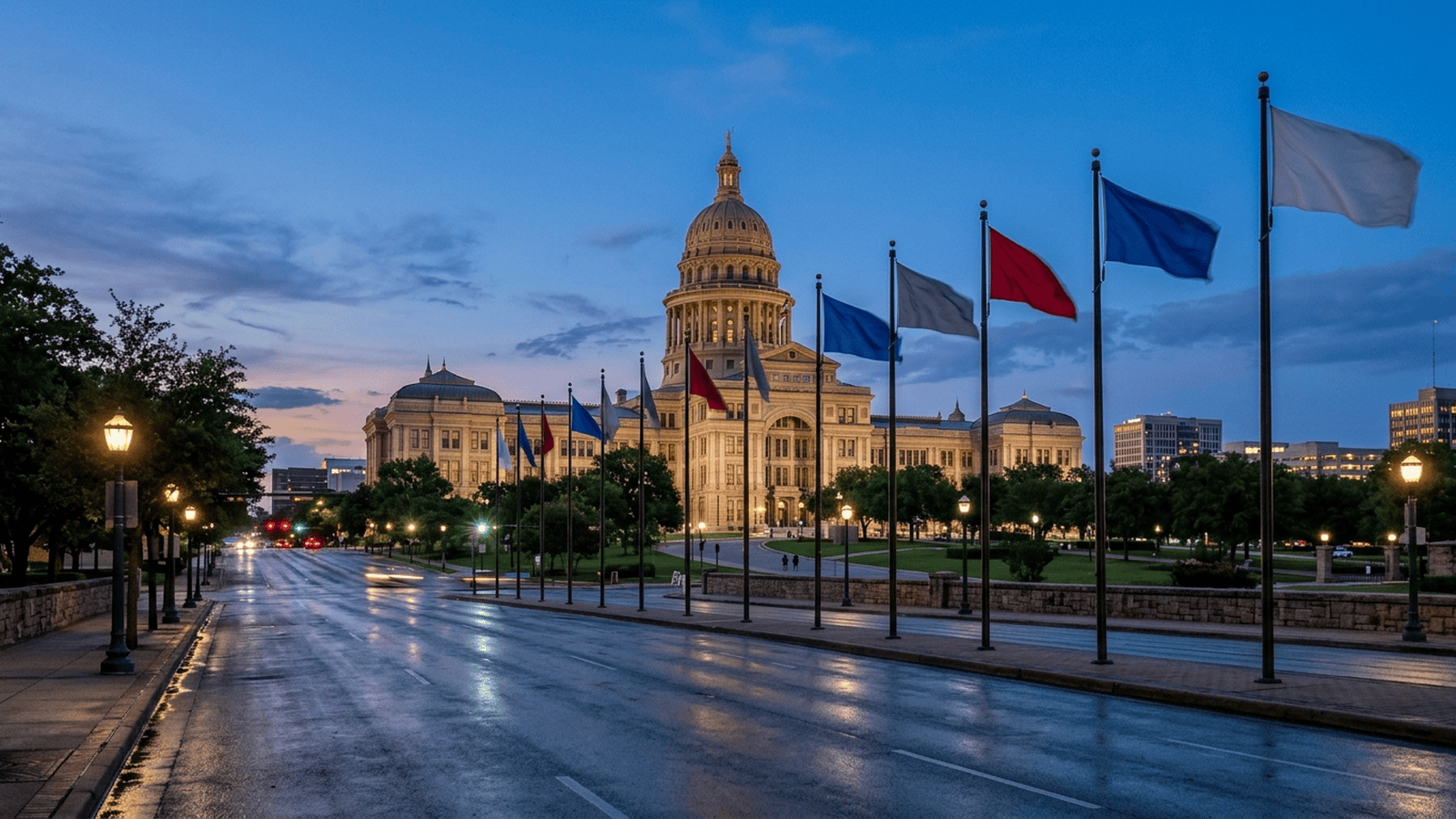
Texas delivered the most striking result in the 2026 midterms, with James Talarico winning the Senate race by more than a million votes and Gina Hinojosa defeating Greg Abbott. Democrats also won every statewide Texas race and four state Supreme Court seats, while control of at least one legislative chamber remained described as likely. Arizona Democrats won both legislative chambers, and Democratic candidates also won governorships in California and Nevada. The results put Republican prospects for 2028 under pressure, especially because Texas has been a central Republican stronghold. Still, the account acknowledges that the state could return to Republican control. Future outcomes depend on continued voter engagement and political developments not yet known.
TLDR: Texas’s midterm results weaken assumptions that the state will reliably support Republicans in 2028, while Democratic wins elsewhere add to the shift. The results are significant but do not guarantee a lasting change, and the source provides no detailed policy costs or implementation timetable.
The 2026 midterm results have sharply changed the political outlook for Republicans heading toward the next presidential election. In Texas, Democrat James Talarico defeated Ken Paxton in the U.S. Senate race by more than a million votes, while Gina Hinojosa defeated Governor Greg Abbott. Democrats also won every statewide race, according to the account of the results in the source material. The scale of those victories makes Texas the central test of claims about Republican strength in 2028.
The excerpt gives no official rationale for a policy change, because it describes election results rather than a new government policy. Its explanation for the Democratic gains is voter mobilization, particularly in communities along the Rio Grande, combined with a broader coalition of voters. That is an interpretation of the results, not proof that the same coalition will vote the same way in the next election. The results alone do not show which issues mattered most to voters or what prompted each person to choose a candidate.
The Texas results extended beyond the governor’s office and Senate seat. Democrats won all four state Supreme Court positions that were on the ballot, changing the court from a 9–0 conservative majority to a 5–4 split, as described in the excerpt. Democrats also may have won enough state House seats to control one chamber of the legislature and made inroads into the Senate majority. The source presents that legislative outcome as likely, rather than settled.
Those state results matter to the national picture because Texas has long been a major Republican stronghold. A decisive change there would complicate the path for a Republican presidential candidate seeking an Electoral College majority in 2028. The excerpt says four of the five largest states are now firmly Democratic and that Florida came close to joining them. It argues that Republican strength concentrated in rural parts of the Midwest, Mountain West and South may not be enough to build a winning national coalition. Texas is especially important because of its size and its role in presidential elections, but one result cannot settle how the state will vote next time.
That conclusion remains a projection. The same account acknowledges that Texas could return to Republican control by 2028 and describes the 2026 outcome as potentially a one-time reaction to conditions in this election year. The results establish what happened in these races. They do not establish how voters will respond to later candidates, campaigns or issues. Any confident prediction about the next presidential contest therefore goes beyond the direct evidence in the vote totals.
Arizona adds another piece of evidence, though not a guarantee of a lasting trend. Democrats won both chambers of its legislature, giving the party control of the state government alongside the governor’s office, according to the excerpt. It also reports Democratic gubernatorial victories in Nevada and California, and identifies New Mexico’s incoming governor as Deb Haaland. These outcomes suggest a wider set of Democratic gains, but each state has its own contests and electorate. The results offer a broader political picture, not proof that the same pattern will hold everywhere in 2028.
The Texas election could affect debates over housing affordability, wages, health care and immigration, but the excerpt describes those as areas where Democrats might pursue policy if they consolidate their position. It does not identify enacted measures, costs, forms, enforcement rules or deadlines. There is no specific compliance burden for households or businesses in the material, and no new housing or infrastructure policy is detailed. Those practical effects remain unknown rather than established parts of the election results. Voters and businesses should not treat possible future proposals as rules already in effect.
The clearest near-term political task described in the source is maintaining the participation of voters who entered the political process in 2026. It also says Democrats would need to consolidate their position and pursue policies they say could improve Texans’ lives. Both are conditions, not completed outcomes. The excerpt offers no timetable, formal oversight mechanism or expert assessment that can settle whether those efforts will succeed. It also does not say how long the new coalition will remain active or what might change its priorities.
For Republicans, the results are a serious warning about the limits of assuming that Texas will remain safely in the party’s column. For Democrats, the gains provide an opening, not a guarantee of durable power. The next steps are continued political organizing and the development of the policy agenda described in the source; no specific deadline or oversight process is reported. The 2028 outlook will become clearer only as those steps meet future elections and voters’ decisions.

Deborah Cole serves as a Senior Correspondent for Just Right News, where she spearheads the network’s coverage of Housing, Infrastructure, and Mobility. With a career defined by a commitment to rigorous reporting and a focus on the fundamental pillars of American community life, Deborah brings a principled perspective to the complex issues that dictate how and where we live. Her work is grounded in the belief that sound policy, fiscal responsibility, and respect for private property are the essential foundations of a prosperous society.
Originally from Boston, Massachusetts, Deborah’s upbringing in one of the nation’s oldest and most historically significant cities deeply influenced her professional trajectory. Growing up amidst the architectural legacy and dense urban planning of New England, she developed an early appreciation for the importance of durable infrastructure and the role of local tradition in shaping neighborhoods. Her perspective is informed by the classic American values of her hometown—hard work, community cohesion, and a healthy skepticism of top-down bureaucratic mandates that often overlook the unique needs of individual citizens.
Today, Deborah operates from her base in Austin, Texas, a city that serves as a primary laboratory for her reporting. Austin’s rapid expansion and its status as a hub for innovation and migration provide her with a front-row seat to the most pressing challenges in modern infrastructure and housing. From the Lone Star State, she chronicles the tensions between rapid growth and the preservation of the American Dream, often highlighting how market-driven solutions and deregulation can address the housing shortages that plague many of the country’s metropolitan areas.
At Just Right News, Deborah is perhaps best known for her signature feature series, “Where We Live.” Through this platform, she explores the intersection of public policy and private life, moving beyond mere statistics to tell the stories of families, small business owners, and local developers. Her reporting frequently highlights the importance of mobility—not just in terms of transportation and transit, but as a vehicle for economic opportunity and social stability. She remains a staunch advocate for the taxpayer, consistently scrutinizing government spending on large-scale projects and advocating for transparency in how infrastructure dollars are allocated.
Deborah’s beat is more than just a collection of policy topics; it is an investigation into the physical and legal structures that allow families to flourish. Whether she is reporting on the impact of zoning laws on suburban development or the necessity of maintaining the nation’s highway systems, her work is characterized by a dedication to the facts and a respect for the constitutional principles that protect the rights of homeowners.
As a Senior Correspondent, Deborah Cole continues to be a vital voice for Just Right News, providing the audience with the clarity and context needed to navigate an ever-changing landscape. Her reporting ensures that the values of individual liberty and local sovereignty remain at the forefront of the national conversation regarding the future of our cities and towns. Through her tireless efforts, she remains committed to informing the public on the issues that hit closest to home.