

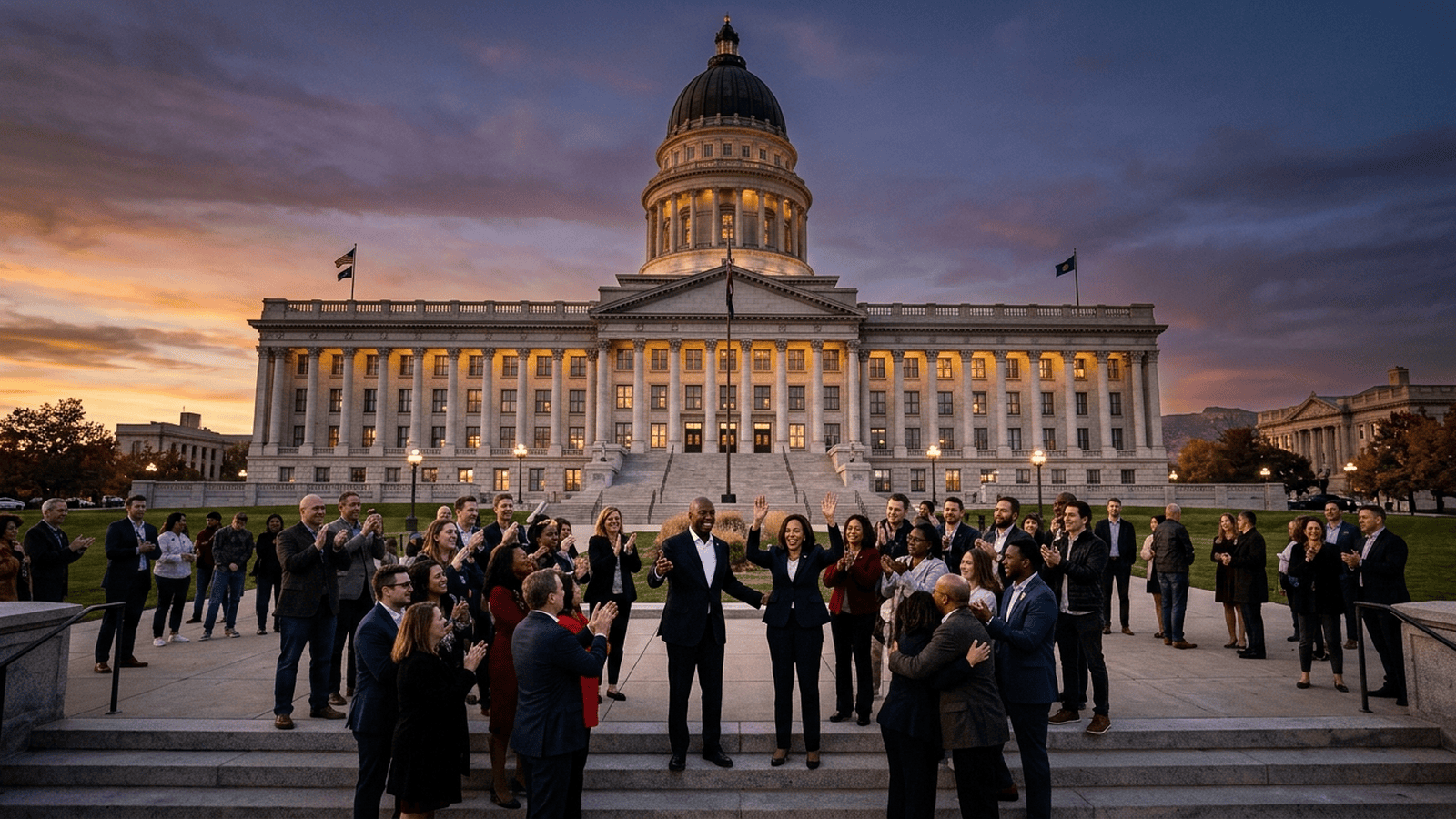
The 2026 midterms produced victories for Keisha Lance Bottoms in Georgia, Byron Donalds in Florida and David Crowley in Wisconsin, while Maryland Gov. Wes Moore won a second term. Bottoms is set to become the first Black woman elected governor in U.S. history and the first woman to govern Georgia. Donalds is set to become Florida’s first Black governor and the first Black Republican elected governor nationwide. In Nevada, Democrat Aaron Ford was leading by more than 70,000 votes, but CBS News still rated the race a toss-up. His outcome remained unresolved in the reported account.
TLDR: Three Black candidates won gubernatorial races, and Maryland’s Wes Moore secured reelection during the 2026 midterms. Nevada’s Aaron Ford was leading by more than 70,000 votes, but the race remained a toss-up.
The 2026 midterms produced historic results in several governors’ races. Voters elected Keisha Lance Bottoms in Georgia, Byron Donalds in Florida and David Crowley in Wisconsin. Maryland Gov. Wes Moore won reelection to a second term. Bottoms is set to become the first Black woman elected governor in the United States. Donalds is set to become the first Black Republican elected governor nationwide.
Those milestones mark a notable moment in state politics. They also describe different kinds of change. Bottoms’ victory would break a barrier for Black women in a country where no Black woman has been elected governor. Donalds’ victory would make him the first Black Republican to hold a governorship. Crowley’s win adds another Black governor to the group of leaders chosen by voters in these races. Moore’s reelection means Maryland voters chose him for another term.
The results are significant, but the details available here are limited. They identify the winners and the historic nature of two victories. They do not provide vote totals, margins, turnout figures or statements from the candidates. They also do not describe the campaigns, the issues voters weighed or the official reasons given for any policy proposals. Without those details, the results cannot show why individual voters made their choices or what specific promises shaped each race.
The victories also do not, on their own, establish what policies the governors will pursue. A governor’s office can affect how state laws and budgets are carried out, but practical effects depend on the policies adopted and the way they are put into practice. The available account does not name proposals that would change costs for residents, create or remove paperwork, alter enforcement, or set new timelines. Those impacts should not be assumed from the election results alone.
In Georgia, Bottoms’ election carries the clearest first-of-its-kind distinction. She is set to become the first Black woman elected governor in the country. That description is about both her identity and the office she won. It is a national milestone, even as the result comes from a state election. The available information does not include details about her plans for the state or the steps she intends to take after taking office.
In Florida, Donalds’ win has a separate historic distinction. He is set to become the first Black Republican elected governor in the nation. The result adds a new milestone in the history of state leadership. It does not, by itself, explain how voters in Florida viewed his party, his campaign or his proposed policies. No such explanations or campaign details are included in the reported facts available here.
Crowley’s victory in Wisconsin is also part of the broader set of results involving Black candidates for governor. The available account names him as the winner but does not specify a first-of-its-kind milestone for his election. It likewise does not provide a margin, a policy agenda or a statement about what his win means to voters in the state. Keeping those distinctions clear helps separate what is known from what remains unreported.
Moore’s reelection in Maryland offers a different kind of result. Rather than entering office for the first time, he won a second term. That outcome gives voters another term under a governor they had already chosen. The information available here does not include details about his record, the campaign or the policies he may pursue next. It also does not say which issues mattered most in the race.
A separate result in Nevada remained unresolved in the reported account. Aaron Ford was leading by more than 70,000 votes, but the race was still described as a toss-up. A lead is not the same as a confirmed final result, so Ford’s status should not be presented as a victory. The available information does not explain why the race remained uncertain or provide a final count. That means the outcome cannot be added to the list of confirmed wins described here.
Taken together, the confirmed results show voters choosing governors in Georgia, Florida and Wisconsin, and returning Moore to office in Maryland. They also establish two national firsts: Bottoms is set to be the first Black woman elected governor, and Donalds the first Black Republican elected governor. Those facts are the central milestones. Further conclusions about policy, voter motivations or the effects on residents require information beyond the results provided.

Ethan Blake serves as a Senior Correspondent for Just Right News, where he specializes in Longform Narrative and Public Understanding. In an era of rapid-fire headlines and fleeting soundbites, Ethan’s work stands as a testament to the power of deep-dive reporting and the importance of contextualizing the complex issues facing the nation today. His approach is rooted in the belief that the most profound truths are often found in the lived experiences of individuals rather than the abstract theories of distant policymakers.
Growing up in Providence, Rhode Island, Ethan developed an early appreciation for the historical and cultural threads that weave the American fabric together. Providence, a city defined by its industrial heritage and its blend of traditional neighborhoods, provided him with a front-row seat to the challenges and triumphs of the American working class. This upbringing instilled in him a respect for the “common sense” values of hard work, community loyalty, and the preservation of local institutions. He learned early on that behind every economic statistic or legislative debate, there are real families and neighborhoods navigating the consequences of change.
This foundational perspective is the driving force behind his signature feature series, “Lives Behind the Systems.” Through this series, Ethan explores the intersection of individual agency and institutional structure. Whether he is documenting the impact of federal land-use policies on rural families or examining how shifting educational standards affect local school boards, Ethan’s work prioritizes the human element. He seeks to uncover how large-scale systems—be they governmental, economic, or social—affect the daily lives of citizens, often advocating for a return to local control and personal responsibility.
Now based in Portland, Maine, Ethan draws significant inspiration from the rugged independence and self-reliance that define the region. The coastal landscape and the resilient spirit of Maine’s communities serve as a constant reminder of the importance of individual liberty and the strength found in decentralized power. Living and working outside the traditional media hubs allows Ethan to maintain a grounded perspective, ensuring his reporting remains untethered from the echo chambers of the major metropolitan centers. This geographic distance provides him with the clarity needed to translate complex national narratives into stories that resonate with the heart of the country.
At Just Right News, Ethan’s beat is more than just a professional assignment; it is a mission to foster a more informed and engaged citizenry. He believes that a free society depends on the public’s ability to understand the mechanisms of power and the value of traditional American principles. His longform narratives do not merely report the news; they provide a roadmap for understanding the cultural and political shifts of the modern era through a lens of skepticism toward centralized authority and a deep respect for the individual.
Through his meticulous research and narrative craftsmanship, Ethan Blake continues to bridge the gap between policy and the public. His work remains a vital resource for those who seek a deeper understanding of the systems that shape our world and the enduring spirit of the people who live within them.