

Dallas ISD’s proposed campus closures face community opposition, while student awards and an internship-networking app point to other ways schools and colleges can support opportunity.
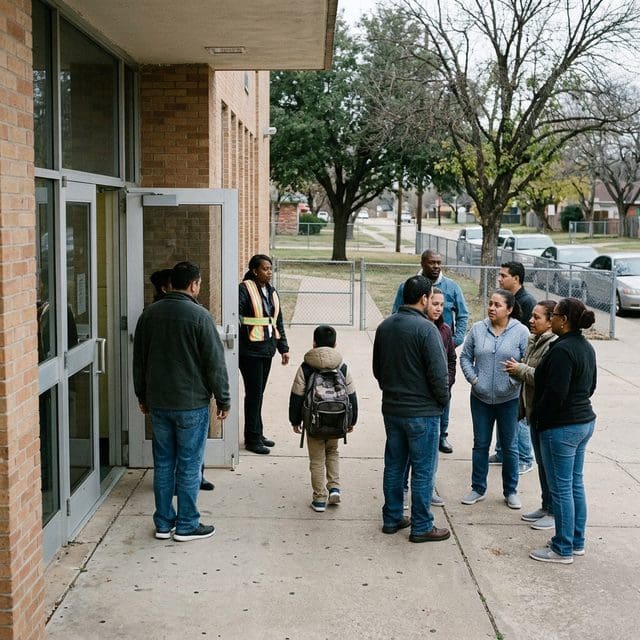
Education systems face a practical test: whether they can put limited resources to work for students while preserving routes to achievement. In Dallas, that question has become immediate as district leaders consider closing six campuses and parents and community members object to the proposed shutdown of Joseph J. Rhoads Learning Center.
Under the proposal, J.J. Rhoads students would move to H.S. Thompson Elementary. The district is weighing the campus changes amid a budget shortfall, according to local reporting. Trustees were expected to vote later in November, but the available reports do not establish a final decision or provide verified figures on the schools’ enrollment, projected savings or the district’s shortfall.
The debate puts competing responsibilities in plain view. District leaders must address financial pressures and enrollment changes, while families want their children’s schools and communities treated as more than entries on a spreadsheet. Consolidation can redirect resources, but it also disrupts routines and relationships. The value of any proposal will depend on what happens to students’ access to instruction and support after a campus closes.
The response from parents and neighbors has been particularly vocal around J.J. Rhoads, CBS Texas reported. That opposition does not settle the budget question, but it signals that a decision’s human consequences matter alongside its financial rationale. Clear explanations of enrollment, costs and the services students would receive at receiving schools are essential to judging whether a consolidation serves children.
Other recent developments offer a different view of how schools and colleges can recognize and connect student potential. Syracuse.com and The Post-Standard honored 20 Central New York high-school students in the 2026 Best and Brightest Awards. The recognition provides a public platform for student accomplishment, though the report does not describe the awards as a job-training program or measure their effect on recipients’ later education and careers.
At Alabama A&M University, senior mechanical-engineering student Bryson Hannah won $5,000 for Internably, according to Black Enterprise. The app is designed to connect college interns through curated groups organized by internship city or company. Separate reporting by Yahoo Finance said funding would support app development ahead of an iOS launch in November and a campus-ambassador marketing effort.
The idea addresses a familiar challenge: students need more than classroom knowledge to make the most of an internship. Peer connections may help them share information and build networks, while the app’s effectiveness will depend on whether students use it and find the groups valuable. Its development is an example of a student turning a perceived need into a product, not yet proof that the tool improves internship outcomes.
Princeton University’s event calendar also listed an “Ask Me Anything” session with Michelle Diaz, a pre-med alum and member of the Northeast board of the Latino Medical Student Association. The event description invited questions about growth-year opportunities for students considering time between college and medical school. Such choices can shape a training path, but the listing does not provide details about the session’s results or Diaz’s specific advice.
Taken together, these stories show different pieces of the education-to-workforce pipeline: decisions about where students learn, recognition of high-school achievement, and efforts to make college internships more connected. None alone answers the larger question of what works. That requires transparent school-level decisions and evidence that programs and tools help students gain skills, access opportunity and move toward their goals.
Daniel Owens serves as a Senior Correspondent for Just Right News, where he leads the newsroom’s coverage of Education, Workforce, and Upward Mobility. In an era where the national conversation often overlooks the practical foundations of success, Owens brings a principled perspective to the forefront of the media landscape. His work is defined by a commitment to the idea that a strong society is built on the pillars of quality education, a robust work ethic, and the removal of bureaucratic barriers to individual achievement.
Born and raised in Cleveland, Ohio, Owens’s worldview was shaped by the industrial landscape of the Midwest. Growing up in a city known for its grit and resilience, he witnessed firsthand the transformative power of steady employment and the devastating effects of economic stagnation. This background instilled in him a deep respect for the American worker and a healthy skepticism toward top-down government solutions that often fail to reach the communities they intend to help. As an African American man who has navigated the path to professional success, Owens approaches his beat with a nuanced understanding of how meritocracy and personal responsibility intersect with opportunity. He frequently draws on his roots to highlight the importance of family stability and community-led initiatives in fostering the next generation of leaders.
At Just Right News, Owens is the architect of the acclaimed feature series, “The Learning Curve.” Through this platform, he explores the evolving landscape of American schooling, from the rise of the school choice movement to the revitalization of trade schools and vocational training. He frequently challenges the status quo of higher education, advocating for a return to academic rigor and the practical alignment of degrees with market demands. For Owens, education is not merely about obtaining credentials; it is about equipping young people with the tools necessary to lead self-sufficient, meaningful lives. His reporting on “The Learning Curve” has become essential reading for parents and policymakers who believe that educational competition and parental rights are the keys to a brighter future.
Now based in Raleigh, North Carolina, Owens finds himself at the heart of one of the nation’s most dynamic regions for innovation and growth. Raleigh’s unique blend of traditional values and a fast-paced economy provides the perfect backdrop for his reporting on the modern workforce. From the tech hubs of the Research Triangle to the rural communities of the South, he tracks how shifts in the economy are impacting families and local industries. His reporting often highlights the success stories of entrepreneurs and workers who are thriving by embracing the values of hard work and innovation.
Throughout his career, Daniel Owens has remained a steadfast voice for the student seeking a better path and the worker striving for a better life. His reporting for Just Right News serves as a vital resource for readers who value common-sense solutions to the challenges of the 21st-century economy. By focusing on the intersection of policy and the human spirit, Owens continues to provide a roadmap for how individuals and communities can achieve lasting upward mobility.