


The Big 12 fined UCF $100,000 after fans chanted derogatory remarks aimed at the Church of Jesus Christ of Latter-day Saints during a game against BYU. The conference has also adopted a league-wide policy that sets an automatic minimum $100,000 fine and a warning after a first confirmed incident. A second incident in the same game can bring a football or basketball penalty, and the league may impose a fine of up to $500,000. Ejected fans will be barred from athletic events for the rest of the school year and may face university conduct rules. UCF says it is reviewing its options, while the fine will support student education initiatives.
TLDR: The Big 12 has made confirmed discriminatory conduct subject to set financial and in-game penalties, including an automatic $100,000 minimum fine for a first incident. UCF’s fine will support student education initiatives, and ejected fans face a school-year ban from athletic events.
The Big 12 has fined UCF $100,000 after fans aimed derogatory chants at The Church of Jesus Christ of Latter-day Saints during a football game against BYU. The conference has also adopted a league-wide policy that sets fines and game penalties for confirmed discriminatory conduct. The change gives schools a clear standard and makes consequences harder to treat as optional.
The league says discriminatory conduct “has no place in the Big 12” and describes the new policy as a system of escalating consequences. That is the stated rationale: conduct the conference classifies as discriminatory should bring a defined response. The fine against UCF will go toward student education initiatives, according to the league. The statement does not explain what those initiatives will include or how the money will be allocated.
Video shared on social media showed UCF fans chanting an obscene insult about Mormons before kickoff Saturday. University security removed some fans from the game, which UCF won in overtime. The conference announced the fine and new policy on Wednesday. The statement does not detail how the league confirms incidents or how schools may contest findings. Those gaps leave important parts of the process unclear in the account of the policy.
UCF athletics spokesman Adam Widman said in an email Wednesday night that the university would review its options after learning of the conference’s decision. The statement does not say what options are available or when UCF will decide what to do. The school’s response is therefore still pending in the account provided.
The conference’s response follows other incidents involving fans targeting BYU and the church. Colorado State apologized in September after derogatory chants. The Big 12 fined Oklahoma State $50,000 in February after inappropriate chants during a men’s basketball game against BYU. Colorado received a $50,000 fine a year ago over similar chants at a football game.
Other reported incidents did not result in fines. Similar conduct occurred at an Arizona men’s basketball game during the 2024-25 season and at a Cincinnati football game in November 2025, but neither school was fined. That history makes the new conference-wide policy a notable change: it establishes a common set of consequences where the previous cases described in the report produced different outcomes. The cases show that similar conduct had not always led to the same response. The new policy sets out a minimum consequence for a first confirmed incident, rather than leaving the result to vary from case to case as described in those earlier examples.
Under the revised conduct policy, a first confirmed incident brings an automatic minimum fine of $100,000 and a warning. A second incident during the same game brings an in-game penalty. The conference’s examples are a 15-yard unsportsmanlike penalty in football or a two-shot technical foul in basketball. The league also says it may levy a $500,000 fine. The policy therefore sets out consequences that can affect both a school’s finances and the game itself.
The consequences reach individual fans as well as schools. Fans ejected for this conduct will be barred from attending athletic events for the rest of the school year and may also face university fan or student conduct policies. Those rules narrow the room for schools and spectators to handle such incidents informally. The report does not provide additional enforcement procedures, appeal steps, or deadlines, so those details remain part of the plan as described by the conference.
The policy puts institutional discipline ahead of broad discretion over how a school responds to a confirmed incident. It also carries direct costs for schools, including the new $100,000 minimum, and potential financial penalties as high as $500,000. A game penalty can affect play, while an ejected fan loses access to athletic events for the remainder of the school year. These are concrete consequences, not merely statements of principle. Schools will also have to respond to the conference’s findings, though the report does not describe any required paperwork or a process for challenging them.
The league has linked UCF’s fine to student education initiatives, but the report does not specify how that money will be spent or what those initiatives will include. It also does not give a start date beyond saying the policy has been established, or describe a schedule for reviewing its use. The next steps are the conference’s application of the rules and UCF’s review of its options. Those steps will show how the new standard is enforced; no additional oversight process or outside expert assessment is described in the available account.
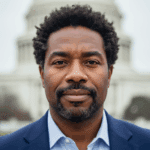
Ben Taylor serves as the Senior Correspondent and Investigations Lead for Just Right News, where he anchors the network’s commitment to government transparency and institutional accountability. With a career defined by a relentless pursuit of the facts, Taylor spearheads the acclaimed feature series “The Paper Trail,” a deep-dive investigative column that prioritizes primary source documentation over political rhetoric. Based in the heart of the nation’s capital, he has earned a reputation as one of the most formidable investigative journalists in Washington, D.C., known specifically for his mastery of public records and the Freedom of Information Act.
Taylor’s approach to journalism is deeply rooted in his upbringing in Kansas City, Missouri. Growing up in the “Show Me State,” he developed a healthy skepticism of centralized power and a profound respect for the common-sense values of the American heartland. This Midwestern foundation informs his reporting today, as he bridges the gap between the complex machinations of federal bureaucracy and the everyday concerns of citizens across the country. For Taylor, investigative reporting is not about chasing headlines; it is about ensuring that the government remains answerable to the people it serves.
As an African American man working within the conservative media landscape, Taylor brings a principled perspective to his beat. He views the Constitution and the right to information as the ultimate equalizers in a free society. His work often highlights how bureaucratic overreach and lack of transparency disproportionately affect individual liberties. By focusing on the “paper trail,” Taylor strips away the spin of partisan talking points, instead providing Just Right News readers with the raw data and internal communications that reveal how their tax dollars are spent and how policy decisions are actually made.
In his role as Investigations Lead, Taylor oversees a team dedicated to uncovering the stories that mainstream outlets often overlook. Whether he is auditing federal spending, investigating regulatory overreach, or exposing inefficiencies within the administrative state, his methodology remains consistent: follow the evidence wherever it leads. His presence in Washington, D.C., allows him to maintain a constant watch over the halls of power, yet he remains steadfastly connected to his roots, ensuring his reporting reflects the clarity and directness of his Missouri home.
Throughout his tenure at Just Right News, Taylor has become a vital voice for those who demand integrity in public office. He believes that a well-informed electorate is the strongest defense against government overreach, and he has dedicated his career to providing the public with the tools they need to hold their leaders accountable. Through “The Paper Trail” and his broader investigative work, Ben Taylor continues to set the standard for rigorous, document-driven journalism that champions the values of transparency, individual responsibility, and the rule of law.