

A New York Times/Siena University poll shows Democrat Annie Andrews tied with Republican Darline Graham in South Carolina and former North Carolina Gov. Roy Cooper leading Republican Michael Whatley by double digits. The findings arrive as campaigns make their final arguments in a contest that could affect control of the Senate; Democrats need a net gain of four seats to retake the majority. President Trump rallied in Ohio after dueling rallies in Texas, while Vice President J.D. Vance made the Republican case in North Carolina. The report provides no poll field dates, sample size, or margin of error, and the survey results do not determine Election Day outcomes.
TLDR: Polling points to an unexpectedly close South Carolina Senate contest and a double-digit Cooper lead in North Carolina. The numbers are snapshots rather than results, and campaigns have less than a week to make their closing arguments before voters decide.
A New York Times/Siena University poll points to potentially competitive Senate races in two states that have long favored Republicans. In South Carolina, Republican Darline Graham and Democrat Annie Andrews are tied, according to the poll. In North Carolina, former Democratic Gov. Roy Cooper leads Republican Michael Whatley by double digits. The findings describe the state of the races at the time of polling, not the results voters will produce on Election Day.
The report offers no single official rationale for the polling changes. It presents the survey as a snapshot of divisions and political pressures shaping the midterm elections, including voter concerns about the economy and corruption in Pennsylvania and affordability in North Carolina. Those themes help explain the campaign arguments described in the report, but they do not establish why each voter supports a particular candidate.
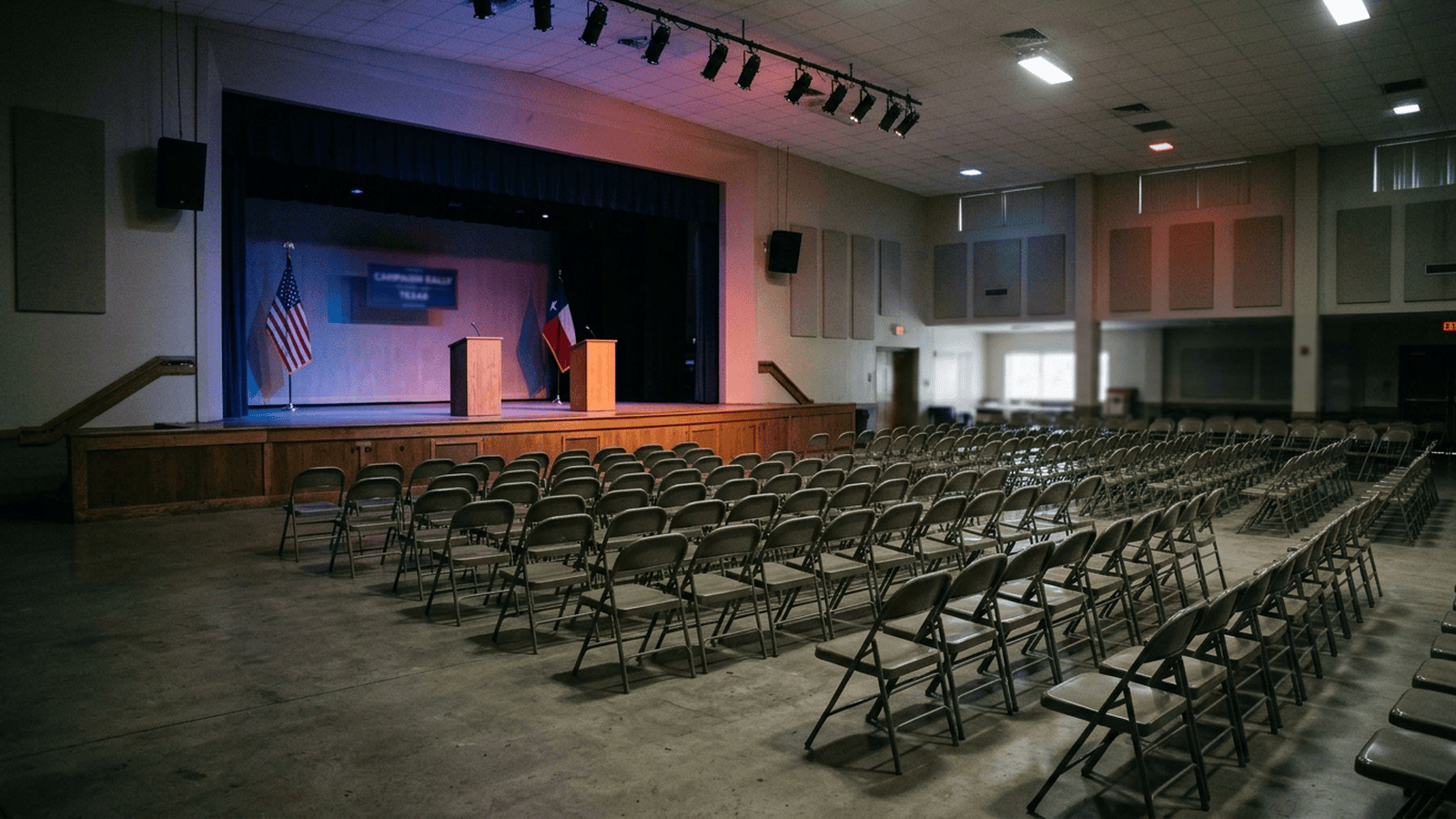
The Senate contest is part of a wider fight over control of the chamber. Democrats need a net gain of four seats to retake the majority, according to the report. President Donald Trump traveled to Ohio to rally voters in a race that could help determine control. His visit followed dueling rallies in Texas, where the campaigns of Trump and Democratic Senate candidate James Talarico held events a few miles apart in Lubbock.
The Texas rallies showed how sharply the candidates and their supporters are contesting the race. Trump attacked Talarico, while Talarico told his supporters that November 3 could bring an extraordinary and historic result. Talarico said about 4,000 people attended his rally. State Attorney General Ken Paxton, Talarico’s opponent, also criticized the Democrat and called him radical. The report describes the exchanges as part of the campaign contest, not as evidence that either candidate has secured an advantage.
Texas is usually a deep-red state, and it has not elected a Democrat to the U.S. Senate in more than three decades, the report says. That history makes the race notable, but it does not decide the outcome. The rallies offer a visible measure of campaign activity and political division. They cannot, by themselves, show how voters who were not at the events will cast their ballots.
South Carolina presents a separate test of the reach of Democratic gains. Graham, a Republican appointed to fill her late brother Lindsey Graham’s seat, is tied with Andrews in the New York Times/Siena University poll. Graham said South Carolinians’ work ethic was the formula behind her campaign and said she intended to continue it. The poll’s reported tie signals a close contest at the time surveyed; the excerpt does not provide a margin of error, field dates, sample size, or other methodological details needed to assess the precision of that finding.
North Carolina’s numbers are more striking in the report. Cooper leads Whatley by double digits, even though the state has not elected a Democrat to the Senate in nearly 20 years. Cooper has centered his campaign on affordability and criticized tariffs, describing them as a tax. He said he would work to overturn them if elected to the Senate. Those are campaign claims and pledges, not changes already made or outcomes established by the poll.
Vice President J.D. Vance made the Republican case in North Carolina, saying the state should send Washington a message that residents are tired of being ignored and left behind. His remarks show the competing appeal to voters: Cooper focused on affordability, while Vance urged support for a Republican message centered on putting America first. The report does not provide polling numbers for that rally or explain how the event affected the Senate race.
Pennsylvania supplies another picture of the political pressures surrounding the midterms, though the excerpt does not give a Senate poll result there. The report says concerns about the economy and corruption have weakened support for Trump and the Republican base in the state. One voter criticized congressional Republicans for yielding power to one person. Another said Trump was doing more for the country than anyone else. Those opposing views illustrate disagreement among voters, but they are individual comments rather than a measure of statewide opinion.
The practical impact described here is electoral rather than administrative. The people directly affected are voters choosing candidates in the Senate races and campaigns making their final arguments. The report says both parties had less than one week left to do so, and Talarico referred to November 3 as Election Day. It gives no fees, required forms, compliance rules, or enforcement steps, and it does not state poll field dates or methods. Those missing details limit what can be concluded from the figures; the polls should not be treated as election outcomes.
The next steps are the campaigns’ closing arguments and the vote itself. The Senate stakes are substantial because Democrats need four net seats to regain the majority, but the reported survey results do not settle who will win. Election Day will provide the results that polling cannot. Until then, the figures remain a snapshot of a fast-moving contest, subject to the uncertainties and limits described in the report.
Daniel Owens serves as a Senior Correspondent for Just Right News, where he leads the newsroom’s coverage of Education, Workforce, and Upward Mobility. In an era where the national conversation often overlooks the practical foundations of success, Owens brings a principled perspective to the forefront of the media landscape. His work is defined by a commitment to the idea that a strong society is built on the pillars of quality education, a robust work ethic, and the removal of bureaucratic barriers to individual achievement.
Born and raised in Cleveland, Ohio, Owens’s worldview was shaped by the industrial landscape of the Midwest. Growing up in a city known for its grit and resilience, he witnessed firsthand the transformative power of steady employment and the devastating effects of economic stagnation. This background instilled in him a deep respect for the American worker and a healthy skepticism toward top-down government solutions that often fail to reach the communities they intend to help. As an African American man who has navigated the path to professional success, Owens approaches his beat with a nuanced understanding of how meritocracy and personal responsibility intersect with opportunity. He frequently draws on his roots to highlight the importance of family stability and community-led initiatives in fostering the next generation of leaders.
At Just Right News, Owens is the architect of the acclaimed feature series, “The Learning Curve.” Through this platform, he explores the evolving landscape of American schooling, from the rise of the school choice movement to the revitalization of trade schools and vocational training. He frequently challenges the status quo of higher education, advocating for a return to academic rigor and the practical alignment of degrees with market demands. For Owens, education is not merely about obtaining credentials; it is about equipping young people with the tools necessary to lead self-sufficient, meaningful lives. His reporting on “The Learning Curve” has become essential reading for parents and policymakers who believe that educational competition and parental rights are the keys to a brighter future.
Now based in Raleigh, North Carolina, Owens finds himself at the heart of one of the nation’s most dynamic regions for innovation and growth. Raleigh’s unique blend of traditional values and a fast-paced economy provides the perfect backdrop for his reporting on the modern workforce. From the tech hubs of the Research Triangle to the rural communities of the South, he tracks how shifts in the economy are impacting families and local industries. His reporting often highlights the success stories of entrepreneurs and workers who are thriving by embracing the values of hard work and innovation.
Throughout his career, Daniel Owens has remained a steadfast voice for the student seeking a better path and the worker striving for a better life. His reporting for Just Right News serves as a vital resource for readers who value common-sense solutions to the challenges of the 21st-century economy. By focusing on the intersection of policy and the human spirit, Owens continues to provide a roadmap for how individuals and communities can achieve lasting upward mobility.