

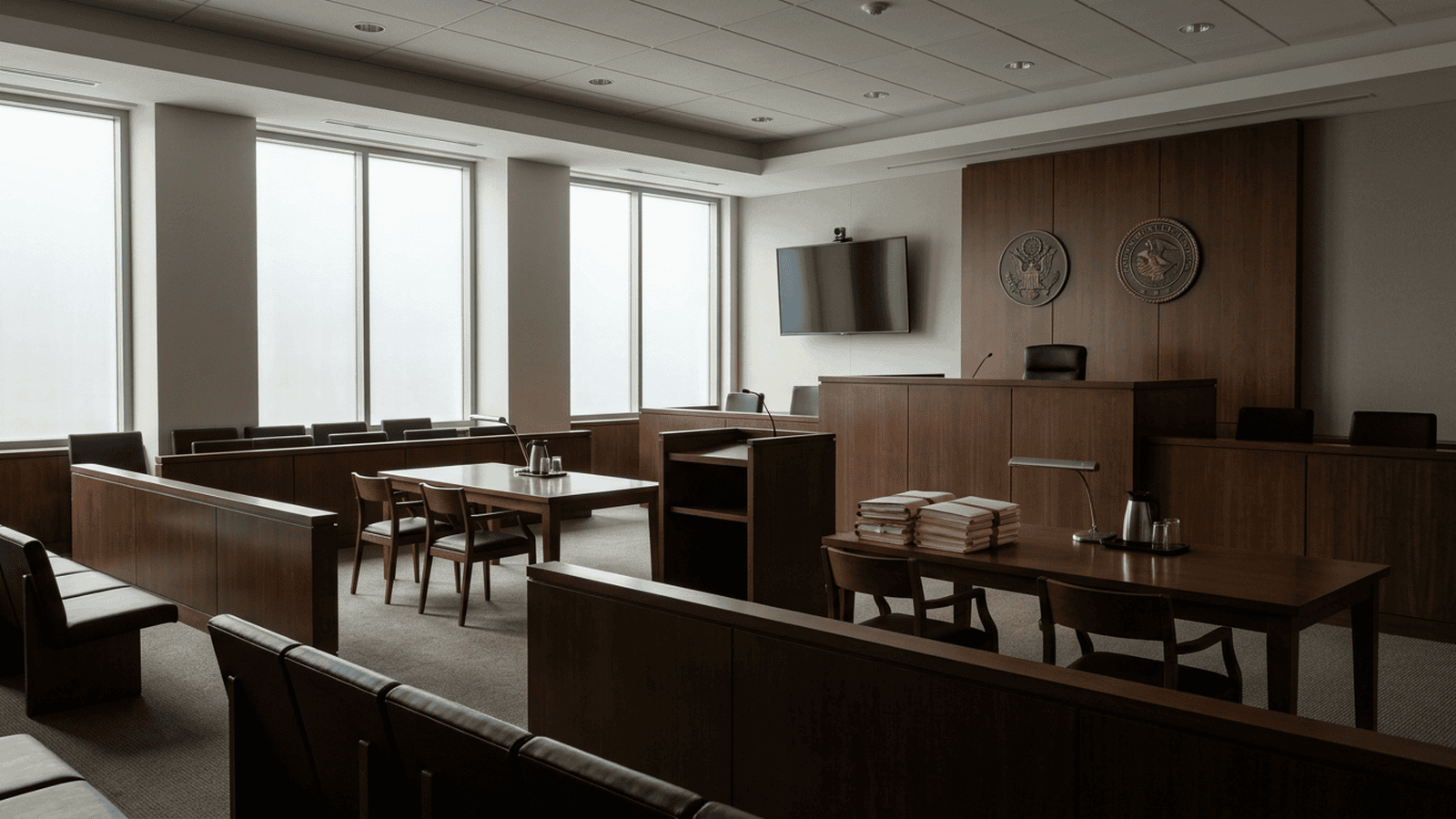
Oscar Belgal, a 28-year-old New York man shot by federal immigration officers, appeared by video Thursday before an immigration judge in Manhattan. His lawyers say he is held in solitary confinement at a Brooklyn jail, has no phone access to contact his family, and needs surgery to remove a bullet from his neck; the judge said she cannot control his placement. The shooting accounts differ: his lawyers allege officers fired as he tried to drive away, while Homeland Security says officers fired after he struck government vehicles and accelerated toward them. Released security footage shows part of the encounter but does not conclusively establish how the shooting happened. Belgal’s next immigration hearing is Oct. 29, and his lawyers have separately petitioned federal court for his release.
TLDR: Oscar Belgal appeared remotely at an immigration hearing while detained in Brooklyn, where his lawyers report solitary confinement and medical concerns. His next hearing is Oct. 29, and a separate federal petition seeks his release as disputed accounts of the shooting remain unresolved.
Oscar Belgal, a 28-year-old New York man shot by federal immigration officers, appeared Thursday before an immigration judge in Manhattan. He joined the brief hearing by video livestream from the federal jail where his lawyers say he is being held in solitary confinement. Belgal, a native of the Dominican Republic, barely spoke during the session.
The court appearance is a step in Belgal’s immigration case, but the account gives no official rationale for his detention or finding about the shooting. The Department of Homeland Security says officers believed their lives were in danger. Belgal’s lawyers describe a different sequence of events, and the available security footage does not conclusively settle how the shooting happened.
Belgal’s lawyers say a bullet remains lodged in the back of his neck and that he needs surgery to remove it. His injury was not apparent on the video feed. During the hearing, he tried to raise his living conditions with Judge Dara Reid, but his lawyer, Karene Brown of the Legal Aid Society, advised him not to speak and cut him off.
Brown told the judge that Belgal has been on 24-hour lockdown at the Metropolitan Detention Center in Brooklyn and cannot use a phone to speak with his family. She said she had asked Immigration and Customs Enforcement to move him out of solitary confinement, but the agency had not honored the request. Reid said she had no authority over where Belgal is placed within the facility.
The shooting took place Oct. 8, after Belgal picked up his five-year-old son from school and was looking for a parking spot. The child was in the car during the encounter. The accounts of what happened next remain disputed, and the distinction between what officials say and what Belgal’s lawyers allege is central to understanding the case.
In a court filing Wednesday, Belgal’s lawyers said an ICE officer ran up to the car, smashed a window and fired several shots as Belgal tried to drive away. They said the officers wore masks and civilian clothes and did not identify themselves. Those are claims made by Belgal’s lawyers, not findings established in the court appearance described in the account.
Homeland Security officials maintain that Belgal smashed his car into two government vehicles and accelerated toward the officers. They say the officers opened fire only after believing their lives were in danger. The department’s account offers its explanation for the officers’ actions, while Belgal’s lawyers’ filing disputes the sequence and describes the shooting differently.
New York City police security-camera footage released last week shows part of the encounter, but does not conclusively show how the shooting occurred. The available video therefore provides some information without resolving the central disagreement. Neither the hearing nor the footage described in the account establishes which version is correct.
The court appearance itself did not resolve the dispute, and the account does not report a finding by Judge Reid on the officers’ actions or the competing descriptions of the encounter. The hearing focused in part on Belgal’s detention conditions. When he tried to discuss those conditions, Brown advised him not to speak, and she described his confinement to the judge.
The practical details now reported concern Belgal’s detention, medical needs and next court steps. His lawyers say he remains in solitary confinement under 24-hour lockdown, cannot call his family and needs surgery to remove the bullet. Brown’s request that ICE move him has not been honored, while Judge Reid said she cannot decide his placement within the facility. The account reports no fees, forms or other requirements for Belgal, and gives no medical schedule or timeline for a decision on the transfer request.
Belgal’s next immigration court hearing is Oct. 29. Separately, his lawyers have filed a petition in federal court seeking his release. That petition is distinct from the immigration court hearing, and the account does not say when the federal court will act or what outcome it will reach.
The next reported steps are the Oct. 29 immigration hearing and consideration of the federal release petition. The available footage and the sharply different accounts leave the central facts unsettled. The court proceedings will continue, while the detention and medical concerns described by Belgal’s lawyers remain part of the case.

Deborah Cole serves as a Senior Correspondent for Just Right News, where she spearheads the network’s coverage of Housing, Infrastructure, and Mobility. With a career defined by a commitment to rigorous reporting and a focus on the fundamental pillars of American community life, Deborah brings a principled perspective to the complex issues that dictate how and where we live. Her work is grounded in the belief that sound policy, fiscal responsibility, and respect for private property are the essential foundations of a prosperous society.
Originally from Boston, Massachusetts, Deborah’s upbringing in one of the nation’s oldest and most historically significant cities deeply influenced her professional trajectory. Growing up amidst the architectural legacy and dense urban planning of New England, she developed an early appreciation for the importance of durable infrastructure and the role of local tradition in shaping neighborhoods. Her perspective is informed by the classic American values of her hometown—hard work, community cohesion, and a healthy skepticism of top-down bureaucratic mandates that often overlook the unique needs of individual citizens.
Today, Deborah operates from her base in Austin, Texas, a city that serves as a primary laboratory for her reporting. Austin’s rapid expansion and its status as a hub for innovation and migration provide her with a front-row seat to the most pressing challenges in modern infrastructure and housing. From the Lone Star State, she chronicles the tensions between rapid growth and the preservation of the American Dream, often highlighting how market-driven solutions and deregulation can address the housing shortages that plague many of the country’s metropolitan areas.
At Just Right News, Deborah is perhaps best known for her signature feature series, “Where We Live.” Through this platform, she explores the intersection of public policy and private life, moving beyond mere statistics to tell the stories of families, small business owners, and local developers. Her reporting frequently highlights the importance of mobility—not just in terms of transportation and transit, but as a vehicle for economic opportunity and social stability. She remains a staunch advocate for the taxpayer, consistently scrutinizing government spending on large-scale projects and advocating for transparency in how infrastructure dollars are allocated.
Deborah’s beat is more than just a collection of policy topics; it is an investigation into the physical and legal structures that allow families to flourish. Whether she is reporting on the impact of zoning laws on suburban development or the necessity of maintaining the nation’s highway systems, her work is characterized by a dedication to the facts and a respect for the constitutional principles that protect the rights of homeowners.
As a Senior Correspondent, Deborah Cole continues to be a vital voice for Just Right News, providing the audience with the clarity and context needed to navigate an ever-changing landscape. Her reporting ensures that the values of individual liberty and local sovereignty remain at the forefront of the national conversation regarding the future of our cities and towns. Through her tireless efforts, she remains committed to informing the public on the issues that hit closest to home.