

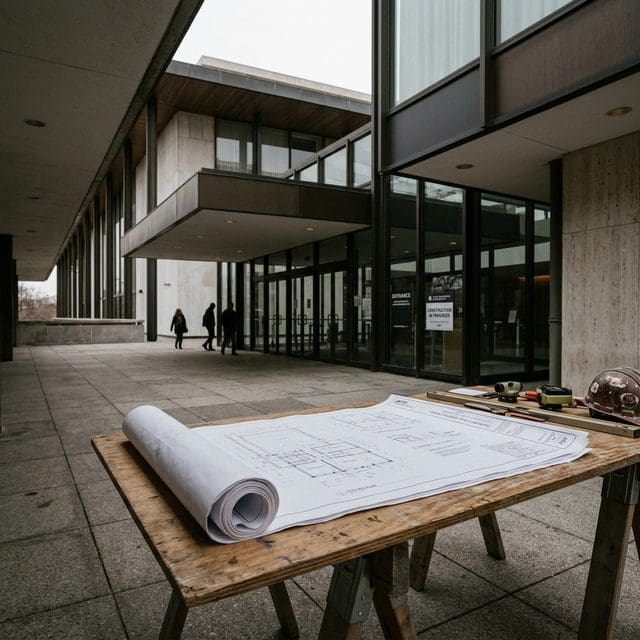
A judge’s order unsealing construction records intensifies a dispute over the Kennedy Center, but the available reporting describes no antitrust action or corporate merger.
A federal judge’s orders on construction records have intensified a legal fight over the Kennedy Center and the Trump administration’s handling of information about the institution. The dispute raises questions about transparency and executive privilege, but it is not an antitrust case: the available reporting describes no merger review, competition investigation or allegation of monopoly power.
Judge Christopher Cooper ordered a five-slide PowerPoint prepared by Delta Construction Group unsealed in full and directed that a separate, 163-page construction plan by JLL ultimately be made public, Newsweek reported. The administration has until October 14 to propose narrowly tailored redactions to the JLL plan. Rep. Joyce Beatty has until October 19 to respond, after which Cooper will decide what, if anything, remains sealed.
Beatty’s attorneys argued that only two slides contained substantive analysis and described them as “riddled with internal inconsistencies,” Newsweek reported. That is an argument by her lawyers, not a court finding about the analysis. The available reports do not detail the documents’ contents, so their release may clarify the competing accounts but does not yet settle them.
The Delta presentation has been ordered unsealed in full, while the JLL plan faces a separate redaction process and later ruling. The order does not mean every record sought in the broader dispute will become public. Executive-privilege claims and other efforts to withhold material remain unresolved.
The Justice Department is asserting executive privilege to block questions about President Donald Trump’s role as Kennedy Center chairman, The Washington Post reported. The dispute raises whether presidential secrecy protections extend to Trump’s activities at an arts institution. Newsweek reported that the administration’s broader effort to withhold Trump-related communications and other records also remains unresolved.
Cooper criticized the defendants’ handling of discovery, writing that their “persistence in trying to obscure relevant—and indeed, core—discovery is untenable,” according to Alternet. The remark reflects the judge’s frustration with the discovery dispute; it does not establish the underlying allegations or resolve the privilege issue. Further court decisions will determine what evidence becomes available.
The case also concerns a proposed two-year closure of the Kennedy Center and Trump’s efforts to attach his name to the facility. The center has remained closed while programming was moved elsewhere, Newsweek reported. The available material does not quantify the financial effects on performers, workers, vendors or audiences, or the costs of relocating events. Those limits make it difficult to assess the closure’s practical toll from the reporting supplied.
Public access to records and scrutiny of powerful institutions are relevant to accountability. But a dispute over government secrecy is not, by itself, evidence of corporate concentration or harm caused by market power. The reporting identifies no acquisition, dominant-market conduct, consumer-price effects or small-business impact that would support an antitrust analysis.
The next steps are procedural: the administration’s proposed redactions, Beatty’s response and Cooper’s decision on the JLL plan. The unresolved privilege questions could shape what else becomes public. Until more records are released, claims about the construction analysis, closure costs or broader effects should remain limited to what the filings and reporting establish.
Alternet characterized the ruling as a legal defeat for Trump. The reported developments are narrower: an order unsealing one presentation, a review process for redactions to another plan, and continuing disputes over discovery and privilege. None constitutes an FTC or Justice Department antitrust action. For a corporate-power beat, the available story concerns access to public records and government authority—not competition in a commercial market.

Greg Sanders serves as the Senior Correspondent for Corporate Power and Antitrust at Just Right News, where he brings a principled, conservative perspective to the complex intersection of big business, government regulation, and the American consumer. With a career dedicated to investigative depth and economic clarity, Greg has become a leading voice in examining how the consolidation of industry power impacts the foundational values of the free market and individual liberty.
Raised in Denver, Colorado, Greg’s reporting is deeply informed by the Western spirit of independence and a healthy skepticism of centralized authority. Growing up in the shadows of the Rockies, he witnessed firsthand the importance of local entrepreneurship and the vital role that small-medium enterprises play in sustaining vibrant communities. This upbringing instilled in him a belief that the American Dream is best preserved when the playing field remains level and when competition—rather than backroom deals between corporate lobbyists and federal regulators—dictates success. For Greg, the rugged individualism of his home state serves as a constant reminder that the economy should serve the people, not the other way around.
Now based in Chicago, Illinois, Greg operates from the heart of the nation’s industrial and financial crossroads. His location in the Midwest provides him with a unique vantage point to observe the real-world consequences of corporate overreach. From the boardrooms of the Loop to the manufacturing hubs that define the region, he tracks the movement of capital and the shifting tides of market influence. Chicago’s history as a center of trade and labor offers a rich backdrop for his work, allowing him to bridge the gap between high-level economic theory and the lived experiences of hardworking Americans who feel the squeeze of monopolistic practices.
At Just Right News, Greg’s beat focuses on the “new monopolies” and the rise of “woke” corporate culture. He argues that when corporations become too large, they often abandon their fiduciary duties to shareholders in favor of social engineering and political posturing. His reporting seeks to hold these “Titans” accountable, ensuring that the power of the purse is not used to silence dissent or bypass the democratic process. He is a firm advocate for the idea that true conservatism requires a vigilant defense of competition, preventing any single entity—public or private—from exerting undue control over the lives of citizens.
This mission is most clearly seen in his acclaimed feature series, “The Titans and the Toll.” In this ongoing project, Greg explores the human cost of market consolidation, from the erosion of consumer choice to the decline of local economies. Through rigorous analysis and boots-on-the-ground reporting, he documents how the concentration of power in sectors like tech, agriculture, and finance creates a “toll” paid by the average family.
Greg Sanders remains committed to the idea that a transparent, competitive market is the greatest engine for prosperity ever devised. Through his work at Just Right News, he continues to provide the essential oversight necessary to protect that engine from the encroaching influence of corporate giants and the bureaucratic structures that enable them.