

Trump’s expanded Russian diesel arrangement coincides with Moscow’s reluctance to resume peace talks, Germany’s sanctions stance and new warnings about Iran’s surviving missile capacity.
President Donald Trump’s Russian diesel arrangement is taking shape as a substantial commitment, even as Vladimir Putin signals that near-term peace talks on Ukraine are unlikely. The two developments raise a practical question for U.S. policy: whether commercial cooperation with Moscow can serve American interests without weakening pressure on Russia or Washington’s leverage in negotiations.
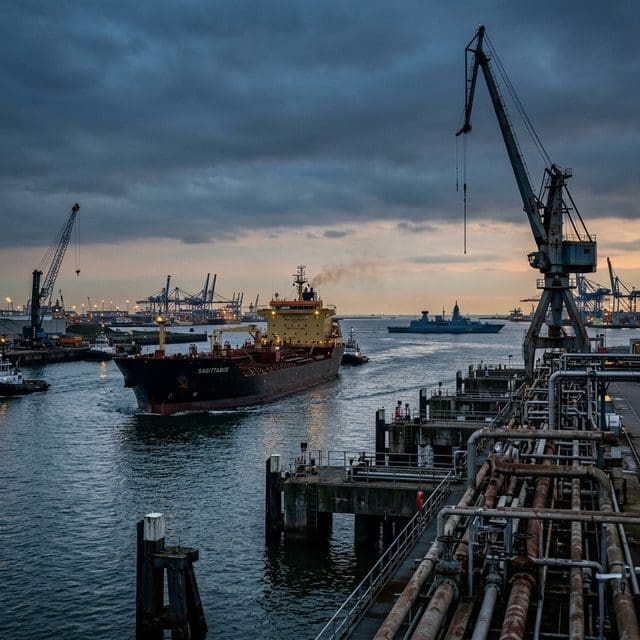
Trump said Russia would supply more than 300,000 tons of diesel immediately, 500,000 tons in November, 1 million tons “immediately thereafter” and 3 million tons “within a short period of time,” according to the Associated Press on October 9. The report did not specify the timing for later shipments or establish the deal’s likely effect on U.S. fuel prices and supply.
That day, Putin told Trump that immediate trilateral talks involving Russia, Ukraine and the United States were unlikely. Moscow blamed Ukrainian drone attacks during Russia’s parliamentary elections and said it would reassess when negotiations could resume. Ukraine has said it is ready to talk this month. Trump envoy Steve Witkoff and Jared Kushner were meeting Ukrainian officials in Miami on a peace proposal when the diesel arrangement was announced, the AP reported.
Ukrainian President Volodymyr Zelenskyy called the deal a “gift to Putin,” arguing that Russian revenue would help fund further attacks. The supplied reporting does not quantify the revenue Russia could gain. But the contrast is clear: Washington is arranging commercial flows while Moscow is not committing to an immediate negotiating table.
Germany said October 10 that it would maintain sanctions and work with European partners on additional measures. Berlin also said its support for Ukraine was unchanged. Germany no longer imports Russian oil or petroleum products, according to Deutsche Welle and The Moscow Times.
That difference in approach tests allied coordination. Washington may view the diesel arrangement as serving U.S. interests, while European governments may judge it by whether sanctions continue to impose costs on Moscow. If the United States eases pressure as European partners seek to sustain or increase it, Russia could exploit those divisions. The available reports do not detail the administration’s full rationale or establish how the deal will affect negotiations.
A separate test of American power is unfolding around Iran. Western intelligence officials cited by Bloomberg and The Jerusalem Post said Iran retains significant ballistic-missile and anti-ship-weapon stocks and can replenish them relatively quickly. They said parts of Iran’s weapons-production infrastructure survived eight months of U.S.-Israeli strikes.
The size of the remaining arsenal is disputed. Israeli estimates put Iran’s prewar ballistic-missile stockpile at about 2,500, while a June Western assessment said Iran retained roughly three-quarters of its prewar munitions. The Jerusalem Post also reported that the UK Navy said at least 10 ships had been struck near the Strait of Hormuz during the preceding week.
The White House rejected the intelligence assessment, saying U.S. operations had destroyed Iran’s missile facilities and conventional defenses. The reporting does not resolve the gap between that claim and the accounts from intelligence officials. Continued attacks near a strategic shipping route make the disagreement operational, not merely rhetorical.
For Washington, the challenge is to show that economic arrangements and military operations can shape adversaries’ choices while keeping allies aligned. Russia’s stated reluctance to meet, Germany’s insistence on sanctions and conflicting assessments of Iran’s arsenal show the distance between public declarations and durable strategic leverage.

Olivia Kendall serves as the Senior Correspondent for Geopolitics, Defense, and Foreign Policy at Just Right News, where she provides a principled, conservative perspective on the complex forces shaping the global stage. With a career dedicated to deconstructing the intricacies of international relations, Kendall has become a trusted voice for readers who value national sovereignty, a robust military, and a foreign policy that prioritizes American interests above all else.
A native of Washington, D.C., Kendall’s professional journey is deeply rooted in her upbringing within the nation’s capital. Growing up in the epicenter of American political life, she developed an early and profound understanding of how policy is crafted and, more importantly, how it often fails to account for the values of the American heartland. This unique vantage point allowed her to witness firsthand the rise of globalist bureaucracies, fueling her commitment to reporting that champions the constitutional foundations of the United States. Her background as a British White American further informs her worldview, providing her with a keen appreciation for the Western tradition and the enduring importance of the “Special Relationship” in maintaining global stability.
Now based in Arlington, Virginia, Kendall operates from the doorstep of the Pentagon and the heart of the nation’s defense establishment. Her proximity to the decision-makers in the military and intelligence communities allows her to provide boots-on-the-ground reporting that is both timely and deeply informed. For Kendall, Arlington is more than just a base of operations; it is a daily reminder of the sacrifices made by the men and women in uniform. This connection to the defense community drives her rigorous coverage of military readiness and her advocacy for a “peace through strength” approach to diplomacy.
At Just Right News, Kendall is perhaps best known for her acclaimed feature series, “The World’s Shadow on America.” In this ongoing project, she explores the direct correlation between international developments and the daily lives of American citizens. Whether she is analyzing the encroachment of foreign adversaries in domestic supply chains or the impact of international treaties on local economies, Kendall’s work serves as a vital bridge between distant geopolitical shifts and their consequences at home. She rejects the notion that foreign policy is an abstract concern for elites, instead proving that what happens in the corridors of power in Brussels or Beijing has a tangible “shadow” that falls across every American doorstep.
Throughout her tenure, Kendall has remained a steadfast critic of international overreach and a vocal proponent of a clear-eyed, realistic foreign policy. She brings a sharp analytical mind to her beat, often challenging the prevailing narratives of the mainstream media to uncover the underlying truths that affect national security. Her reporting is characterized by a refusal to compromise on the truth and a dedication to the idea that a strong, secure America is the world’s best hope for liberty. As a Senior Correspondent, Olivia Kendall continues to lead the charge in providing the essential context and conservative insight necessary to navigate an increasingly volatile world.