


As borrowers move out of the SAVE plan, missed deadlines could mean higher bills—and repayment choices with consequences for public-service loan forgiveness.
For student loan borrowers, leaving the SAVE repayment plan is becoming a practical test of financial planning: choose a new plan in time, or risk a standard option that may bring a larger bill and affect a path to loan forgiveness.
The Independent reported Oct. 9 that borrowers who miss the transition deadline will be placed in the Standard Repayment Plan. The Student Debt Crisis Center estimates median monthly payments under that plan at $674. That is an estimate, not an amount every borrower will owe, but it signals the stakes for households fitting loan payments into budgets shaped by housing, childcare and other expenses.
The change matters beyond monthly cash flow. Federal Student Aid says borrowers automatically placed into the Tiered Standard Plan may lose a route to Public Service Loan Forgiveness. Payments under that plan do not count toward PSLF, the agency says. Payments under Income-Based Repayment, Income-Contingent Repayment, Pay As You Earn and the Repayment Assistance Plan do count.
For borrowers in qualifying public-service jobs who are pursuing forgiveness, plan selection is more than a paperwork chore. A payment may satisfy a bill while failing to advance progress toward forgiveness. Federal Student Aid’s guidance makes clear that borrowers should check how a plan treats payments and eligibility rather than assume every federal repayment option has the same effect.
The transition highlights a basic challenge in student debt policy: a repayment plan must fit both a borrower’s monthly budget and longer-term goals. Borrowers may need to weigh the payment amount against whether the plan preserves progress toward forgiveness. The available reporting does not establish how many borrowers have switched plans or what an individual’s new payment will be. The $674 figure is a median estimate for the Standard Repayment Plan, not a universal payment or a direct comparison with every borrower’s former SAVE bill.
For colleges and training providers, the episode is a reminder that education’s value is measured not only by enrollment or graduation, but also by whether students can turn credentials into stable work and manage the debt used to pay for them. Repayment policy cannot replace sound program choices or responsible borrowing, but confusing transitions can make it harder for workers to plan around existing obligations. Clear guidance matters when a plan’s consequences can extend beyond the next bill.
The current source material does not connect Princeton University, Missoula Sentinel or Glacier High School to this repayment transition; matching results for those names concerned unrelated events and sports. The relevant developments are federal repayment guidance and payment estimates reported by The Independent. Borrowers will need to verify their status and plan terms with their servicer and Federal Student Aid, particularly if PSLF eligibility is part of their financial plan. The sources do not specify individual transition dates or circumstances, so the estimate should not be treated as a personalized forecast.
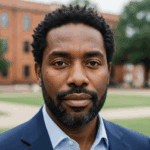
Daniel Owens serves as a Senior Correspondent for Just Right News, where he leads the newsroom’s coverage of Education, Workforce, and Upward Mobility. In an era where the national conversation often overlooks the practical foundations of success, Owens brings a principled perspective to the forefront of the media landscape. His work is defined by a commitment to the idea that a strong society is built on the pillars of quality education, a robust work ethic, and the removal of bureaucratic barriers to individual achievement.
Born and raised in Cleveland, Ohio, Owens’s worldview was shaped by the industrial landscape of the Midwest. Growing up in a city known for its grit and resilience, he witnessed firsthand the transformative power of steady employment and the devastating effects of economic stagnation. This background instilled in him a deep respect for the American worker and a healthy skepticism toward top-down government solutions that often fail to reach the communities they intend to help. As an African American man who has navigated the path to professional success, Owens approaches his beat with a nuanced understanding of how meritocracy and personal responsibility intersect with opportunity. He frequently draws on his roots to highlight the importance of family stability and community-led initiatives in fostering the next generation of leaders.
At Just Right News, Owens is the architect of the acclaimed feature series, “The Learning Curve.” Through this platform, he explores the evolving landscape of American schooling, from the rise of the school choice movement to the revitalization of trade schools and vocational training. He frequently challenges the status quo of higher education, advocating for a return to academic rigor and the practical alignment of degrees with market demands. For Owens, education is not merely about obtaining credentials; it is about equipping young people with the tools necessary to lead self-sufficient, meaningful lives. His reporting on “The Learning Curve” has become essential reading for parents and policymakers who believe that educational competition and parental rights are the keys to a brighter future.
Now based in Raleigh, North Carolina, Owens finds himself at the heart of one of the nation’s most dynamic regions for innovation and growth. Raleigh’s unique blend of traditional values and a fast-paced economy provides the perfect backdrop for his reporting on the modern workforce. From the tech hubs of the Research Triangle to the rural communities of the South, he tracks how shifts in the economy are impacting families and local industries. His reporting often highlights the success stories of entrepreneurs and workers who are thriving by embracing the values of hard work and innovation.
Throughout his career, Daniel Owens has remained a steadfast voice for the student seeking a better path and the worker striving for a better life. His reporting for Just Right News serves as a vital resource for readers who value common-sense solutions to the challenges of the 21st-century economy. By focusing on the intersection of policy and the human spirit, Owens continues to provide a roadmap for how individuals and communities can achieve lasting upward mobility.