

Reflection AI introduced Beam, a large open-weight model aimed at coding and agent tasks, while new funding and governance moves underscored the growing costs and oversight demands of enterprise AI.
Reflection AI has introduced Beam, its first model, positioning it as an open-weight contender for coding, reasoning and agentic work. The company’s announcement highlights a technical scale that will draw attention from developers weighing whether to use hosted AI services or run models under their own infrastructure and control.
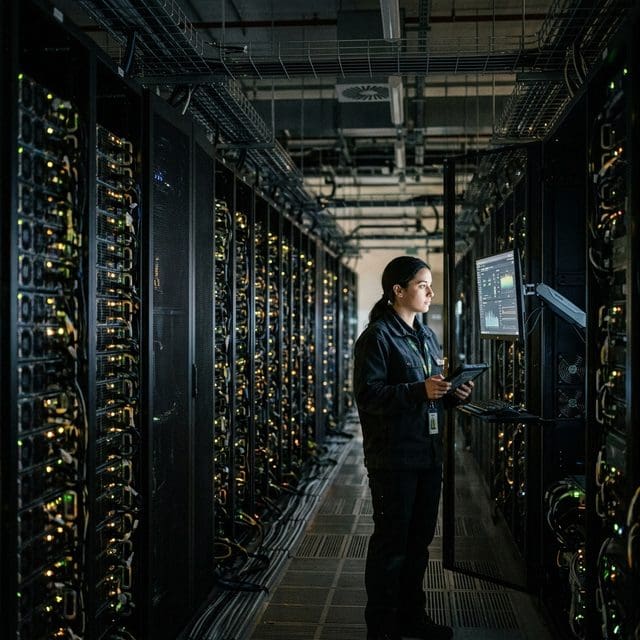
Beam is a sparse mixture-of-experts model with 501 billion parameters in total, of which 23 billion are active for a given task, according to reporting by Reuters and other coverage. Reflection says pretraining used 6,144 NVIDIA GB300 NVL72 GPUs in less than four weeks. Its reinforcement-learning run generated more than 100 million rollouts using 10,500 GB300 GPUs over four weeks.
The figures describe a substantial buildout, not proof that Beam is better or cheaper in ordinary use. Reflection says the model is aimed at coding and agent workloads and has compared it with Z.ai’s GLM-5.2 and Alibaba’s Qwen3.8-Max. The company also claims Beam needs three to four times less inference compute than comparable models. Those are company claims; independent evaluation will matter, particularly for developers assessing accuracy, latency and the cost of operating the model.
The distinction between open weights and a fully usable, independently verified release also matters. Reflection has said it plans to publish weights and accompanying technical materials under an Apache 2.0 license, but the release timing is not confirmed. The company is offering early access as it completes red-teaming. Until the artifacts are available and tested, teams cannot make a firm assessment of deployment requirements or licensing in practice.
For small software businesses and independent developers, the appeal is straightforward: a model that can be deployed with greater control may reduce dependence on a single hosted provider. The trade-off is that a system built at this scale requires serious compute resources. That makes Reflection’s reported agreements for additional capacity—including a deal with SpaceX’s Colossus 2 data center—part of the story, not a side note. Open weights can broaden access to model technology without making the infrastructure free or decentralized by default.
Other developments point to the operational concerns surrounding AI. Clockwork.io raised $31 million as LinkedIn, Together AI and WhiteFiber adopted its software for AI workload resilience, according to a company announcement carried by PR Newswire. The funding and customer names suggest demand for tools that keep AI workloads functioning reliably, though the announcement does not provide independent performance comparisons.
Data-governance company Collibra acquired trail ML, a move the companies said is intended to automate AI governance and policy enforcement across the AI lifecycle. As businesses deploy models in more consequential settings, governance software can help track policies and processes. It also raises a broader question for customers: whether such systems give organizations meaningful control or merely add another layer of centralized oversight.
Mistral, meanwhile, was expected to unveil a new model on October 6. CEO Arthur Mensch said it outperforms Chinese models in some areas, including cybersecurity, according to Reuters. That is a claim ahead of the announcement, not an independently established result. Mistral’s €3 billion financing round, reported in September, is relevant background but is not new funding announced today.
Together, the developments show a market advancing on two fronts: increasingly ambitious models and the infrastructure and controls needed to put them to work. The practical test for developers will be whether the promised openness translates into usable access, verifiable performance and genuine choice over where their software and data run.

Mason Reed serves as a Staff Writer for Just Right News, where he spearheads the Future Frontiers & Special Projects desk. In an era defined by rapid technological shifts and evolving social landscapes, Mason provides a steady, principled voice, examining the innovations of tomorrow through the lens of traditional American values. His work is most prominently featured in his signature series, “The Next Horizon,” where he explores the intersection of emerging technology, national sovereignty, and the preservation of individual liberty.
A native of San Diego, California, Mason’s worldview was shaped by the unique culture of his hometown. Growing up in a region defined by its strong military presence and its history of maritime industry, he developed a deep-seated respect for the institutions that provide national stability and the entrepreneurial spirit that drives the American economy. This upbringing instilled in him a belief that true progress is not found in discarding the past, but in building upon a foundation of proven principles. His reporting often reflects this San Diego influence, emphasizing the importance of a robust national defense and the necessity of maintaining a competitive edge in the global marketplace.
Now based in San Francisco, Mason operates from the heart of the world’s technological engine. Living and working in the Bay Area provides him with a front-row seat to the advancements—and the ideological challenges—emanating from Silicon Valley. While many in the region embrace a “move fast and break things” mentality, Mason’s reporting serves as a vital counterweight. He offers Just Right News readers a “boots on the ground” perspective, documenting how radical local policies and the concentration of tech power impact the everyday lives of citizens. His proximity to the industry allows him to cut through the marketing jargon of big tech to uncover the real-world implications for privacy, free speech, and the nuclear family.
In his “Future Frontiers” beat, Mason tackles complex subjects ranging from the ethics of artificial intelligence to the burgeoning private space race. He approaches these topics with a healthy skepticism toward centralized bureaucracy, championing instead the decentralized innovations that empower individuals. Through “The Next Horizon,” he highlights the pioneers and thinkers who are working to ensure that the future remains a place where human dignity and constitutional rights are protected. He believes that the rapid pace of change requires more than just technical expertise; it requires a moral compass rooted in the Western tradition.
Throughout his tenure at Just Right News, Mason has remained committed to the idea that the future is something to be shaped, not merely accepted. His writing is characterized by a rigorous defense of American exceptionalism and a belief that the country’s best days lie ahead, provided it remains true to its founding ideals. Whether he is investigating the impact of automation on the American workforce or profiling the next generation of aerospace engineers, Mason Reed ensures that his readers are equipped with the insights they need to navigate a changing world with confidence and clarity.