

A 15-year-old student lost a hand in Lens after picking up a police grenade during protests that have disrupted schools across France. Students cite teacher absences, overloaded schedules and poor building conditions, while the government says it is working to fill staffing gaps and discuss school repairs with regional leaders. More than 400 of France’s 3,700 high schools were partly or fully closed Monday, and authorities expected more closures in the Paris region. The government is advancing a bill that could make people responsible for public-property damage pay for repairs, potentially through family allowances or housing benefits, subject to a minimum income threshold. Larger demonstrations and a meeting with regional presidents are expected Tuesday.
TLDR: School protests in France have disrupted hundreds of campuses, and a teenager was seriously injured after picking up a police grenade in Lens. The government is addressing staffing and building concerns while pursuing a proposal to recover public repair costs from people responsible for damage.
A 15-year-old student lost a hand Monday after picking up a police grenade during protests over school conditions in France. Authorities said he was injured in Lens, in the north. A police union source told AFP that the student appeared to have picked up a sting-ball grenade fired by riot police, which then exploded in his hand. The incident came as protests disrupted lessons at hundreds of schools and larger demonstrations were expected Tuesday.
The government says it is addressing students’ complaints while seeking to hold people responsible for damage to public property. Prime Minister Sebastien Lecornu has urged local authorities to prioritize filling long-term teacher absences and unfilled posts. He also called a meeting with regional presidents for Tuesday to discuss school buildings. Those steps respond to concerns about staffing and facilities while the government faces growing disorder around schools.
Students have blocked entrances to hundreds of schools since late September. Their complaints include teacher absences, overloaded schedules, deteriorating classrooms and buildings they say are poorly suited to rising temperatures. A 17-year-old protester told CBS News that his school had a rat infestation. Student leader Daphnee Die said the violence was fueled by frustration, but warned that demonstrations were becoming dangerous.
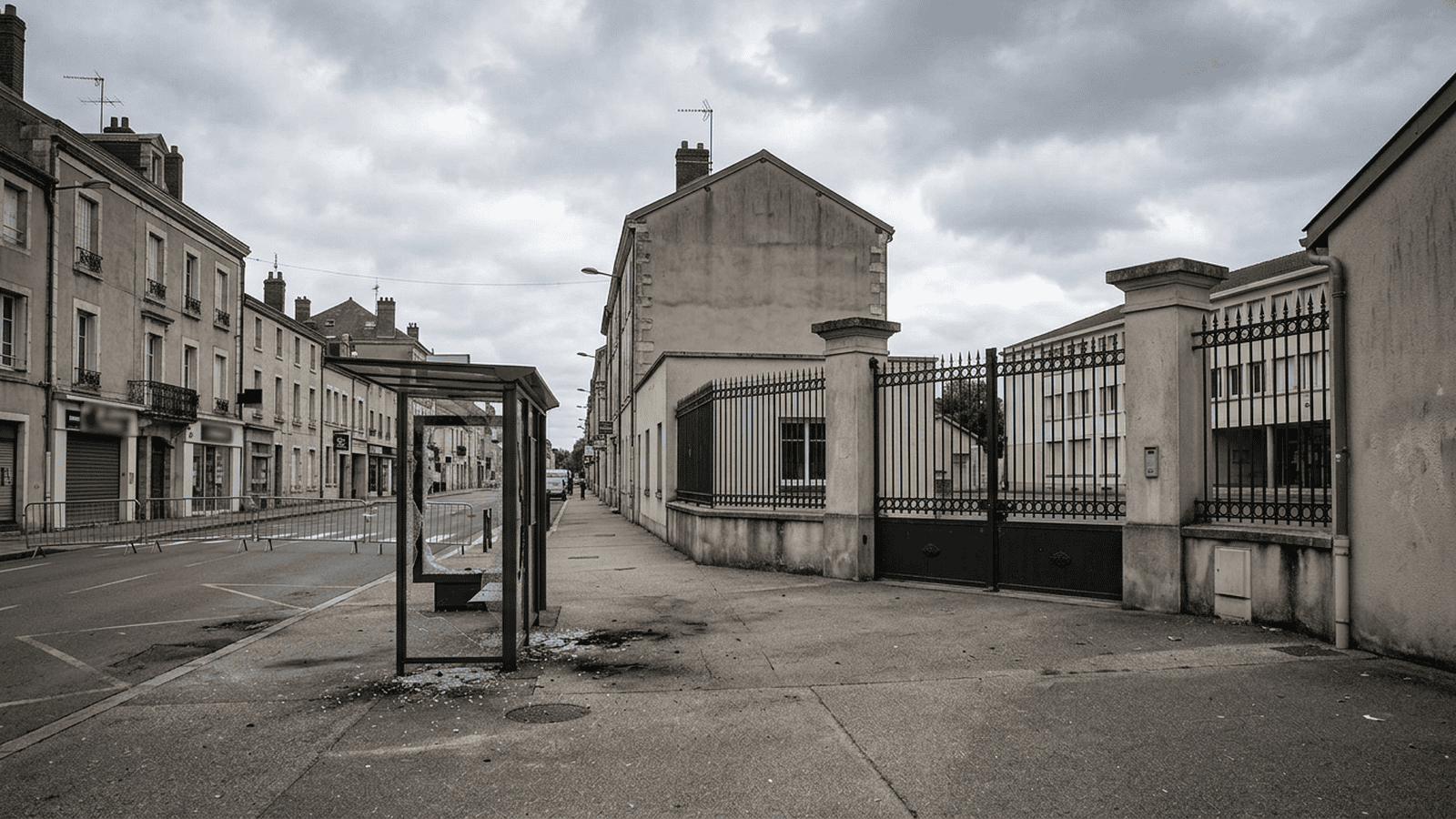
The movement began Sept. 17 at a high school in Creteil, outside Paris, in support of teachers striking over a lack of staff and resources. It spread across the country and at times turned violent. Protesters have damaged bus shelters, burned school entrances and clashed with security forces. France’s education minister said 24 schools had been burned or ransacked since the protests began.
The disruption remained visible Monday. The education ministry said more than 400 of France’s 3,700 high schools, known as lycees, were partly or fully closed that morning. Authorities expected a third of the 468 lycees serving teenagers aged 15 to 17 in the Paris region to close. In central Paris, dozens of students demonstrated outside a school as some classmates entered for lessons.
Conditions varied elsewhere. In Bordeaux, some students returned to class while others demonstrated in the presence of riot police. Protesters outside Gustave Eiffel high school set off fireworks toward police, who responded at times with tear gas, according to AFP reporters. In Lille, masked protesters destroyed bus shelters and set fire to bins as police fired tear gas toward demonstrators.
The scale of arrests and complaints about police conduct has added to the pressure on authorities. More than 5,000 people have been arrested, 85% of them minors, according to the report. Protesters have accused police of excessive force, and internal investigations have been opened into at least three alleged instances of police brutality. The French Human Rights League also accused security forces of using disproportionate methods against demonstrators, many of them legally minors.
The league’s president, Nathalie Tehio, said police instructions did not direct officers to show restraint despite dealing with children. The government, meanwhile, has accused hard-left activists of hijacking the protest movement. The protests are unfolding months before elections next year to choose a successor to President Emmanuel Macron, a political backdrop that adds significance but does not resolve the immediate dispute over school conditions and public order.
The government is also pressing legislation that would make those responsible for damage to public property pay for repairs rather than relying on public funds. Lecornu has said the draft could allow compensation to be recovered from family allowances and housing benefits, while preserving a minimum income threshold. The proposal would affect families connected to people found responsible for damage. The excerpt provides no specific fee amount, application form, enforcement timetable or deadline for the legislation, so those details remain part of the plan rather than established requirements.
Government spokeswoman Maud Bregeon said damage by young people raised questions about parental responsibility. CGT labor union leader Sophie Binet criticized the proposal, warning that it could target vulnerable families. The disagreement sets public accountability against concerns about how costs might fall on households. For now, the bill remains a government proposal, not an enacted payment system.
Tuesday brings two stated next steps: larger demonstrations are expected, and Lecornu is due to meet regional presidents about school buildings. Local authorities have also been urged to prioritize staffing gaps. The meetings, the staffing timetable and any further legislative process are necessary steps for assessing the response and compliance; the source provides no further schedule or independent assurance that the issues are resolved.

Mark Davis serves as the Senior Correspondent for Energy, Climate, and Resource Economics at Just Right News. In an era where the conversation around the environment is often dominated by alarmism and top-down mandates, Mark provides a vital, market-oriented perspective on the complex forces shaping our world. As the lead voice behind the acclaimed feature series “Power and the Planet,” he explores the intersection of environmental policy, global energy markets, and the fundamental economic principles that sustain modern civilization.
Mark’s pragmatic approach to resource management was forged in the high desert of his hometown, Albuquerque, New Mexico. Growing up in a region defined by both its breathtaking natural beauty and its rugged, resource-dependent landscape, he developed an early appreciation for the delicate balance between conservation and utilization. New Mexico’s unique position as a hub for both traditional energy production and cutting-edge scientific research provided Mark with a front-row seat to the evolution of the American energy sector. This upbringing instilled in him a deep-seated belief that true environmental stewardship is inseparable from economic prosperity and technological innovation.
Now based in Boulder, Colorado, Mark operates from the heart of the nation’s climate research community. While Boulder is often seen as a bastion of environmental idealism, Mark utilizes his post to provide a necessary counterweight, grounded in the realities of resource economics. He understands that energy policy does not exist in a vacuum; it has tangible consequences for the American taxpayer, the stability of the national power grid, and the strength of the domestic manufacturing sector. By reporting from the front lines of the climate debate, he is able to challenge prevailing narratives with hard data and a commitment to the principles of the free market.
Throughout his tenure at Just Right News, Mark has distinguished himself by focusing on the “Resource Economics” aspect of his beat. He frequently highlights the hidden costs of rapid energy transitions and advocates for an “all-of-the-above” energy strategy that prioritizes American energy independence. His work often shines a light on the geopolitical implications of resource scarcity, arguing that a secure nation must first be an energy-secure nation. Whether he is analyzing the impact of federal land-use regulations or investigating the supply chains required for new technologies, Mark remains focused on how policy decisions affect the lives and livelihoods of everyday citizens.
In “Power and the Planet,” Mark continues to bridge the gap between complex scientific concepts and the economic realities facing the country. He rejects the false choice between a healthy environment and a thriving economy, instead seeking out solutions that leverage American ingenuity and private-sector competition. For Mark, reporting on the climate is not about following the latest trends, but about ensuring that the conversation remains tethered to the foundational values of liberty, property rights, and fiscal responsibility. His contributions ensure that Just Right News readers receive a comprehensive, clear-eyed view of the challenges and opportunities defining the future of our planet.