

Two-year-old Vella Campillo was found safe after spending seven hours alone in the Arizona desert. Jay Stewart responded to a public request for help from the Pinal County sheriff and found her beneath a bush shortly after midnight, about a mile and a half from her home. More than 100 people searched on foot, while drones and helicopters were also used. Sheriff Ross Teeple said drones could not detect her heat signature because a small child produces little heat. Campillo was cold but uninjured, and Stewart tucked her inside his jacket after finding her. Officials have not described new policies, deadlines, fees, or a further oversight process.
TLDR: A volunteer found a missing two-year-old in the Arizona desert after a seven-hour search involving more than 100 people on foot, drones, and helicopters. The child was cold but uninjured, and officials have not announced additional policy steps or deadlines.
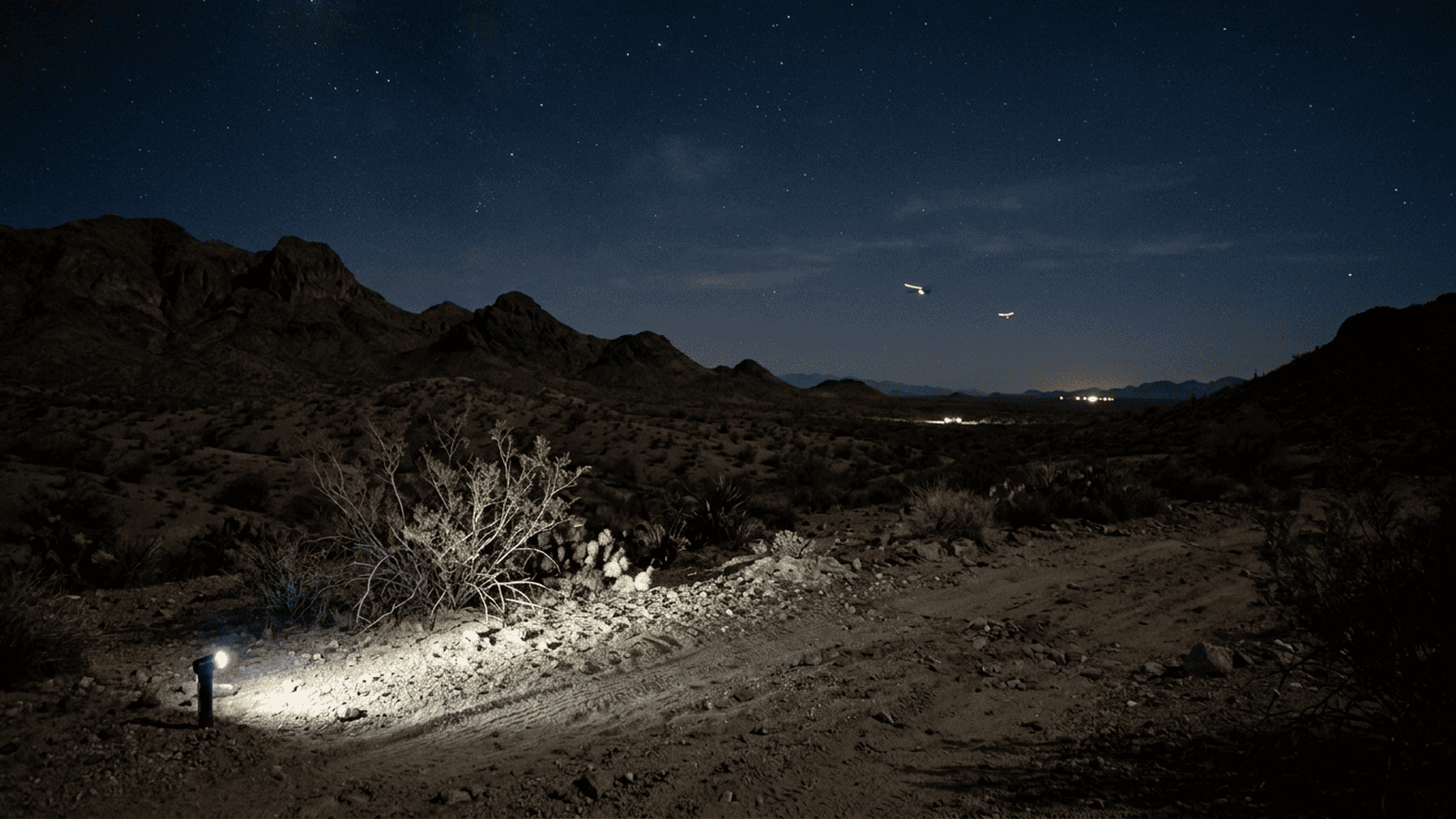
A two-year-old girl who wandered from her yard outside Eloy, Arizona, was found safe after spending seven hours alone in the desert. Jay Stewart, a volunteer who joined the search after seeing a plea for help from the Pinal County sheriff, spotted her curled beneath a bush shortly after midnight Wednesday. She was cold but uninjured. The search ended with a volunteer finding the child on foot after a large response involving local authorities and community members.
The official rationale for the search was clear: Vella Campillo was missing, and help was urgently needed to find her. The sheriff’s office asked for assistance, and more than 100 people searched on foot. Pinal County Sheriff Ross Teeple said the response also used drones and helicopters. The immediate goal was to locate the child in remote terrain where temperatures can fall quickly.
Campillo had wandered out of her yard just before sunset Tuesday. She was wearing only a diaper, according to the account provided by the sheriff’s office. Stewart responded to the sheriff’s public request for help and began searching on foot. The information available does not describe any government policy change, new rule, or official policy rationale beyond the urgent effort to find the missing child.
The search covered challenging ground and continued into the night. Teeple said the team used drones, helicopters, and every available resource. But the drones’ heat-signature equipment could not detect Campillo. The sheriff explained that a small child produces little heat, and remote areas can become extremely cold very quickly during winter.
That limitation made the foot search important. Stewart had been searching for three hours when he heard the child yell. He was about a mile and a half from her home when he shined his flashlight toward a bush and saw her emerge. She had been curled beneath it, alone in the desert for hours.
Stewart recalled the moment at a news conference. He said finding the frightened child was something he would never forget. After he picked her up, she clung tightly to him. He tucked her inside his jacket, and she was later reported uninjured, though a little cold.
The rescue depended on a combination of organized search efforts and individual action. More than 100 people took part on foot, while drones and helicopters were also used. Those tools did not locate the child, but the search continued until a volunteer found her by listening and looking on the ground. The account does not specify how many agencies or vehicles took part, or how the search was coordinated beyond the sheriff’s office statement and Teeple’s comments.
The sheriff’s public plea connected Stewart to the search. He saw the request and joined the effort, then kept walking for three hours before hearing Campillo. The details offer a direct account of how the volunteer response unfolded, without establishing that any particular search method was responsible on its own. The child’s location under a bush and the limits of the heat-signature equipment were both part of the circumstances described by officials.
Teeple praised Stewart in a video posted to the sheriff’s office Facebook page, referring to body-camera footage and telling him he had been the child’s hero. Stewart declined to make the rescue about himself. He said the child’s parents had thanked him, but added that they did not need to because helping was simply what people do.
For the family, the episode began when a toddler left the yard shortly before sunset and ended after midnight with her found and safe. The account does not report any charges, fees, forms, deadlines, or compliance rules connected with the search. There is also no announced follow-up policy or oversight process in the available information. The practical details are the seven hours alone, the large foot search, the unsuccessful heat-signature effort, and Stewart’s discovery about a mile and a half from home.
The search concluded with Campillo found uninjured, and the sheriff’s office shared details of the effort and the rescue. No additional search deadlines or official next steps are described. The confirmed account leaves the outcome plain: a volunteer answered the request for help, kept searching on foot, and found the missing child in the dark.

Eric Nolan serves as the Senior Correspondent for Food, Water, and Environmental Health at Just Right News, where he brings a principled, common-sense perspective to the most fundamental issues facing the American public. With a career dedicated to uncovering the truth behind the policies that govern our natural resources, Eric has become a trusted voice for readers who value traditional stewardship over bureaucratic overreach. His reporting is defined by a commitment to the idea that true environmentalism is rooted in the protection of the American family and the preservation of the nation’s agricultural heritage.
Raised in Fresno, California, Eric’s worldview was shaped in the heart of the San Joaquin Valley. Growing up in one of the world’s most productive agricultural hubs, he witnessed firsthand the vital connection between the land, the water, and the dinner table. In Fresno, he saw the resilience of farmers and the devastating impact that distant, top-down regulations can have on local communities. This upbringing instilled in him a deep respect for the producers who feed the country and a lifelong skepticism toward the alarmist narratives often pushed by mainstream media. For Eric, environmental health is not an abstract political talking point; it is a matter of ensuring that the people who work the land have the freedom and the resources to do so effectively.
Now based in Eugene, Oregon, Eric operates from a unique vantage point in the Pacific Northwest. Living in a region often defined by intense environmental debate, he provides a necessary counter-narrative to the prevailing trends of the area. From his base in Eugene, he monitors the shifting tides of federal and state policies, ensuring that the voices of rural citizens and property owners are not drowned out by urban activism. His reporting often bridges the gap between the rugged realities of the outdoors and the legislative halls where decisions are made, offering a grounded perspective that prioritizes local sovereignty and practical solutions.
As the lead for the acclaimed feature series “Earth on the Table,” Eric explores the intricate journey of the American food supply. He tackles critical issues such as water rights, soil health, and food security through a lens of national stability and individual liberty. He believes that a healthy environment and a thriving economy are not mutually exclusive, but rather two sides of the same coin of national prosperity. His work consistently highlights how innovation and private-sector ingenuity are the most effective tools for ensuring clean water and a safe food supply, rather than the expansion of the administrative state.
At Just Right News, Eric’s reporting serves as a vital resource for those who seek accountability and transparency. Whether he is investigating the impact of federal land management on local economies or examining the safety of the national food infrastructure, his work remains anchored in the values of heritage and hard work. Eric Nolan continues to be a leading voice in environmental journalism, championing the belief that the best way to protect our natural resources is to empower the people who live and work closest to them.