

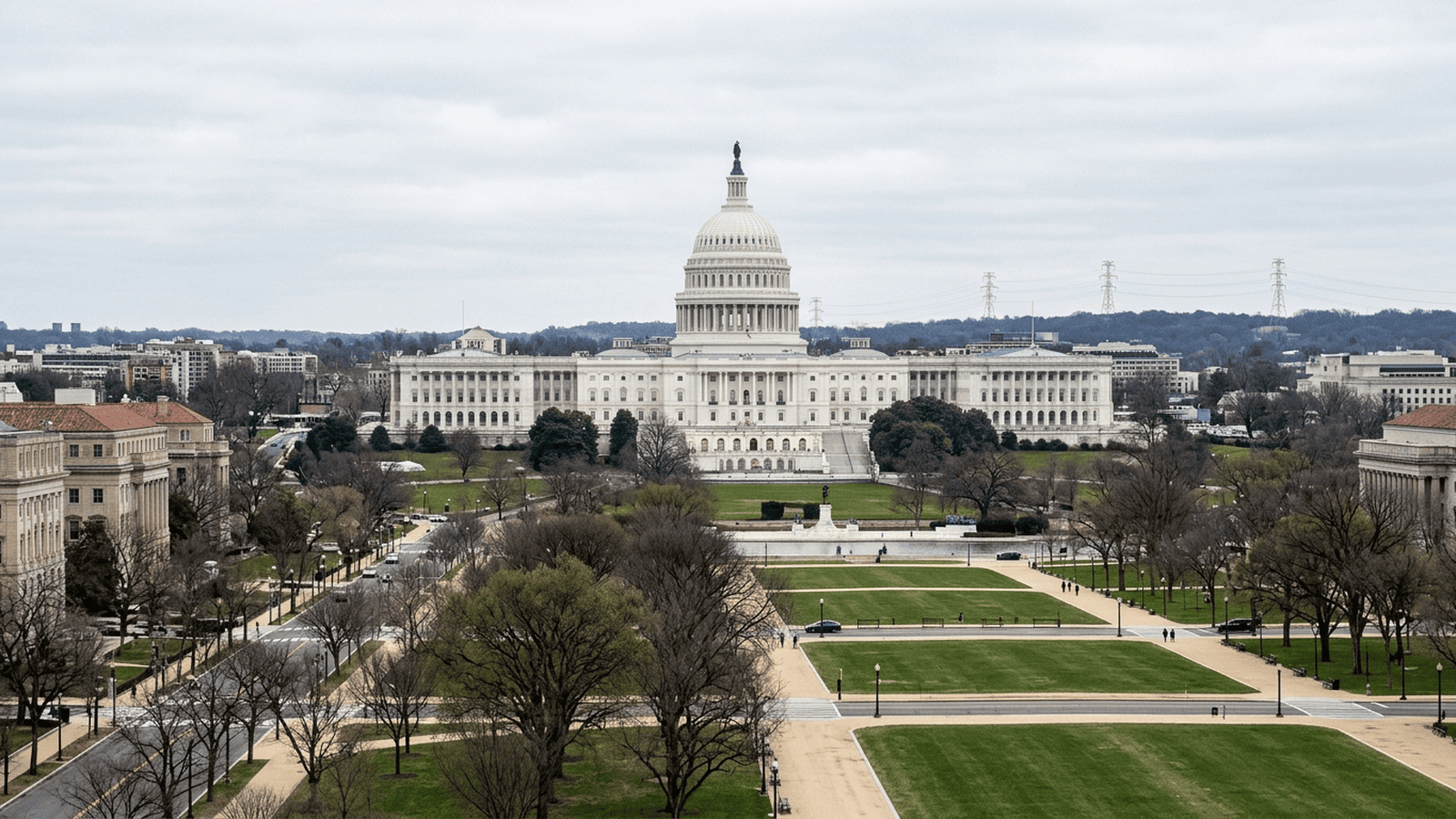
The Senate passed the Bipartisan American Affordability and Jobs Act by 62 to 33, advancing a measure intended to speed federal reviews for energy and infrastructure projects. Supporters say shorter reviews and limits on lawsuits could reduce building costs and help renewable and fossil fuel projects, along with the power lines they need. Opponents warn that the changes could weaken environmental protections and affect state and tribal interests, while some House members want changes to transmission provisions. The House now faces an uncertain decision on whether to pass the bill as written or revise it; President Trump would have to sign any final measure. The excerpt lists no specific fees, forms, or compliance deadlines.
TLDR: The Senate approved a bipartisan permitting measure aimed at speeding energy and infrastructure construction and lowering costs. The House may revise or reject it, and any final bill would still require President Trump’s signature.
The Senate approved the Bipartisan American Affordability and Jobs Act, known as BAAJA, by a vote of 62 to 33 on Thursday. The bipartisan measure would change federal permitting and environmental review processes for infrastructure and energy projects. It now goes to the House, where its prospects remain uncertain. President Trump has expressed support for the deal, but he would need to sign any bill that reaches his desk.
Supporters say the bill is needed because complex permitting reviews can delay major projects for years and add to building costs. They argue that faster, more efficient reviews could make it easier to build energy and infrastructure, an issue that has gained attention as energy prices rise. That case for speeding construction is the central rationale offered by the bill’s backers.
The measure would make it easier to build renewable energy and fossil fuel projects, as well as the high-tension power lines that support them. It follows years of intermittent negotiations and a breakthrough announced by negotiators in September. Senate Majority Leader John Thune described the bill as years in the making.
Republican Sen. Shelley Moore Capito of West Virginia said the agreement would make infrastructure projects faster and easier to build without giving up strong environmental protections. She presented the negotiations as an example of Republicans and Democrats identifying a long-running problem and working together on it. Sen. John Barrasso of Wyoming likewise argued that delays and costs have made it harder to build in the United States.
Barrasso said the bill would streamline environmental and judicial reviews and limit lawsuits. He described those provisions as common-sense reforms and said the measure offered a responsible way to produce more energy while protecting the environment. Support for the bill includes some renewable energy leaders and developers, though environmental groups have opposed it.
The Senate vote showed substantial support across party lines, but also clear opposition. Fifteen members of the Democratic caucus voted yes, along with virtually all Republicans. Thirty-one Democrats voted no, largely citing concerns that the bill could weaken environmental protections and lead to more fossil fuel projects. Republican Sens. Mike Rounds of South Dakota and Josh Hawley of Missouri also voted against it.
Democratic Sen. Jeff Merkley of Oregon raised concerns about possible effects on states’ ability to protect clean water and air, the balance between fossil fuel and renewable energy, data center development, the deficit, and tribal rights. Merkley acknowledged that the measure could help renewable energy projects, but questioned whether the Trump administration would allow wind projects to proceed. He also warned that easier approval of natural gas and other fossil fuel projects could increase carbon emissions.
Sen. Ron Wyden, also of Oregon, opposed the bill and sought a vote on an amendment to ban data centers on public lands. Wyden and Merkley have both expressed concern about possible effects on tribal rights. Those objections point to questions the House will face as it considers a measure that supporters describe as a way to speed construction while opponents fear it could reduce protections and change which projects move forward.
The House debate is not settled. Some House Republicans have raised concerns about changes to provisions on electricity transmission and grid reliability. Some House Democrats also want changes. Rep. Jared Huffman of California, the ranking member on the House Natural Resources Committee, has questioned whether the administration might use the bill to approve fossil fuel projects while delaying renewable projects.
A spokesperson for House Minority Leader Hakeem Jeffries said Jeffries supports the need for permitting reform but believes the Senate bill falls short in several areas. The spokesperson said the House Democrats would seek more involvement in shaping the legislation. Some opponents have suggested Democrats may have more negotiating leverage next year, when they are expected to take control of the House and Senate, according to the excerpt. The bill’s passage before the end of the year is uncertain.
For project developers, the bill’s stated practical effect would be shorter, more efficient federal environmental and judicial reviews, fewer delays from lawsuits, and a simpler path to building renewable and fossil fuel energy projects and transmission lines. The intended result is lower costs and faster construction, but the excerpt gives no specific fee amounts, application forms, compliance deadlines, or enforcement schedule. It also does not quantify any effect on the deficit or specify how states’ authority, tribal rights, or environmental protections would change. Those unresolved details are part of the plan’s next legislative stage, not established outcomes.
The House must now decide whether to pass the Senate bill as written or seek changes, including on transmission and other disputed provisions. Thune said he did not know whether the House would pass it unchanged, and the measure may not advance before year’s end. Any final version would still require President Trump’s signature. House consideration and the presidential decision are the necessary next steps for determining whether the proposed permitting changes become law.

Jordan Lee serves as the Senior Correspondent for Wall Street, Finance, and Monetary Systems at Just Right News. Based in the heart of the world’s financial capital, New York City, Lee brings a sharp, principled eye to the complex mechanisms that drive the global economy. His reporting is defined by a commitment to fiscal responsibility, the defense of the free market, and a deep-seated belief that a transparent monetary system is the bedrock of a free society.
Raised in Portland, Oregon, Lee’s perspective was forged in a city that has undergone significant cultural and economic shifts. His upbringing in the Pacific Northwest instilled in him a profound appreciation for the industriousness of small business owners and the importance of local economic stability. Watching the evolution of his hometown’s landscape sparked an early interest in how federal fiscal policy and large-scale financial trends eventually trickle down to the average citizen. This background provides him with a unique vantage point; he understands the growing disconnect between the policy-making elite and the reality of Main Street, a theme that frequently resonates throughout his work.
Now operating from his base in New York City, Lee bridges the gap between the high-stakes trading floors of Manhattan and the households of everyday Americans. He views the financial sector not merely as a collection of numbers and tickers, but as a vital engine of American prosperity that requires constant vigilance and accountability. His reporting often highlights the dangers of centralized financial control and the necessity of maintaining a system that rewards merit, risk-taking, and innovation.
As the creator and lead of the featured series, “The Invisible Economy,” Lee pulls back the curtain on the often-opaque world of monetary systems. He specializes in translating the dense jargon of central banking and international finance into actionable insights for the Just Right News audience. His work explores the “invisible” forces—such as inflationary pressures, regulatory creep, and the expansion of the administrative state—that erode the purchasing power of American families. By focusing on these systemic issues, Lee empowers readers to understand the hidden forces shaping their financial independence.
Lee’s journalistic philosophy is rooted in a steadfast commitment to traditional American values. As an Asian American professional who has navigated the competitive corridors of the financial world, he is a vocal advocate for meritocracy and the preservation of the American Dream. He believes that a stable currency and a predictable regulatory environment are essential for national sovereignty and individual liberty. His reporting frequently warns against the risks of government overreach in the private sector, arguing that the most effective solutions to economic challenges arise from competition and individual enterprise rather than bureaucratic mandates.
At Just Right News, Jordan Lee remains dedicated to providing a clear-eyed defense of the taxpayer. Whether he is analyzing market volatility or investigating the long-term implications of national debt, his mission is to provide the truth about where the money is going and what it means for the future of the country. Through his rigorous analysis and principled stance, Lee has become a trusted voice for those who value a strong, sovereign, and fiscally sound America.