

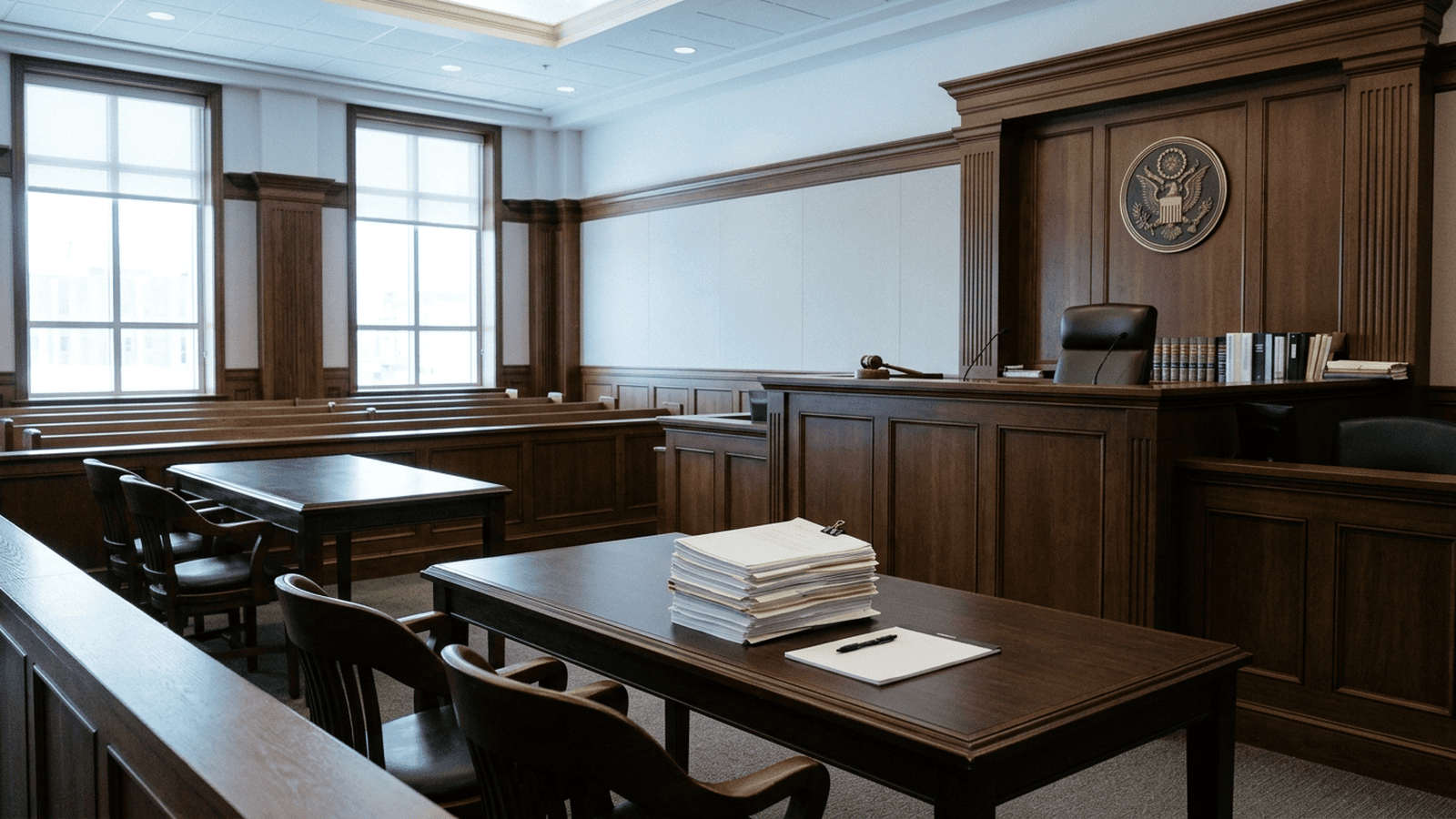
The Justice Department has asked the 9th U.S. Circuit Court of Appeals to declare moot its lawsuit challenging certification of Mary Peltola’s Alaska Senate victory. The department initially sought to delay certification while investigating whether voters confused two candidates named Sullivan, but says the completed election leaves no way to determine voters’ intent. A federal judge had dismissed the suit, and Alaska’s Supreme Court had ruled that the second Sullivan could appear on the ballot. Peltola won an outright majority, and the state’s Republican attorneys also opposed the federal case. The appeals court has not ruled; it must decide whether to vacate the lower court’s order and dismiss the matter.
TLDR: The Justice Department is asking an appeals court to end its challenge to Mary Peltola’s Alaska Senate victory because the election is over and voter intent can no longer be determined. The 9th Circuit has not ruled on the motion or its request to vacate the lower court’s dismissal.
The Justice Department has asked a federal appeals court to end its lawsuit challenging the certification of Mary Peltola’s victory in Alaska’s U.S. Senate race. The motion came two days after the race was decided. It does not mean the court has ruled, and the administration’s filing asks the appeals court to take more than one procedural step before dismissing the case.
The department originally said certification should wait until an investigation could determine whether voters were confused by two candidates named Sullivan. That was the stated reason for the lawsuit. The ballot listed the challenger as Daniel J. Sullivan Jr., with no party preference, while Republican Sen. Dan Sullivan was identified as the incumbent. The administration did not explain how investigators could determine voters’ intent while ballots remained secret.
The legal challenge focused on whether the second candidate’s name could have led some voters to select him while intending to vote for the senator. The Alaska Supreme Court had already ruled that the second Sullivan’s candidacy was legal and that he could appear on the ballot. Earlier this month, a federal judge in Alaska dismissed the administration’s lawsuit.
The Justice Department is now asking the 9th U.S. Circuit Court of Appeals to declare the case moot, vacate the lower court’s order and send the case back for dismissal on that basis. The filing also asks the appeals court to overturn the lower court’s dismissal before dismissing the case itself. That unusual sequence would erase the loss in the lower court while ending the dispute because the election has concluded.
Associate Attorney General Stanley E. Woodward wrote that the United States “reluctantly acknowledges” there is no longer a way to determine whether votes for Daniel J. Sullivan were intended for the senator. The filing therefore recognizes a practical limit: after voters have cast ballots and the race has been decided, the government says it cannot establish which candidate those voters meant to support. The appeals court must decide what procedural effect that recognition will have.
Peltola won an outright majority and received more votes than the other Sullivan. Her victory made her the Democrats’ 56th senator and marked the party’s ninth Senate pickup in the midterm election. In a statement responding to the filing, Peltola said the election was over and that she was eager to move forward and work for Alaskans. Her statement does not resolve the pending court matter, but it reflects her position that the result should now stand.
The case drew objections from Alaska officials as well as from the courts. Attorneys for the state, which is controlled by Republicans, opposed the administration’s legal position and filed papers supporting dismissal of the original case. They called the lawsuit “meritless.” The state’s involvement is a reminder that the dispute was not simply a contest between the federal administration and the winning candidate. State officials also defended the state’s handling of the election in court.
The controversy widened after reporting by The New York Times described texts and other documents that appeared to show Peltola’s campaign involved in recruiting the retired schoolteacher from Petersburg. Peltola denied involvement, and the second Sullivan has long said he ran independently. The candidate appeared on the ballot as Daniel J. Sullivan Jr., without a party preference. The senator appeared as a Republican and the incumbent. The excerpt does not establish that Peltola or her campaign committed wrongdoing.
President Trump directed the Justice Department to file the lawsuit and later demanded that Peltola be prosecuted for what he described as a scheme. Federal investigators entered Alaska before Election Day. Gov. Mike Dunleavy separately ordered an investigation after the newspaper report, and the Justice Department’s top prosecutor in Alaska called the reporting “troubling” before the election. Those steps are distinct from the pending appellate motion; the excerpt does not say that the investigations have reached a conclusion.
The practical impact is procedural rather than a new election rule. The directly affected parties include Peltola, the two Sullivan candidates, the federal government and Alaska officials. The original lawsuit sought to block certification while the administration investigated possible voter confusion; the new filing asks the appeals court to end the case after the vote. The excerpt identifies no new fees, forms, compliance deadline or enforcement schedule. It also records no court ruling on the latest request, so the certification dispute’s next formal step rests with the 9th Circuit.
The administration’s filing marks at least the second time since the November 3 election that the Justice Department has moved to drop a prominent case involving state election administration. In a separate California matter, the department moved to drop a suit seeking to stop officials from counting roughly 20,000 ballots. The Alaska motion is narrower: it concerns the Senate race and the effect of the completed election on the federal lawsuit.
The next necessary step is for the 9th Circuit to consider the government’s request and determine whether the case is moot, whether the lower court’s order should be vacated, and whether dismissal is appropriate. No outcome has been announced. The court’s decision will establish how this particular case proceeds, while the election result and the state’s prior ballot ruling remain part of the record before it.

Lila Hayes serves as a Staff Writer for Just Right News, where she anchors the “Courts, Law, and Constitutional Order” beat. Her work is defined by a steadfast commitment to the foundational principles of the American republic and a rigorous defense of the legal frameworks that ensure national stability. As a primary voice for the outlet, she provides readers with a clear-eyed analysis of the judiciary, focusing on the importance of originalism and the preservation of the separation of powers.
Lila’s perspective was forged in the American heartland. Raised in St. Louis, Missouri, she grew up in a Hispanic household where the values of hard work, faith, and respect for the law were paramount. Her upbringing instilled in her a deep appreciation for the American Dream and the legal protections that make it possible. This Missouri background remains a cornerstone of her reporting, providing a grounded, common-sense counter-narrative to the often-insular legal circles of the coastal elite. She understands that the decisions made in high-court chambers have real-world consequences for families and small business owners across the country.
At Just Right News, Lila has become widely recognized for her signature feature series, “The Rulebook of Power.” In this ongoing project, she delves into the mechanics of the federal government, examining how administrative overreach and judicial activism can threaten the delicate balance of the Constitution. She approaches her beat with the tenacity of a veteran journalist and the precision of a legal scholar, consistently advocating for a judiciary that interprets the law as written rather than legislating from the bench. For Lila, the Constitution is not a “living” document subject to the whims of modern social trends; it is a fixed standard that ensures the government remains the servant of the people, not their master.
Now based in Philadelphia, Pennsylvania, Lila finds herself at the very epicenter of American constitutional history. Living and working in the city where the Founders drafted the documents she defends daily provides a constant source of inspiration. The historic halls and landmarks of Philadelphia serve as a daily reminder of the high stakes involved in her reporting. Her presence in the city allows her to bridge the gap between the historical intent of the law and its contemporary application, ensuring that the legacy of the Founding Fathers remains central to the national conversation.
Throughout her career, Lila has remained dedicated to the idea that a free society requires an informed citizenry and a transparent legal system. Her reporting is more than just a collection of headlines; it is a defense of the constitutional order that has sustained the nation for over two centuries. By focusing on the “Rulebook of Power,” she ensures that her readers understand not just what is happening in the courtrooms, but why those decisions matter for the future of American liberty. Lila Hayes continues to be a vital voice for those who believe that the law should be a shield for the citizen and a constraint on the state.