

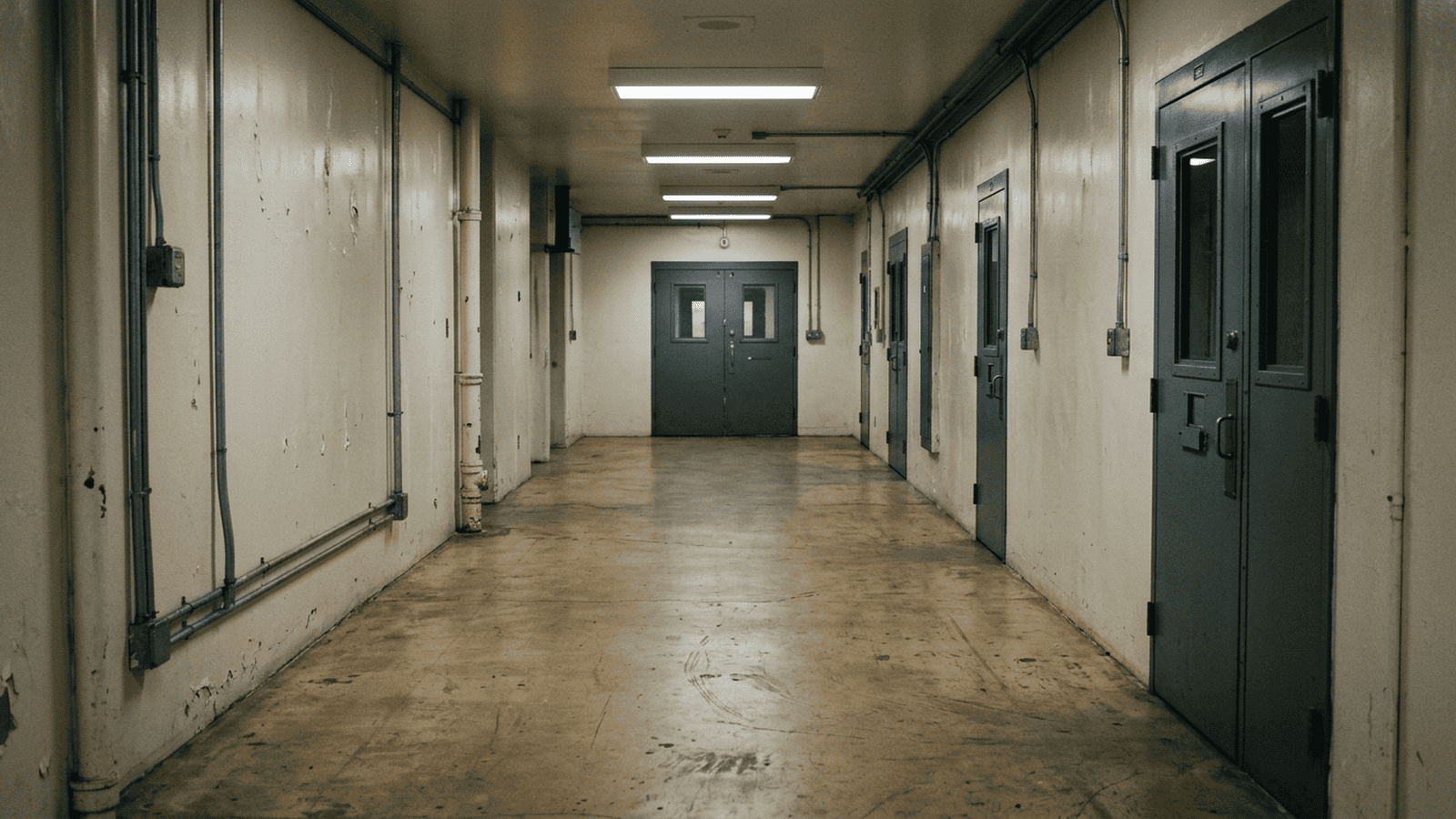
Tennessee Gov. Bill Lee has paused executions and ordered an independent investigation after Christa Pike’s attempted execution failed, the second such failure in four months. Pike’s attorneys say she received two doses of pentobarbital, suffered repeated needle attempts, and was hospitalized with burned and blistered arms. Their account of IV placement has not been answered in the excerpt by state officials. A 2022 review had already found failures to follow testing procedures and a lack of formal health-care training for the unidentified executioner. The current investigation has no stated deadline, and the state has not said when executions may resume or whether procedures will change.
TLDR: Tennessee has suspended executions while Gov. Bill Lee orders an independent review of Christa Pike’s failed execution. The investigation follows earlier findings of missed drug testing and will determine whether the state changes its execution procedures.
Tennessee Gov. Bill Lee has paused executions and ordered an independent investigation after the failed attempt to execute Christa Pike. The decision follows a second failed execution in four months and renews scrutiny of the state’s procedures. The pause is an immediate step while investigators examine what went wrong; the excerpt does not specify how long it will last.
The stated rationale is to investigate the unsuccessful attempt and identify what went wrong. That is the official reason given for the pause and review. The available account does not describe new rules, a revised protocol, or a deadline for completing the investigation.
Pike, 50, was unconscious and on a ventilator at a Nashville-area hospital on Friday, according to her attorneys. They said she was punctured with needles at least seven times in the death chamber and later had burned and blistered arms after receiving two doses of pentobarbital. Those details are allegations by her attorneys, who described them in an emergency court filing.
Her attorneys said they believed the IV lines were not correctly placed, causing the drug to enter her body rather than her bloodstream. They alleged that execution team members did not recognize the problem and that prison officials administered a backup set of syringes instead of correcting the IV failure. The excerpt does not include an official account from the state addressing those specific claims.
The failed attempt follows another breakdown earlier this year involving Tony Carruthers. Medical workers placed an IV in his right arm but could not establish a second line. They then tried his other arm, left hand, and left foot, but could not establish a central line. Lee ordered officials to wait at least a year before trying to execute Carruthers again.
The state has faced questions about its execution process before. In April 2022, Lee stopped Oscar Smith’s execution shortly before it was to take place after officials learned of mishandled drugs. More than a week later, Lee paused executions after acknowledging that Tennessee had failed to ensure the drugs were properly tested. An independent review released in December 2022 found that the state had not followed its own lethal-injection process since its revision in 2018.
That review covered a period in which Tennessee executed seven inmates, two by injection and five in the electric chair. It found that the pharmacy had not performed required endotoxin testing for the executions reviewed, including the one Lee halted. In one lethal injection, midazolam had not been tested for potency. Tennessee later moved from a three-drug sequence to pentobarbital alone.
The review, conducted by former U.S. Attorney Ed Stanton, also found that the unidentified executioner had no formal health-care training and learned the job mainly through experience on the job. After the report was released, the Tennessee Department of Correction fired its longtime top attorney and another employee. Pike’s attorney Steve Ferrell said he was skeptical of the progress, describing the result as a less detailed protocol and greater secrecy.
The scale of Tennessee’s execution activity is limited compared with the national total, but the recent failures have drawn attention. Since 2022, Tennessee has carried out four of more than 140 executions nationwide, according to the Death Penalty Information Center. Republican state Sen. Joey Hensley, a family physician, said execution workers may not be trained well enough to handle difficult cases and suspected the IV line was not properly inserted.
The practical impact is a halt to executions while Lee’s independent investigation proceeds. The account provides no fee, new form, compliance schedule, or completion deadline for the review. It also does not state when executions may resume or whether the investigation will lead to changes in staffing, testing, or protocol. Directly affected are people scheduled for execution and state officials responsible for carrying out the process; the excerpt does not identify a date for any next execution.
Tennessee’s earlier review documented missed testing requirements and gaps in executioner training, while Pike’s attorneys now raise new allegations about IV placement and the handling of backup doses. The investigation is the next stated step, but its scope, findings, and any resulting oversight measures remain unknown. Those necessary steps will determine what the state concludes and whether execution procedures change.
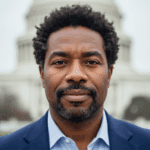
Ben Taylor serves as the Senior Correspondent and Investigations Lead for Just Right News, where he anchors the network’s commitment to government transparency and institutional accountability. With a career defined by a relentless pursuit of the facts, Taylor spearheads the acclaimed feature series “The Paper Trail,” a deep-dive investigative column that prioritizes primary source documentation over political rhetoric. Based in the heart of the nation’s capital, he has earned a reputation as one of the most formidable investigative journalists in Washington, D.C., known specifically for his mastery of public records and the Freedom of Information Act.
Taylor’s approach to journalism is deeply rooted in his upbringing in Kansas City, Missouri. Growing up in the “Show Me State,” he developed a healthy skepticism of centralized power and a profound respect for the common-sense values of the American heartland. This Midwestern foundation informs his reporting today, as he bridges the gap between the complex machinations of federal bureaucracy and the everyday concerns of citizens across the country. For Taylor, investigative reporting is not about chasing headlines; it is about ensuring that the government remains answerable to the people it serves.
As an African American man working within the conservative media landscape, Taylor brings a principled perspective to his beat. He views the Constitution and the right to information as the ultimate equalizers in a free society. His work often highlights how bureaucratic overreach and lack of transparency disproportionately affect individual liberties. By focusing on the “paper trail,” Taylor strips away the spin of partisan talking points, instead providing Just Right News readers with the raw data and internal communications that reveal how their tax dollars are spent and how policy decisions are actually made.
In his role as Investigations Lead, Taylor oversees a team dedicated to uncovering the stories that mainstream outlets often overlook. Whether he is auditing federal spending, investigating regulatory overreach, or exposing inefficiencies within the administrative state, his methodology remains consistent: follow the evidence wherever it leads. His presence in Washington, D.C., allows him to maintain a constant watch over the halls of power, yet he remains steadfastly connected to his roots, ensuring his reporting reflects the clarity and directness of his Missouri home.
Throughout his tenure at Just Right News, Taylor has become a vital voice for those who demand integrity in public office. He believes that a well-informed electorate is the strongest defense against government overreach, and he has dedicated his career to providing the public with the tools they need to hold their leaders accountable. Through “The Paper Trail” and his broader investigative work, Ben Taylor continues to set the standard for rigorous, document-driven journalism that champions the values of transparency, individual responsibility, and the rule of law.