

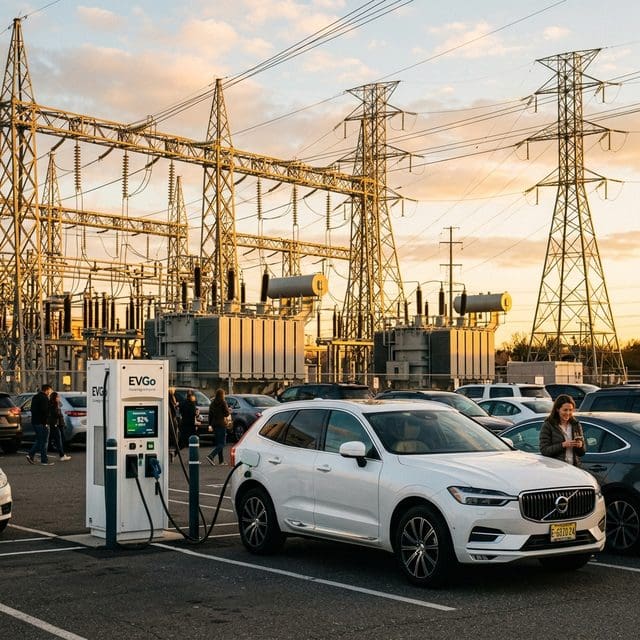
Toyota’s record hybrid sales and steady investment in grid infrastructure signal a pragmatic shift in the energy transition amid cooling economic indicators.
The American energy transition is increasingly defined by consumer pragmatism and industrial necessity rather than ideological mandates. Recent third-quarter data from Toyota Motor North America reveals a significant shift in market behavior, where hybrid technology has emerged as the primary driver of decarbonization. The company reported 633,223 total vehicles sold in Q3 2026, with electrified models accounting for 363,367 units—a 28.5% increase year-over-year. This surge brought electrified vehicles to 57.4% of the combined Toyota and Lexus volume, a clear indicator that the market is gravitating toward incremental efficiency over total powertrain disruption.
Crucially, the data shows that consumers are not abandoning internal combustion entirely but are instead opting for the reliability and cost-effectiveness of hybrids. Within the Toyota brand specifically, electrified sales reached 61% of total volume, totaling 325,227 units. The Lexus division mirrored this trend, where the ES Hybrid notably outsold its all-electric counterpart by a margin of 5,133 to 2,083. Even as the fully electric Lexus RZ saw sales double to 10,214 units, it remains a secondary player to the hybrid models that dominate the RX line, which saw 37,448 hybrid units sold through September. This suggests that the American taxpayer is voting with their wallet for a gradual, market-led transition that avoids the range anxiety and infrastructure gaps associated with pure EVs.
While consumers manage their individual energy footprints at the dealership, the broader financial markets are focusing on the backbone of the energy system: the electric grid. The First Trust NASDAQ Clean Edge Smart Grid Infrastructure Index Fund (GRID) closed at $178.80 on October 1, reflecting a growing investor appetite for industrial reliability. The fund, which manages $11.90 billion in net assets, is heavily weighted toward companies like Eaton, Quanta Services, Johnson Controls, ABB, and Schneider Electric. These firms provide the hardware and engineering necessary to modernize an aging electrical system, focusing on transmission investment and building efficiency rather than speculative power generation alone.
This shift toward infrastructure-heavy investment comes at a time of broader economic uncertainty. The labor market showed signs of cooling in September, with nonfarm payrolls rising by only 29,000, missing forecasts and pushing unemployment to 4.2%. With 30-year fixed mortgage rates hitting a three-year high of 7.28% as of October 1, the economic environment favors efficiency and proven technology over high-cost experiments. New mortgage applications are already declining, signaling a tightening of the consumer belt that may further entrench the demand for cost-effective hybrid vehicles over premium-priced electric models.
Technological shifts are also reshaping the resource landscape. As OpenAI launches its “dots” AI agent and Akamai enters a $12 billion cloud deal with Anthropic, the demand for high-performance computing is surging. Amazon has responded by raising prices on chip rentals and utilizing sale-leaseback arrangements for Nvidia processors. This digital expansion places even greater stress on the domestic power grid, reinforcing the necessity of the infrastructure investments tracked by the GRID fund. The need for reliable, always-on power to fuel the AI revolution is becoming a primary driver of energy policy, often superseding emissions-only goals.
The intersection of these trends points to a maturing energy landscape. The market is rewarding companies that prioritize grid stability and flexible vehicle options that fit within existing consumer habits. As long as capital continues to flow toward transmission investment and hybrid efficiency, the transition will likely remain anchored in economic reality and resource availability rather than policy-driven optimism.

Mark Davis serves as the Senior Correspondent for Energy, Climate, and Resource Economics at Just Right News. In an era where the conversation around the environment is often dominated by alarmism and top-down mandates, Mark provides a vital, market-oriented perspective on the complex forces shaping our world. As the lead voice behind the acclaimed feature series “Power and the Planet,” he explores the intersection of environmental policy, global energy markets, and the fundamental economic principles that sustain modern civilization.
Mark’s pragmatic approach to resource management was forged in the high desert of his hometown, Albuquerque, New Mexico. Growing up in a region defined by both its breathtaking natural beauty and its rugged, resource-dependent landscape, he developed an early appreciation for the delicate balance between conservation and utilization. New Mexico’s unique position as a hub for both traditional energy production and cutting-edge scientific research provided Mark with a front-row seat to the evolution of the American energy sector. This upbringing instilled in him a deep-seated belief that true environmental stewardship is inseparable from economic prosperity and technological innovation.
Now based in Boulder, Colorado, Mark operates from the heart of the nation’s climate research community. While Boulder is often seen as a bastion of environmental idealism, Mark utilizes his post to provide a necessary counterweight, grounded in the realities of resource economics. He understands that energy policy does not exist in a vacuum; it has tangible consequences for the American taxpayer, the stability of the national power grid, and the strength of the domestic manufacturing sector. By reporting from the front lines of the climate debate, he is able to challenge prevailing narratives with hard data and a commitment to the principles of the free market.
Throughout his tenure at Just Right News, Mark has distinguished himself by focusing on the “Resource Economics” aspect of his beat. He frequently highlights the hidden costs of rapid energy transitions and advocates for an “all-of-the-above” energy strategy that prioritizes American energy independence. His work often shines a light on the geopolitical implications of resource scarcity, arguing that a secure nation must first be an energy-secure nation. Whether he is analyzing the impact of federal land-use regulations or investigating the supply chains required for new technologies, Mark remains focused on how policy decisions affect the lives and livelihoods of everyday citizens.
In “Power and the Planet,” Mark continues to bridge the gap between complex scientific concepts and the economic realities facing the country. He rejects the false choice between a healthy environment and a thriving economy, instead seeking out solutions that leverage American ingenuity and private-sector competition. For Mark, reporting on the climate is not about following the latest trends, but about ensuring that the conversation remains tethered to the foundational values of liberty, property rights, and fiscal responsibility. His contributions ensure that Just Right News readers receive a comprehensive, clear-eyed view of the challenges and opportunities defining the future of our planet.