

Chief Minister C. Joseph Vijay expanded the Perunthalaivar Kamarajar Breakfast Scheme to middle schoolers, while global institutions pivot toward AI-driven workforce training and high-output research to meet modern manufacturing demands.
The fundamental role of education as a driver for human capital is undergoing a dual transformation: one rooted in the basic physical readiness of students and the other in the high-tech demands of the modern workforce. In a significant expansion of the state’s social safety net, Tamil Nadu Chief Minister C. Joseph Vijay officially launched the expanded Perunthalaivar Kamarajar Breakfast Scheme on September 22, 2026. By extending the program to students in Classes VI through VIII, the administration has added 15.30 lakh students across 15,454 government and aided schools, signaling a belief that nutritional stability is a prerequisite for academic achievement.
This expansion is not merely a symbolic gesture but a massive logistical undertaking backed by a ₹217.63 crore budget increase. The total allocation for the program now stands at ₹724 crore, covering roughly 34.64 lakh students in nearly 44,984 schools. The implementation model relies on a decentralized network, utilizing integrated kitchens in 447 Greater Chennai schools, municipal arrangements in 2,150 schools, and self-help groups in 12,857 rural schools. While the rollout was deferred in districts like Chengalpattu and Tiruppur due to election codes, the weekly menu remains focused on traditional staples like upma, khichdi, and pongal to ensure students are physically prepared for the rigors of the school day. Reports suggest that while non-vegetarian items like chicken biryani have been proposed, no statewide menu change was included in this specific rollout.
While primary and middle schools focus on foundational readiness, the higher education sector is increasingly measured by its ability to produce tangible research and innovation. Chandigarh University Uttar Pradesh recently highlighted this shift, reporting a strong research momentum with 182 papers published during the 2025-26 academic year. This emphasis on scholarly output aligns with a broader global push for universities to act as hubs for specialized knowledge, moving beyond simple degree conferral toward active participation in the global intellectual economy. This trend mirrors the recent call from Chinese President Xi Jinping, who on September 20 urged for sustained efforts to strengthen advanced manufacturing to support modernization, a goal that requires a highly skilled and research-oriented workforce.
This push for excellence is also attracting private sector heavyweights who see education as a market-aligned solution for workforce gaps. NBA veteran Chris Paul recently joined Owl Ventures as a Venture Partner to support founders working on education and workforce innovation. Similarly, at the HUAWEI CONNECT 2026 Global Education Summit in Shanghai, Huawei launched its AI Practice LAB (AIPL) solution. These private initiatives reflect a growing skepticism of top-down government intervention, favoring instead practical, technology-driven tools that align student skills with the needs of advanced manufacturing and the energy transition priorities championed at the UN Private Sector Forum.
However, bureaucratic hurdles and political friction continue to complicate the path to meritocracy. In the United States, a federal judge recently intervened to prevent the Education Department from cutting approximately $600 million in grants to teacher training programs over anti-DEI policy disputes. This legal friction underscores the ongoing struggle to keep education focused on professional preparation rather than ideological mandates. Furthermore, research from the Charities Aid Foundation released on September 21 found that charities worldwide are facing a demand for services that far outpaces their capacity to respond, suggesting that government programs like the Tamil Nadu breakfast scheme are essential to fill gaps that private philanthropy cannot currently bridge.
Ultimately, the goal of these diverse investments—from providing a hot meal in a rural Indian school to establishing AI labs in Shanghai—is the same: the cultivation of human capital. As institutions like Chandigarh University ramp up their research and states like Tamil Nadu secure the health of their students, the focus remains on whether these systems can successfully remove barriers to upward mobility and prepare a generation for a competitive, high-tech workforce. By prioritizing student health and market-aligned skills, these programs represent a common-sense approach to building a resilient and productive society.
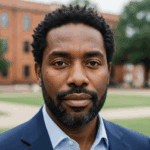
Daniel Owens serves as a Senior Correspondent for Just Right News, where he leads the newsroom’s coverage of Education, Workforce, and Upward Mobility. In an era where the national conversation often overlooks the practical foundations of success, Owens brings a principled perspective to the forefront of the media landscape. His work is defined by a commitment to the idea that a strong society is built on the pillars of quality education, a robust work ethic, and the removal of bureaucratic barriers to individual achievement.
Born and raised in Cleveland, Ohio, Owens’s worldview was shaped by the industrial landscape of the Midwest. Growing up in a city known for its grit and resilience, he witnessed firsthand the transformative power of steady employment and the devastating effects of economic stagnation. This background instilled in him a deep respect for the American worker and a healthy skepticism toward top-down government solutions that often fail to reach the communities they intend to help. As an African American man who has navigated the path to professional success, Owens approaches his beat with a nuanced understanding of how meritocracy and personal responsibility intersect with opportunity. He frequently draws on his roots to highlight the importance of family stability and community-led initiatives in fostering the next generation of leaders.
At Just Right News, Owens is the architect of the acclaimed feature series, “The Learning Curve.” Through this platform, he explores the evolving landscape of American schooling, from the rise of the school choice movement to the revitalization of trade schools and vocational training. He frequently challenges the status quo of higher education, advocating for a return to academic rigor and the practical alignment of degrees with market demands. For Owens, education is not merely about obtaining credentials; it is about equipping young people with the tools necessary to lead self-sufficient, meaningful lives. His reporting on “The Learning Curve” has become essential reading for parents and policymakers who believe that educational competition and parental rights are the keys to a brighter future.
Now based in Raleigh, North Carolina, Owens finds himself at the heart of one of the nation’s most dynamic regions for innovation and growth. Raleigh’s unique blend of traditional values and a fast-paced economy provides the perfect backdrop for his reporting on the modern workforce. From the tech hubs of the Research Triangle to the rural communities of the South, he tracks how shifts in the economy are impacting families and local industries. His reporting often highlights the success stories of entrepreneurs and workers who are thriving by embracing the values of hard work and innovation.
Throughout his career, Daniel Owens has remained a steadfast voice for the student seeking a better path and the worker striving for a better life. His reporting for Just Right News serves as a vital resource for readers who value common-sense solutions to the challenges of the 21st-century economy. By focusing on the intersection of policy and the human spirit, Owens continues to provide a roadmap for how individuals and communities can achieve lasting upward mobility.