

Legal challenges to India’s nuclear caps and the expiration of Irish fuel subsidies highlight the friction between fiscal policy and energy security.
The global energy landscape is navigating a complex transition where legal frameworks and fiscal policies are being tested against market demand. From the subcontinent to Western Europe, the mechanisms governing energy liability and consumer pricing are under scrutiny, revealing the trade-offs inherent in maintaining a stable grid.
In India, the Supreme Court has intensified its focus on the SHANTI Act. A bench led by Chief Justice Surya Kant requested the Union government clarify whether the Act’s liability caps unconstitutionally restrict courts from awarding “fair and just” compensation. Currently, operator liability is capped between ₹100 crore and ₹3,000 crore, with total compensation limited to approximately ₹3,900 crore. The Court is also probing Section 17(4) regarding the Atomic Energy Regulatory Board (AERB), seeking to ensure the regulator’s independence from government influence.
This legal tension coincides with new draft nuclear-damage rules dated August 14, 2026. These rules propose a strict, no-fault liability regime extending beyond a singular “nuclear incident” to include “radiation damage” at mines or during transport. By assigning responsibility to license holders for impacts on health and the environment, the government is attempting to close gaps that have long concerned legal experts, even as statutory limits remain under judicial review.
In the renewable sector, the market is testing subsidy-free growth. In Karnataka, Bescom has invited tenders for 500 MW of solar capacity under the Mukya Mantri Soura Shakti (CM-SKY) scheme. Unlike the federal PM-KUSUM program, this initiative offers no capital subsidies to vendors. Consequently, PPA rates are expected to reach ₹3.19/kWh, higher than the ₹2.89/kWh seen under subsidized models. Private firms will lease land from farmers for 28 years, reflecting a market-oriented approach that prioritizes long-term stability over state handouts.
In Europe, the fiscal consequences of energy intervention are peaking. The Irish government faces warnings of fuel protests as it winds down temporary supports. Since April, excise cuts of 30c/L on diesel and 27c/L on petrol have provided a buffer. However, phased restoration begins September 1, with commercial diesel excise rising from €0.25185 to €0.31689 per liter. The industry group Fuels for Ireland has lobbied for a pause, yet the government remains committed to fiscal normalization by December.
These developments occur as global oil demand declines relative to historical levels, constraining price movement despite geopolitical volatility. While U.S. retail sales dipped in July due to cheaper gasoline, a persistent K-shaped wealth gap means wealthy consumers sustain demand for travel while lower-income households face the brunt of restored energy taxes. The challenge for policymakers remains balancing immediate taxpayer relief with the requirement for a reliable, legally sound energy infrastructure.
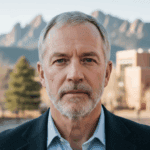
Mark Davis serves as the Senior Correspondent for Energy, Climate, and Resource Economics at Just Right News. In an era where the conversation around the environment is often dominated by alarmism and top-down mandates, Mark provides a vital, market-oriented perspective on the complex forces shaping our world. As the lead voice behind the acclaimed feature series “Power and the Planet,” he explores the intersection of environmental policy, global energy markets, and the fundamental economic principles that sustain modern civilization.
Mark’s pragmatic approach to resource management was forged in the high desert of his hometown, Albuquerque, New Mexico. Growing up in a region defined by both its breathtaking natural beauty and its rugged, resource-dependent landscape, he developed an early appreciation for the delicate balance between conservation and utilization. New Mexico’s unique position as a hub for both traditional energy production and cutting-edge scientific research provided Mark with a front-row seat to the evolution of the American energy sector. This upbringing instilled in him a deep-seated belief that true environmental stewardship is inseparable from economic prosperity and technological innovation.
Now based in Boulder, Colorado, Mark operates from the heart of the nation’s climate research community. While Boulder is often seen as a bastion of environmental idealism, Mark utilizes his post to provide a necessary counterweight, grounded in the realities of resource economics. He understands that energy policy does not exist in a vacuum; it has tangible consequences for the American taxpayer, the stability of the national power grid, and the strength of the domestic manufacturing sector. By reporting from the front lines of the climate debate, he is able to challenge prevailing narratives with hard data and a commitment to the principles of the free market.
Throughout his tenure at Just Right News, Mark has distinguished himself by focusing on the “Resource Economics” aspect of his beat. He frequently highlights the hidden costs of rapid energy transitions and advocates for an “all-of-the-above” energy strategy that prioritizes American energy independence. His work often shines a light on the geopolitical implications of resource scarcity, arguing that a secure nation must first be an energy-secure nation. Whether he is analyzing the impact of federal land-use regulations or investigating the supply chains required for new technologies, Mark remains focused on how policy decisions affect the lives and livelihoods of everyday citizens.
In “Power and the Planet,” Mark continues to bridge the gap between complex scientific concepts and the economic realities facing the country. He rejects the false choice between a healthy environment and a thriving economy, instead seeking out solutions that leverage American ingenuity and private-sector competition. For Mark, reporting on the climate is not about following the latest trends, but about ensuring that the conversation remains tethered to the foundational values of liberty, property rights, and fiscal responsibility. His contributions ensure that Just Right News readers receive a comprehensive, clear-eyed view of the challenges and opportunities defining the future of our planet.