

FDA and CDC investigators are tracking a cluster of Salmonella and Cyclospora outbreaks linked to Mexican produce and domestic powdered milk, triggering widespread secondary recalls across major U.S. retailers.
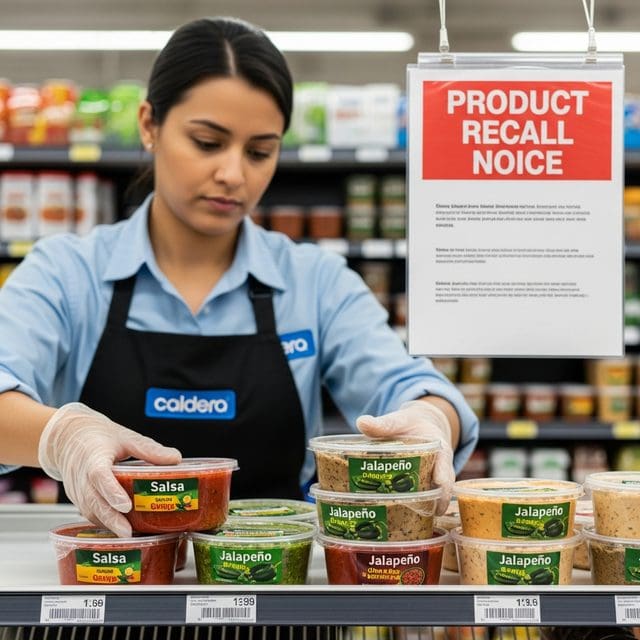
The American food supply chain is currently grappling with a series of contamination events that highlight vulnerabilities in both imported produce and domestic ingredient processing. As of mid-August 2026, federal health officials confirmed that a multistate outbreak of Salmonella Javiana is tied to jalapeño peppers sourced from Sinaloa, Mexico. The contamination has forced major retailers, including Whole Foods, Trader Joe’s, and Walmart, to pull prepared foods, dips, and salsas. The reach of this outbreak is particularly concerning, as it involves secondary recalls for brands like Marketside and Taylor Fresh Foods, with some products carrying best-by dates through August 16, 2026.
While the FDA and CDC maintain that immediate risk from these specific retail establishments has been mitigated, the investigation remains active. The ripple effect of the jalapeño recall has extended into the meat and poultry sectors, with the Food Safety and Inspection Service issuing public health alerts for branded dips and prepared meals. Even the pet food sector was impacted, as a voluntary recall of Oma’s Pride Woof Complete Canine Chicken Recipe for possible Salmonella adds to the narrative of systemic oversight challenges. This cross-category contamination suggests that once a pathogen enters the processing stream, isolating it becomes a logistical nightmare for the private sector.
Simultaneously, a separate outbreak of Cyclospora has been traced to iceberg lettuce from Taylor Farms de Mexico. Federal officials have initiated onsite inspections and sampling in Mexico to determine the root cause. Although the tainted lettuce is believed to be off the market, the incident underscores the challenges of oversight when relying on foreign partners who may not adhere to the same water quality and sanitation standards required of American farmers. For domestic producers, this highlights an uneven playing field created by varying international regulatory enforcement.
On the domestic front, the FDA flagged a significant safety concern involving California Dairies Inc. A cluster of recalls has emerged surrounding powdered milk products due to potential Salmonella risk. Unlike produce outbreaks, which are often localized, ingredient-level contamination in powdered milk can infiltrate hundreds of processed goods, from infant formula to baking mixes. This situation serves as a stark reminder that the safety of the final product on a family’s dinner table is only as reliable as the most basic ingredients in the industrial pantry.
While federal agencies focus on reactive recalls, some states are taking proactive steps regarding environmental health. California’s Department of Pesticide Regulation recently announced a two-year phase-out of paraquat, a potent herbicide linked to Parkinson’s disease. This move follows a global trend, as the chemical is restricted in over 70 countries. However, such bans place a heavy burden on local growers who must find cost-effective alternatives to maintain yields. In a state already burdened by complex water rights, the loss of another tool is met with skepticism by those who prioritize local sovereignty.
These domestic shifts occur against a backdrop of global agricultural instability. In Europe, a severe drought is currently impacting nearly 40% of the territory, devastating farm incomes. Meanwhile, South Korea has moved to subsidize pesticide costs and release government food reserves to stabilize prices. For the American consumer, these overlapping issues of contamination and scarcity serve as a reminder that food security requires the rigorous maintenance of the infrastructure that keeps the supply chain clean. Ensuring that regulators do their jobs without overstepping into the livelihoods of American families remains the critical balance.

Eric Nolan serves as the Senior Correspondent for Food, Water, and Environmental Health at Just Right News, where he brings a principled, common-sense perspective to the most fundamental issues facing the American public. With a career dedicated to uncovering the truth behind the policies that govern our natural resources, Eric has become a trusted voice for readers who value traditional stewardship over bureaucratic overreach. His reporting is defined by a commitment to the idea that true environmentalism is rooted in the protection of the American family and the preservation of the nation’s agricultural heritage.
Raised in Fresno, California, Eric’s worldview was shaped in the heart of the San Joaquin Valley. Growing up in one of the world’s most productive agricultural hubs, he witnessed firsthand the vital connection between the land, the water, and the dinner table. In Fresno, he saw the resilience of farmers and the devastating impact that distant, top-down regulations can have on local communities. This upbringing instilled in him a deep respect for the producers who feed the country and a lifelong skepticism toward the alarmist narratives often pushed by mainstream media. For Eric, environmental health is not an abstract political talking point; it is a matter of ensuring that the people who work the land have the freedom and the resources to do so effectively.
Now based in Eugene, Oregon, Eric operates from a unique vantage point in the Pacific Northwest. Living in a region often defined by intense environmental debate, he provides a necessary counter-narrative to the prevailing trends of the area. From his base in Eugene, he monitors the shifting tides of federal and state policies, ensuring that the voices of rural citizens and property owners are not drowned out by urban activism. His reporting often bridges the gap between the rugged realities of the outdoors and the legislative halls where decisions are made, offering a grounded perspective that prioritizes local sovereignty and practical solutions.
As the lead for the acclaimed feature series “Earth on the Table,” Eric explores the intricate journey of the American food supply. He tackles critical issues such as water rights, soil health, and food security through a lens of national stability and individual liberty. He believes that a healthy environment and a thriving economy are not mutually exclusive, but rather two sides of the same coin of national prosperity. His work consistently highlights how innovation and private-sector ingenuity are the most effective tools for ensuring clean water and a safe food supply, rather than the expansion of the administrative state.
At Just Right News, Eric’s reporting serves as a vital resource for those who seek accountability and transparency. Whether he is investigating the impact of federal land management on local economies or examining the safety of the national food infrastructure, his work remains anchored in the values of heritage and hard work. Eric Nolan continues to be a leading voice in environmental journalism, championing the belief that the best way to protect our natural resources is to empower the people who live and work closest to them.