

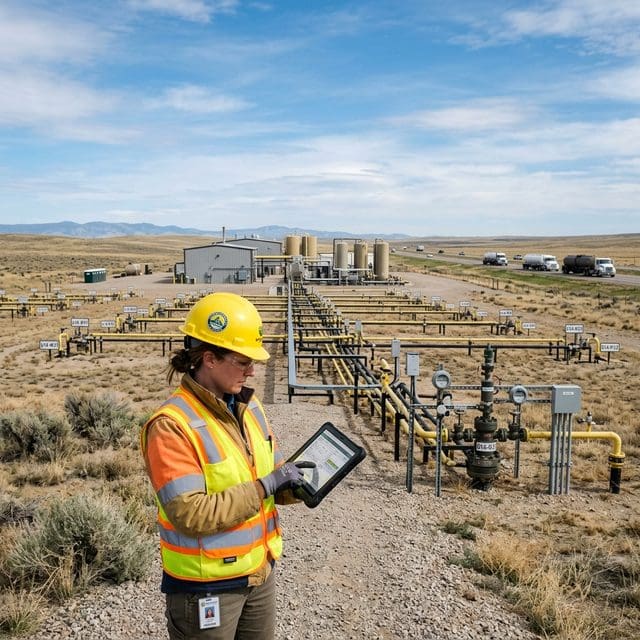
Coordinated emergency oil releases and domestic uranium production gains are providing relief to global energy prices as geopolitical tensions strain refined product supplies.
Global energy markets received a significant liquidity injection this week as G7 leaders agreed to release 100 million barrels of diesel and crude oil from emergency reserves. The coordinated action, executed through the International Energy Agency (IEA), aims to mitigate a persistent supply crunch that has kept energy costs elevated. Following the announcement, Brent crude fell to $99.74 per barrel, while WTI dropped to $89.34, signaling a cooling of recent price spikes that saw U.S. diesel hit a record $6.52 per gallon in late September. By October 2, U.S. diesel prices retreated to $6.37 per gallon.
The intervention specifically targets the refined product market, which has faced acute pressure due to limited refinery capacity in the Middle East and ongoing disruptions in Russia. In Samara and Volgograd, recent attacks on Russian refineries have tightened global diesel supply, prompting Moscow to extend export restrictions through October. The G7 plan allocates a substantial portion of the release to diesel within the first 20 days to address these bottlenecks. In a related policy shift, the Trump administration confirmed it would not authorize a diesel-export ban, a move intended to maintain trade fluidity with participating allies. This reversal balances domestic price pressures with the necessity of maintaining international energy alliances.
While fossil fuel markets stabilize, the domestic nuclear sector is marking its own milestones in energy independence. Ur-Energy recently detailed expansion plans for its Shirley Basin and Lost Creek operations in Wyoming. The company has lifted its licensed operating capacity to 2.2 million pounds of uranium annually, with a strategic goal to reach 2 million pounds of annual production by late 2028. This expansion is bolstered by the upcoming technical report for the Lost Soldier project, which holds an estimated 14 million pounds of resource. These developments represent a pragmatic shift toward securing the nuclear fuel cycle, reducing reliance on foreign mining as the electric grid faces increasing demand from the AI sector.
State-level policies continue to create a complex regulatory environment, particularly in California. Governor Gavin Newsom recently signed legislation barring oil producers from utilizing state-water infrastructure to support new federal offshore leases, a move that could complicate production logistics. Simultaneously, the state is requiring utilities to disclose unused grid capacity and is investigating lower returns on low-risk utility investments to address retail electricity costs. These measures arrive as California also explores a cheaper winter fuel blend to combat gas prices that remain significantly higher than the national average, highlighting the tension between environmental mandates and consumer affordability.
Technology and monitoring are also evolving to meet emissions standards without sacrificing industrial output. The successful launch of the Tanager-2 satellite by Carbon Mapper on October 1 provides a new tool for high-resolution methane monitoring. This technological approach allows for targeted leak detection, offering a market-based alternative to broad-brush regulatory mandates. Meanwhile, the broader infrastructure landscape remains volatile; while companies like GoodLeap continue to close massive securitizations for residential energy projects, traditional storage manufacturers have seen stock declines due to shifting production priorities in the AI storage market. As the Trump administration prepares to appoint Jay Clayton as a White House AI czar, the intersection of energy demand and technological innovation will remain the primary driver of federal policy.

Mark Davis serves as the Senior Correspondent for Energy, Climate, and Resource Economics at Just Right News. In an era where the conversation around the environment is often dominated by alarmism and top-down mandates, Mark provides a vital, market-oriented perspective on the complex forces shaping our world. As the lead voice behind the acclaimed feature series “Power and the Planet,” he explores the intersection of environmental policy, global energy markets, and the fundamental economic principles that sustain modern civilization.
Mark’s pragmatic approach to resource management was forged in the high desert of his hometown, Albuquerque, New Mexico. Growing up in a region defined by both its breathtaking natural beauty and its rugged, resource-dependent landscape, he developed an early appreciation for the delicate balance between conservation and utilization. New Mexico’s unique position as a hub for both traditional energy production and cutting-edge scientific research provided Mark with a front-row seat to the evolution of the American energy sector. This upbringing instilled in him a deep-seated belief that true environmental stewardship is inseparable from economic prosperity and technological innovation.
Now based in Boulder, Colorado, Mark operates from the heart of the nation’s climate research community. While Boulder is often seen as a bastion of environmental idealism, Mark utilizes his post to provide a necessary counterweight, grounded in the realities of resource economics. He understands that energy policy does not exist in a vacuum; it has tangible consequences for the American taxpayer, the stability of the national power grid, and the strength of the domestic manufacturing sector. By reporting from the front lines of the climate debate, he is able to challenge prevailing narratives with hard data and a commitment to the principles of the free market.
Throughout his tenure at Just Right News, Mark has distinguished himself by focusing on the “Resource Economics” aspect of his beat. He frequently highlights the hidden costs of rapid energy transitions and advocates for an “all-of-the-above” energy strategy that prioritizes American energy independence. His work often shines a light on the geopolitical implications of resource scarcity, arguing that a secure nation must first be an energy-secure nation. Whether he is analyzing the impact of federal land-use regulations or investigating the supply chains required for new technologies, Mark remains focused on how policy decisions affect the lives and livelihoods of everyday citizens.
In “Power and the Planet,” Mark continues to bridge the gap between complex scientific concepts and the economic realities facing the country. He rejects the false choice between a healthy environment and a thriving economy, instead seeking out solutions that leverage American ingenuity and private-sector competition. For Mark, reporting on the climate is not about following the latest trends, but about ensuring that the conversation remains tethered to the foundational values of liberty, property rights, and fiscal responsibility. His contributions ensure that Just Right News readers receive a comprehensive, clear-eyed view of the challenges and opportunities defining the future of our planet.