

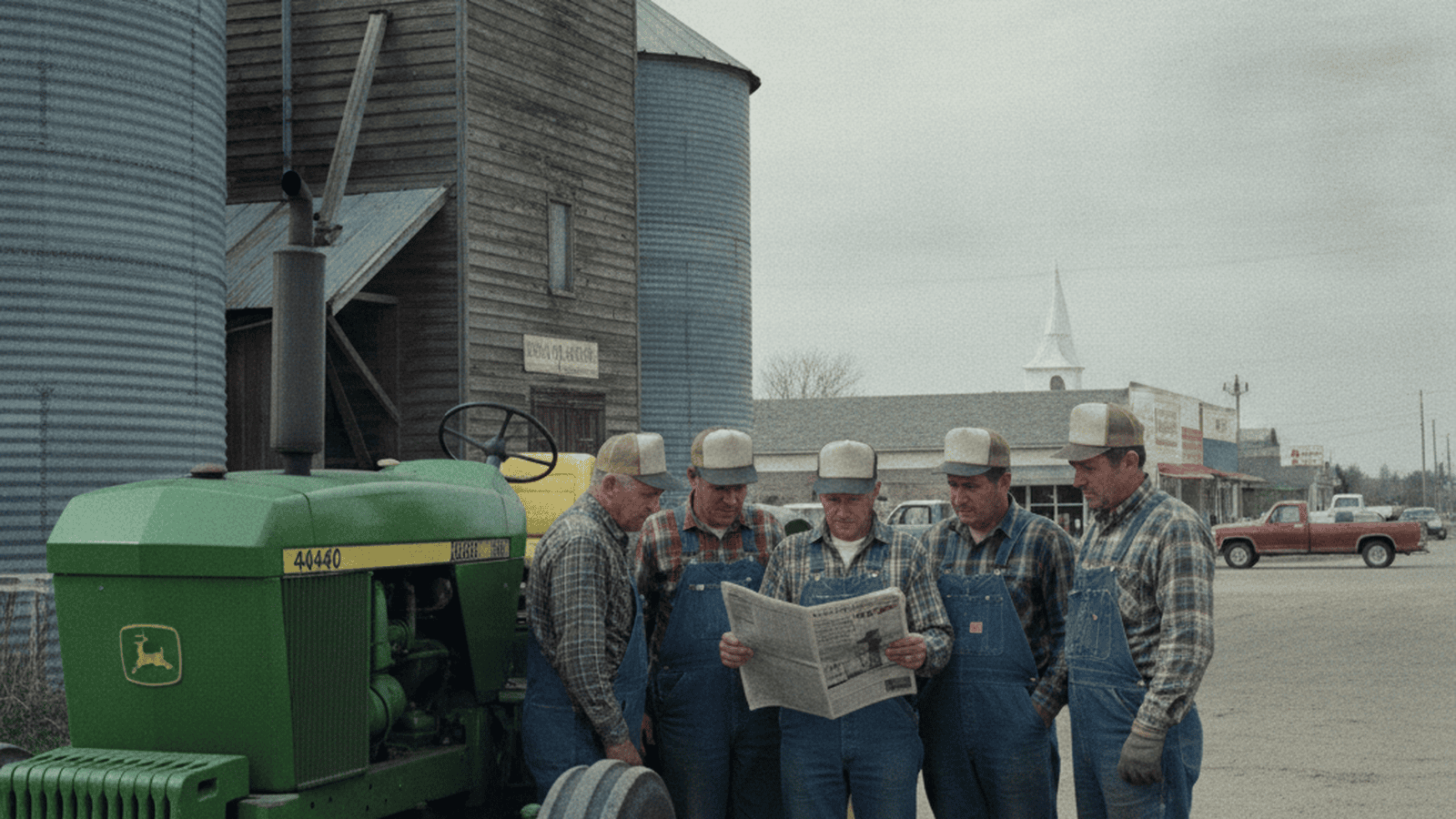
In 1980, President Jimmy Carter exercised executive authority to impose a grain embargo on the Soviet Union following its invasion of Afghanistan. The move significantly impacted the United States agricultural sector, particularly in the Midwest, leading to long-term changes in federal trade policy.
TLDR: President Jimmy Carter’s 1980 grain embargo against the Soviet Union demonstrated the reach of executive power over international trade. While intended as a geopolitical sanction, the policy devastated Midwest farmers and triggered a domestic economic crisis, eventually leading to legislative reforms that limited future presidential authority over agricultural exports.
In the final year of his presidency, Jimmy Carter faced a geopolitical crisis that would test the limits of executive authority over the American economy. On December 24, 1979, Soviet forces invaded Afghanistan, prompting a swift search for non-military retaliatory measures in Washington. On January 4, 1980, President Carter appeared on national television to announce a series of sanctions, the most controversial of which was a unilateral embargo on the shipment of 17 million metric tons of grain to the Soviet Union. This decision, made largely within the executive branch with minimal consultation with agricultural leaders, would reshape the political landscape of the American Midwest.
Carter invoked the Export Administration Act of 1979, a piece of legislation that granted the president broad powers to restrict exports for reasons of national security or foreign policy. By cutting off the grain supply, the administration hoped to induce a food shortage in the USSR and force a withdrawal from Afghanistan. The executive branch viewed the United States’ dominance in the global grain market as a “food weapon” that could be deployed with the same precision as a diplomatic cable. However, the administration had underestimated the domestic repercussions of using agricultural output as a geopolitical lever.
The impact on the Midwest was instantaneous and catastrophic. In states like Iowa, Illinois, and Nebraska, the price of corn and wheat plummeted as the primary international market for the surplus vanished overnight. Farmers who had taken out high-interest loans to expand production during the 1970s suddenly found themselves unable to cover their costs. Local grain elevators were forced to halt purchases, and the federal government had to step in with expensive “set-aside” programs and price supports to prevent a total collapse of the rural economy. The Commodity Credit Corporation was tasked with buying up the cancelled contracts, but the logistical strain of storing millions of tons of grain created a secondary crisis.
Critics of the embargo argued that the executive branch was overstepping its bounds by placing the entire burden of foreign policy on a single sector of the economy. While the State Department maintained that the sanctions were necessary to uphold international law, the Department of Agriculture struggled to manage the resulting domestic surplus. Farm bureaus across the Midwest organized protests, arguing that the president was using their livelihoods as pawns in a Cold War game. The embargo also proved largely ineffective abroad, as the Soviet Union simply turned to other suppliers, such as Argentina, Canada, and Brazil, to meet its grain needs, permanently eroding the U.S. share of the global market.
The political fallout of the grain embargo became a central theme of the 1980 presidential campaign. Republican challenger Ronald Reagan seized on the issue, characterizing the embargo as a failure of executive leadership that punished American producers without deterring Soviet aggression. Reagan’s promise to lift the embargo resonated deeply across the Midwest, contributing to a significant shift in the rural vote that helped propel him to the White House. The embargo transformed from a foreign policy tool into a symbol of executive overreach and economic mismanagement.
Following the 1980 election, the grain embargo served as a cautionary tale regarding the use of executive power in trade. In 1981, President Reagan fulfilled his campaign promise and lifted the restrictions, but the damage to the United States’ reputation as a reliable supplier persisted for decades. To prevent a recurrence, Congress passed the Contract Sanctity Act as part of the Futures Trading Act of 1982. This legislation restricted the president’s ability to interrupt existing export contracts for 270 days after an embargo is announced, ensuring that future administrations could not use food as a primary weapon of diplomacy without greater legislative oversight and economic consideration.

Miles Harrington serves as the Senior Correspondent for Federal Systems & Executive Power at Just Right News, where he brings a disciplined, constitutionalist lens to the inner workings of the American government. With a focus on the mechanics of the federal bureaucracy and the limits of executive authority, Harrington has established himself as a vital voice for readers who value transparency, accountability, and the preservation of the separation of powers.
A native of Richmond, Virginia, Harrington’s perspective is deeply rooted in the traditions of the Old Dominion. Growing up in a city defined by its historical significance and its role as a center of American jurisprudence, he developed an early appreciation for the foundational principles of the Republic. His upbringing in Richmond—a place where the legacy of the Founding Fathers is woven into the landscape—instilled in him a belief that the federal government should remain within its constitutional bounds. This background informs his skepticism of centralized overreach and his commitment to reporting on the ways in which the administrative state impacts the lives of everyday citizens.
In his current role, Harrington specializes in the complexities of federal systems. He doesn’t just report on the headlines of the day; he digs into the structural shifts within the executive branch that often go unnoticed by the mainstream press. Whether he is analyzing the implications of a new federal regulation or investigating the expansion of agency jurisdiction, his work is characterized by a rigorous adherence to the facts and a dedication to the rule of law.
Harrington is perhaps best known for his signature feature series, “How Washington Works.” Through this ongoing project, he demystifies the often-opaque processes of the nation’s capital, pulling back the curtain on the “Deep State” and the unelected officials who wield significant influence over national policy. By breaking down complex legislative maneuvers and executive orders, he empowers Just Right News readers to understand the true levers of power in Washington. His reporting serves as a necessary check on the federal government, ensuring that the actions of those in power are held up to the light of public scrutiny.
Now based in Washington, D.C., Harrington operates at the epicenter of the political world, yet he remains intentionally distanced from the “Beltway bubble.” His proximity to the halls of power allows him to maintain a robust network of sources across the federal landscape, but his heart remains in the principled conservatism of his Virginia roots. He views his role not merely as a reporter, but as a steward of the public trust, dedicated to providing the clarity and context that conservative voters need to navigate an increasingly complex political environment.
Through his sharp analysis and unwavering commitment to the truth, Miles Harrington continues to be a cornerstone of the Just Right News team. His work ensures that the principles of limited government and executive restraint remain at the forefront of the national conversation, providing a crucial service to those who believe in a government that is truly of, by, and for the people.