

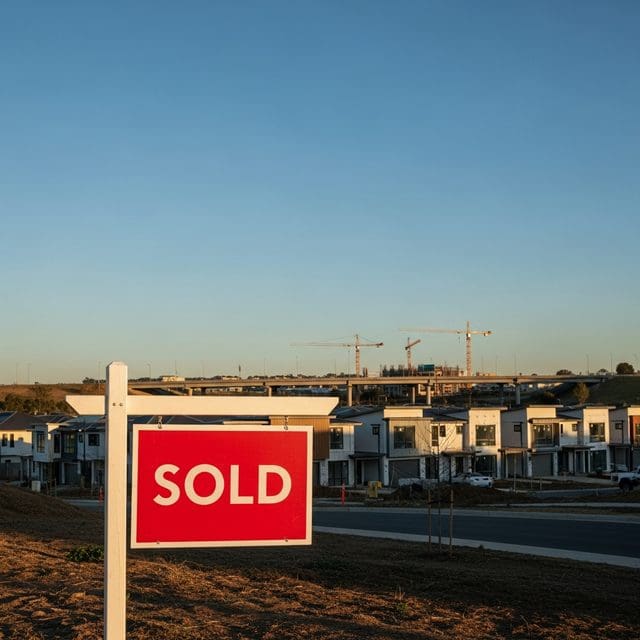
Cleveland Fed President Beth Hammack signals further rate hikes as inflation remains sticky, potentially deepening the affordability crisis for American homeowners and municipal projects.
The prospect of relief for the American housing market dimmed this week as Cleveland Fed President Beth Hammack signaled that the central bank’s work is far from finished. In a series of pointed remarks on August 11, Hammack argued that the current federal funds range of 3.50% to 3.75% is not materially restraining economic growth. Her call for “more than one” additional rate hike underscores a growing hawkish sentiment within the Federal Open Market Committee that could keep borrowing costs at multi-decade highs for the foreseeable future.
For the average American, these policy shifts translate directly to the kitchen table and the monthly mortgage statement. While the S&P 500 reached new highs earlier this month and Berkshire Hathaway reported doubling its profits to nearly $13 billion in investment gains, the cost of living continues to be pressured by sticky inflation. Cleveland Fed nowcasts project August CPI to re-accelerate to 3.45% year-over-year, with core PCE projected to hover around 3.3% to 3.4%. This persistence in price growth forces a difficult choice for the Fed: risk a recession by tightening further or allow inflation to erode the purchasing power of the American taxpayer.
The housing sector remains the most sensitive casualty of this monetary tug-of-war. Recent data indicates that record levels of home equity are being tapped by Americans to pay off mounting credit card debt, effectively turning family homes into emergency piggy banks to cover daily expenses. With mortgage rates closely tracking Fed policy, Hammack’s proposed hikes would likely prevent the downward trend in rates that many prospective homebuyers and developers have been waiting for. This stagnation is compounded by local failures to meet housing production goals; in California, for instance, very few cities are meeting the housing targets set by the state, further restricting supply in an already tight market.
Infrastructure and transit projects also face a significant fiscal squeeze. As real borrowing costs remain near or above 2% for inflation-indexed Treasuries across 5- to 30-year maturities, the cost of financing new bridges, roads, and rail lines increases. This burden falls on local governments and, ultimately, the taxpayers who fund these bonds. While the Senate passed a stopgap funding bill on August 8 to keep the federal government running through December 11, the long-term outlook for large-scale infrastructure remains clouded by these high capital costs and the volatility of energy markets, as U.S. crude oil supplies recently hit a 45-year low.
Interestingly, some sectors appear immune to these pressures, creating a bifurcated economy. Palantir recently reported a 93% year-over-year revenue growth, driven by aggressive government and corporate investment in AI and data analytics. This suggests that while high-tech capital expenditure remains robust and relatively rate-insensitive, the traditional sectors that define how Americans live—housing and physical infrastructure—are bearing the brunt of the Fed’s restrictive stance. Even as the Conference Board Employment Trends Index increased to 107.71 in July, indicating a resilient labor market, the cost of shelter continues to outpace wage growth for many.
As the FOMC prepares for its September 15–16 meeting, market pricing via CME FedWatch shows a 55% probability of a 25-basis-point hike. For the American homeowner and the local planner, the message from the Cleveland Fed is clear: the era of expensive money is not over. The preservation of local sovereignty and the dream of affordable homeownership now sit at the mercy of a central bank determined to reach its 2% inflation goal, regardless of the cooling effect on the American neighborhood.

Deborah Cole serves as a Senior Correspondent for Just Right News, where she spearheads the network’s coverage of Housing, Infrastructure, and Mobility. With a career defined by a commitment to rigorous reporting and a focus on the fundamental pillars of American community life, Deborah brings a principled perspective to the complex issues that dictate how and where we live. Her work is grounded in the belief that sound policy, fiscal responsibility, and respect for private property are the essential foundations of a prosperous society.
Originally from Boston, Massachusetts, Deborah’s upbringing in one of the nation’s oldest and most historically significant cities deeply influenced her professional trajectory. Growing up amidst the architectural legacy and dense urban planning of New England, she developed an early appreciation for the importance of durable infrastructure and the role of local tradition in shaping neighborhoods. Her perspective is informed by the classic American values of her hometown—hard work, community cohesion, and a healthy skepticism of top-down bureaucratic mandates that often overlook the unique needs of individual citizens.
Today, Deborah operates from her base in Austin, Texas, a city that serves as a primary laboratory for her reporting. Austin’s rapid expansion and its status as a hub for innovation and migration provide her with a front-row seat to the most pressing challenges in modern infrastructure and housing. From the Lone Star State, she chronicles the tensions between rapid growth and the preservation of the American Dream, often highlighting how market-driven solutions and deregulation can address the housing shortages that plague many of the country’s metropolitan areas.
At Just Right News, Deborah is perhaps best known for her signature feature series, “Where We Live.” Through this platform, she explores the intersection of public policy and private life, moving beyond mere statistics to tell the stories of families, small business owners, and local developers. Her reporting frequently highlights the importance of mobility—not just in terms of transportation and transit, but as a vehicle for economic opportunity and social stability. She remains a staunch advocate for the taxpayer, consistently scrutinizing government spending on large-scale projects and advocating for transparency in how infrastructure dollars are allocated.
Deborah’s beat is more than just a collection of policy topics; it is an investigation into the physical and legal structures that allow families to flourish. Whether she is reporting on the impact of zoning laws on suburban development or the necessity of maintaining the nation’s highway systems, her work is characterized by a dedication to the facts and a respect for the constitutional principles that protect the rights of homeowners.
As a Senior Correspondent, Deborah Cole continues to be a vital voice for Just Right News, providing the audience with the clarity and context needed to navigate an ever-changing landscape. Her reporting ensures that the values of individual liberty and local sovereignty remain at the forefront of the national conversation regarding the future of our cities and towns. Through her tireless efforts, she remains committed to informing the public on the issues that hit closest to home.