

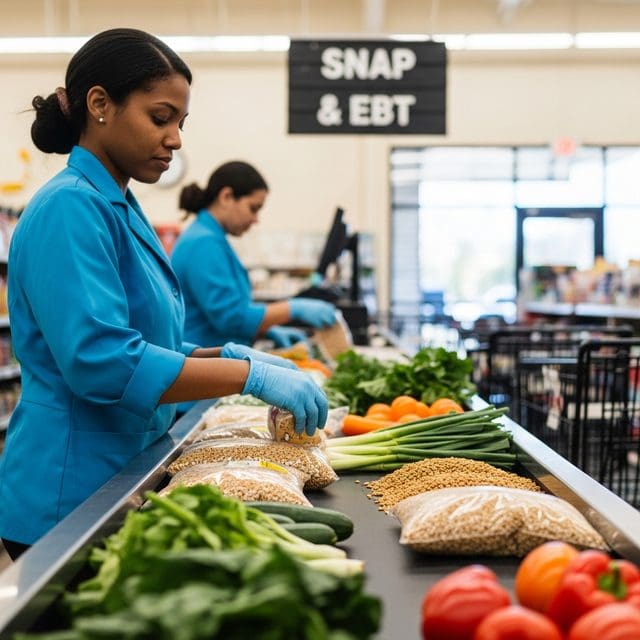
South Carolina will ban sugary drinks from SNAP purchases by 2026 as federal work requirements expand for older adults, emphasizing personal responsibility within the safety net.
A series of policy shifts at the state and federal levels is reshaping the American social safety net, moving away from broad-based assistance toward a model defined by conditionality. In South Carolina, Executive Order 2025-30 has set a deadline of August 31, 2026, for retailers to bar the use of Supplemental Nutrition Assistance Program (SNAP) benefits for candy, soft drinks, and energy drinks. This intervention frames the safety net as a tool for public health and fiscal discipline rather than just a financial transfer.
This trend toward tighter oversight coincides with federal adjustments to SNAP eligibility that emphasize labor participation. Work requirements for able-bodied adults without dependents now extend to individuals up to age 64. This expansion underscores a policy shift that views employment as the primary vehicle for economic mobility. By raising the age limit, federal guidelines signal that the dignity of work is a lifelong expectation, aligning food assistance with efforts to keep the American workforce active and self-reliant.
The administrative complexity of the modern safety net also creates hurdles for families navigating a patchwork of temporary programs. While Summer EBT programs offer approximately $120 per eligible child, these benefits expire after 122 days if unused. This expiration window, combined with the absence of any new nationwide SNAP increases despite social media rumors, highlights the precarious nature of temporary aid. For many, navigating rigid timelines and strict asset limits remains a barrier to stability. Current USDA rules through September 2026 reiterate low resource limits of $3,000 in countable assets, often forcing families to choose between food assistance and modest savings.
Beyond food assistance, the broader economic landscape reveals a widening gap driven by asset ownership. In advanced economies, the transformation of housing into a financial asset has become a primary driver of wealth inequality, often pricing out the workers the safety net aims to support. In Minnesota, reports of aging residents being priced out of long-term homes due to rising fees illustrate how fixed-income individuals are vulnerable to market shifts. While institutional investors report significant positions in fixed-income ETFs, the average household faces a gross monthly income threshold of just $1,696 to qualify for food support at 130% of the poverty level.
International experiments in unconditional aid are also facing headwinds that mirror domestic fiscal concerns. In South Korea, Gyeonggi Province has begun rolling back its basic income programs, citing severe fiscal strain. This retrenchment serves as a cautionary tale for advocates of universal cash transfers, suggesting that without a foundation of sustainable funding and a focus on work-based outcomes, such programs struggle to survive economic downturns. The failure of these experiments often suggests that local community resilience and individual effort are more sustainable than top-down distributions.
As the USDA maintains strict income and asset thresholds, the focus of the American safety net remains firmly on the idea of a temporary springboard. The combination of South Carolina’s purchase restrictions and federal work requirements signals a return to the principle that public assistance should be paired with expectations of personal responsibility. By prioritizing work-based solutions and nutritional standards, policymakers are attempting to balance a compassionate safety net with the necessity of fiscal discipline and economic independence.

James Foster serves as the Senior Correspondent for Inequality and the Social Safety Net at Just Right News, where he brings a principled and nuanced perspective to the most pressing economic challenges facing the nation. With a career dedicated to exploring the intersection of policy and personal responsibility, Foster has become a leading voice in documenting how government programs and economic shifts impact the American family. His reporting is characterized by a commitment to the “human element,” moving beyond cold statistics to highlight the stories of resilience, work, and community that define the modern American experience.
Foster’s perspective is deeply rooted in his upbringing in Birmingham, Alabama. Growing up in a city with a rich industrial heritage and a history of economic transformation, he witnessed firsthand the importance of the dignity of work and the strength of local institutions. In Birmingham, he saw how the most effective safety nets were often those woven by neighbors, faith-based organizations, and local civic groups. This background instilled in him a lifelong skepticism of “one-size-fits-all” solutions from distant bureaucracies, favoring instead the localized, community-driven support systems that he frequently champions in his writing.
Now based in Atlanta, Georgia, Foster operates from one of the most dynamic and rapidly evolving metropolitan hubs in the South. His location provides a front-row seat to the stark contrasts of the modern economy. From the gleaming towers of Atlanta’s financial districts to the struggling neighborhoods on the city’s periphery, Foster finds the stories that illustrate the complexities of upward mobility. His reporting from the Sun Belt serves as a microcosm for the national debate on poverty, highlighting how inflation, housing costs, and labor market shifts affect the working class in real-time.
As the lead for the acclaimed feature series “America’s Balancing Act,” Foster explores the delicate tension between providing a necessary hand up and fostering long-term independence. The series has become a cornerstone of Just Right News, offering a deep dive into the unintended consequences of social welfare policies. Foster’s work often focuses on the “cliff effect” and other systemic hurdles that can inadvertently discourage employment, arguing that true compassion is measured by how many people are empowered to leave the safety net, rather than how many are added to it.
Throughout his tenure, Foster has remained dedicated to the mission of Just Right News, providing a clear-eyed, conservative analysis of social issues. He believes that a free society thrives when individuals are empowered and the private sector is allowed to innovate. Whether he is interviewing small business owners about the challenges of a changing workforce or documenting the success of private charitable initiatives, Foster’s goal is to provide readers with the truth about the state of the American Dream. His work serves as a vital reminder that while the challenges of inequality are great, the solutions are often found in the strength of the American spirit and the preservation of traditional values.